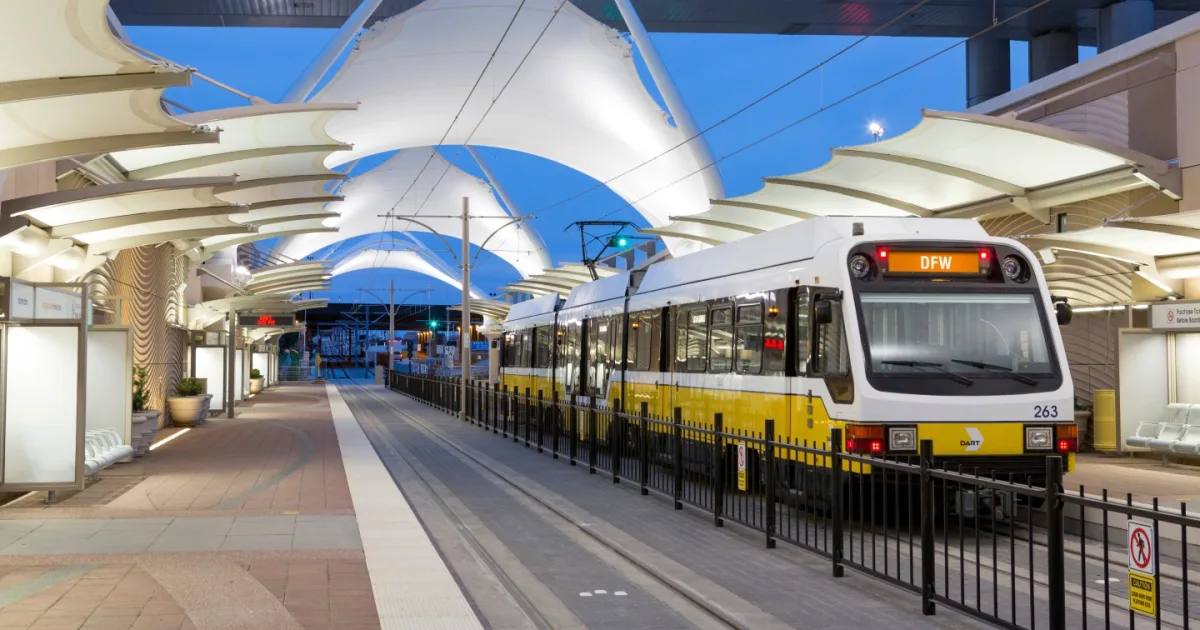
DALLAS, Texas — Dallas Area Rapid Transit (DART) will launch Operation Access on Monday, November 16, a 90-day initiative that puts a visible uniformed presence at key light-rail stations, requires mandatory fare validation at the system's two main downtown stations, and tests — with real riders — how a future fare-gated system could work, the agency announced on November 13.
From Monday, riders will see DART Police officers, Fare Enforcement Officers and Transit Security Officers across the system, DART said in its official release. The launch was also reported by CultureMap Dallas, and the two-phase security program behind it was detailed earlier by Mass Transit magazine.
What changes for riders on Monday
All customers boarding at Pearl/Arts District Station and West End Station — the two downtown stations named in the plan — will pass through barriers and take part in mandatory fare validation before boarding, DART said. The agency warned that customers at those two stations may experience brief delays during peak travel periods while fare inspections are conducted, but said the process has been designed to move riders through checkpoints efficiently and that any additional wait is expected to be minimal.
In addition to the two downtown locations, uniformed enforcement teams will be positioned at Bachman, Forest Lane, LBJ/Skillman, MLK Jr. and 8th & Corinth stations. DART said those stations serve as critical entry and exit points for customers travelling to and from downtown, and that placing officers and security personnel there creates a continuous presence along key rail corridors, with code-of-conduct and fare-compliance checks for riders throughout their journey.
What DART's leaders say the operation is for
"At its core, Operation Access is about creating the transit experience our riders deserve," said Chief Charles Cato, DART's Chief of Police, in the agency's release. "When customers see a consistent security presence, know that fares are being checked, and feel confident that everyone is following the same rules, it creates a safer and more comfortable environment for everyone. This first phase allows us to deliver those benefits immediately while gathering the information we need to plan for the future."
DART President and CEO Nathaniel P. Ford Sr. made the same two-part case — action now, data for later. "Operation Access allows us to take meaningful action today while planning responsibly for tomorrow," Ford said. "We're making the system safer and improving fare compliance right now, and at the same time we're collecting critical data that will help shape the next generation of rail security and customer experience at DART."
DART says the information gathered during the 90 days — on staffing, passenger flow and fare compliance — will help it determine how fare-gated access could be implemented more broadly across the light rail system in the future. In other words, the barriers at Pearl/Arts District and West End are a live pilot, not yet a system-wide decision.
The background: a two-phase security push
Mass Transit magazine reported in September that Operation Access is the first phase of a wider DART security initiative. The second phase, briefed to the DART Board on October 13, includes a review of the feasibility of fare-gating rail platforms, placing a uniformed security resource in the first car of every train, and possible changes to DART's fare policy and Rider Code of Conduct. The initiative follows a $24.6 million investment the agency made in November 2025 to improve security and cleanliness across the system, the magazine reported.
The stations in the plan were selected based on incident data and their ability to provide coverage across rail lines entering and exiting downtown Dallas, according to that earlier reporting — which is why the list mixes two gated downtown stations with enforcement teams spread across five further stations on different corridors.
The system riders are being checked on
DART provides light rail, Trinity Railway Express and regional rail, bus routes, GoLink on-demand service and paratransit across a 700-square-mile, 12-city region that includes Dallas, Plano, Richardson, Garland, Irving, Carrollton, Farmers Branch, Rowlett, Addison, Cockrell Hill, Glenn Heights and University Park. The agency says it moves more than 171,000 passengers daily — the ridership whose peak-hour flow through the two gated downtown stations will be the pilot's first real test.
What happens next
Operation Access runs for 90 days from Monday, November 16. Riders using Pearl/Arts District and West End should expect barriers and a fare check before boarding from Monday morning, and riders at Bachman, Forest Lane, LBJ/Skillman, MLK Jr. and 8th & Corinth should expect a uniformed team on the platform. What DART decides after the 90 days — whether fare gates spread across the system — will rest on the data this phase collects, the agency says.