WASHINGTON — A last-minute effort by President Donald Trump to install as many federal judges as possible before Democrats take control of the U.S. Senate is running into resistance from fellow Republicans, Reuters reported on Sunday, November 15. A handful of Republican senators have blocked or cast doubt on three nominees chosen for their home states, complicating a push that the White House says it expects to finish this year.
Source: Reuters
Senate Republicans had, until recently, routinely approved Trump's nominees for lifetime seats on district and appeals courts during his second term, confirming 57 so far and helping him cement a conservative imprint on the judiciary that will outlast his presidency, according to Reuters. Twenty-three nominees remain pending in the lame-duck session.
Why home-state senators can stop a nominee
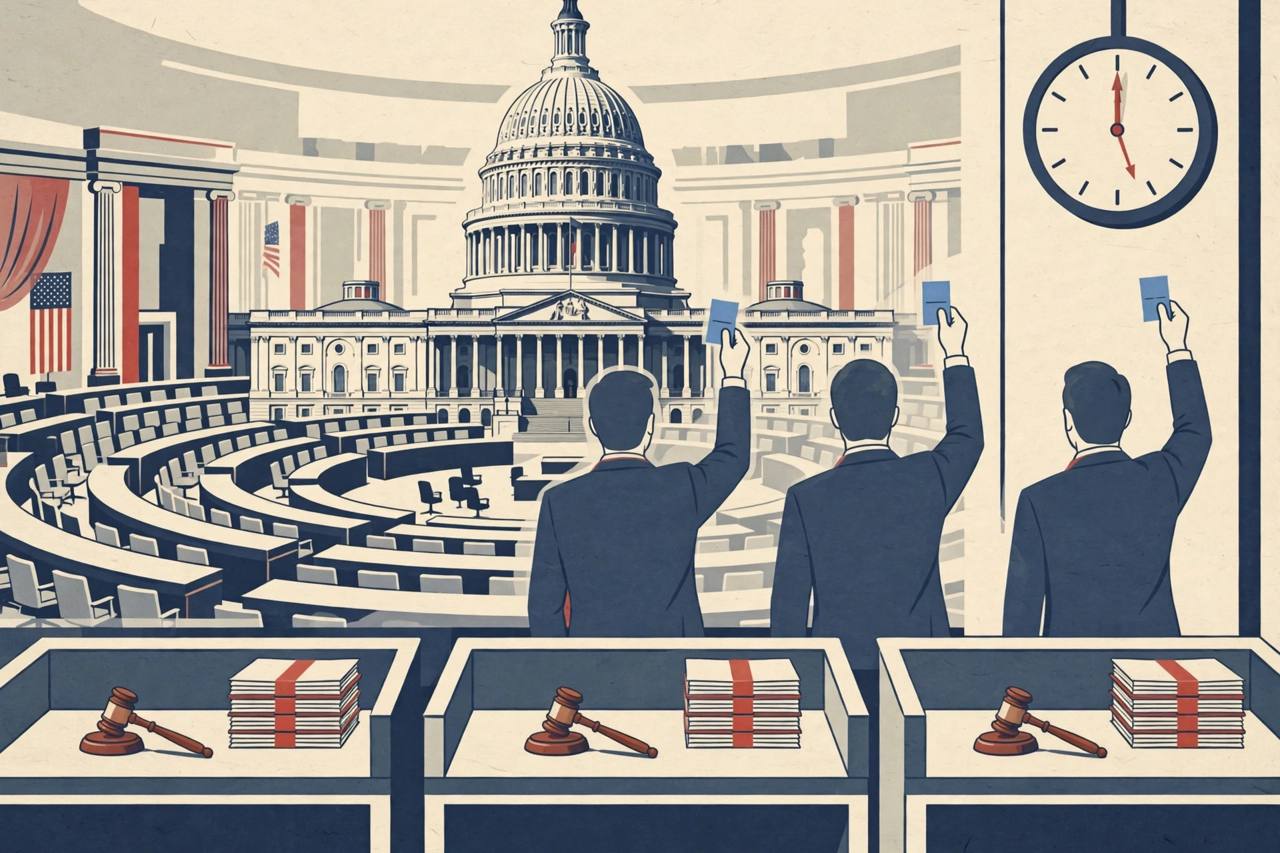
Senators traditionally help choose judges for vacancies in their own states. Trial court nominees are especially vulnerable because, under Senate custom, home-state senators can block them by withholding a “blue slip,” a form indicating support to the Senate Judiciary Committee. Reuters reported that the White House has generally honoured that tradition, but has sometimes picked conservatives to fill judicial vacancies over the objections of Republican senators.
“We put up a lot of really qualified candidates that we sent to the White House, and they basically ignored that and just put through their one,” Senator Alan Armstrong, an Oklahoma Republican, told Reuters.
Two outgoing Republican members of the Senate Judiciary Committee, Thom Tillis of North Carolina and John Cornyn of Texas, can deny such nominees the votes needed to advance. Tillis is retiring, and Cornyn lost a primary to a Trump-backed challenger; Reuters reported both are in their final days in office and have indicated a willingness to block some nominees pending before the committee, of which they are both members.
The Arkansas nomination the White House withdrew
The clearest setback came on Tuesday, when the White House took the rare step of withdrawing U.S. District Judge Lee Rudofsky's nomination to the St. Louis-based 8th U.S. Circuit Court of Appeals and replacing him with Arkansas Supreme Court Justice J. Cody Hiland, after Senators John Boozman and Tom Cotton of Arkansas opposed Rudofsky, Reuters reported.
Rudofsky is a first-term Trump appointee known for a ruling that weakened enforcement of a major voting rights law, according to Reuters. Tillis acknowledged he had supported the Arkansas senators' efforts to block him. Boozman, who led the opposition, instead favoured Hiland, who said in August that he had been offered a trial court nomination, which he declined.
Two more nominees stuck in Texas and Oklahoma
In Texas, Cornyn has declined to commit to supporting T. Elliot Gaiser, Trump's nominee for a federal judgeship in Dallas. Gaiser, who is from Ohio, was selected without going through the usual senator-driven screening process in Texas, Reuters reported. He now leads the Justice Department's Office of Legal Counsel, which has issued opinions endorsing some of the most controversial elements of Trump's agenda. Without a blue slip from Cornyn, Gaiser cannot appear at a Judiciary Committee hearing scheduled for Wednesday.
In Oklahoma, Tillis is backing Armstrong's opposition to Zach West, a lawyer in the Oklahoma attorney general's office who has drawn praise from conservative legal activists for defending abortion restrictions and supporting the participation of religious schools in Oklahoma's charter school program. Armstrong initially returned a favourable blue slip for West but later withdrew his support, leaving West without enough votes to clear the committee when it next decides whom to advance on Tuesday, according to Reuters.
Armstrong will leave the Senate on November 30 and be replaced by Senator-elect Kevin Hern, a Republican who could take a different position on West. Tillis said that, for now, he will continue blocking the nominee. “When I've got two Republicans from the state telling me to move on it, I move on it,” Tillis said. “If I have one or more asking me not to, then I'm not.”
Tillis, who has a fractured relationship with Trump, told reporters on Thursday that the White House has at times essentially told senators, “This is our guy, I hope you'll get on board.” “That's not how it works here,” he said. “They should expect they're going to get this response.” Tillis also said senators deserved more “respect” from the White House in selecting judges for their states. (Reuters)
The longer project behind the rush
For the White House, Reuters reported, the next few weeks are the last hurrah of a project that began in Trump's first administration to shift the federal judiciary's ideological balance to the right, an initiative whose effects will be felt for years after Trump leaves office. Trump made 234 judicial appointments during his first term, from 2017 to 2021, including three members of the U.S. Supreme Court's current 6-3 conservative supermajority. Roughly one-third of active judges are now Trump appointees.
Rob Luther, a George Mason University law professor who worked on judicial nominations in the White House Counsel's Office during Trump's first term, told Reuters that senators who are now on “borrowed time” stand in the way of “movement conservatives” being appointed to the bench.
“We expect all judicial nominees pending in the Senate to be confirmed this year,” a White House official said in a statement reported by Reuters. Senate Majority Leader John Thune said on Monday that judicial confirmations were a top priority while Republicans retain control of the chamber.
What happens next
The Senate confirmed its first judicial nominee of the lame-duck session on Thursday. Among the 23 nominees still pending is Colorado-based U.S. District Judge Daniel Domenico, whose nomination to the Denver-based 10th U.S. Circuit Court of Appeals is set for a Monday vote, Reuters reported. The Judiciary Committee is due to decide on Tuesday whom to advance, which is where West's nomination is stuck, and Gaiser's Wednesday hearing cannot go ahead unless Cornyn supplies a blue slip. Whether the White House's year-end expectation holds will depend on how many of these home-state disputes it can settle in the coming days.