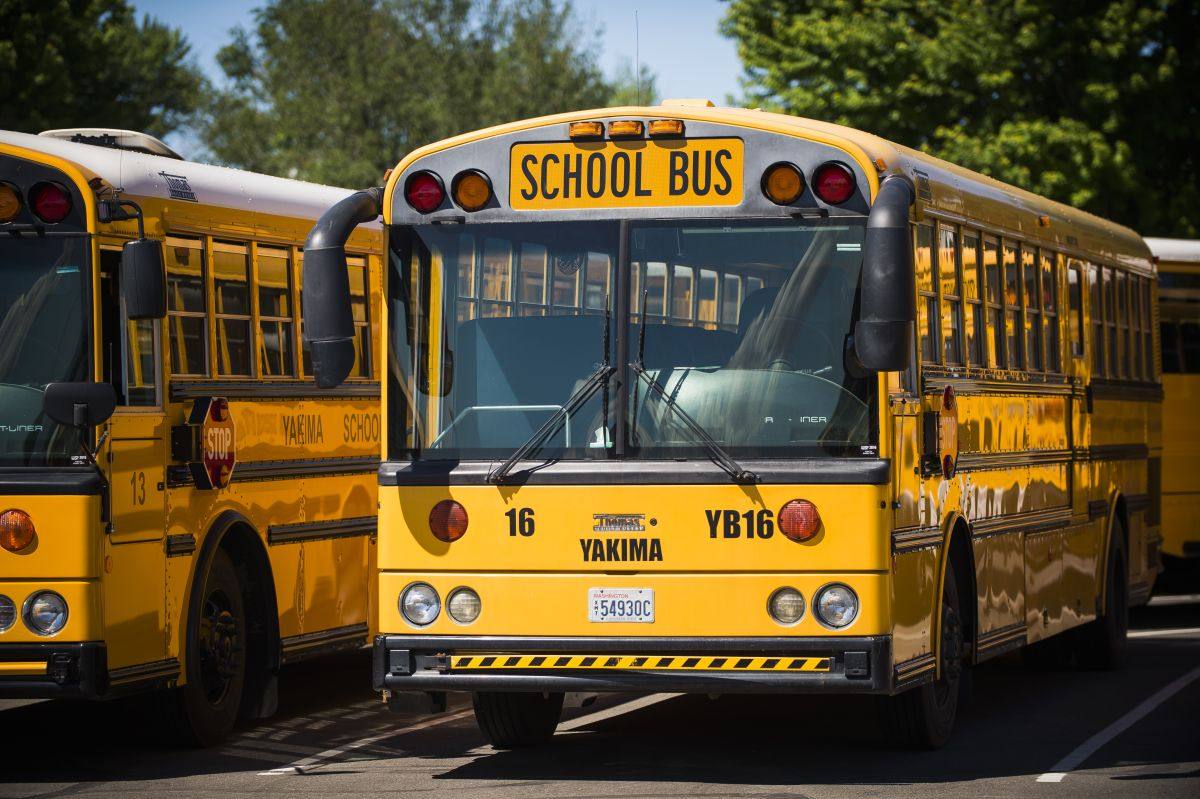
Three of Washington state's larger school districts — Lake Washington, Tacoma and Yakima — are preparing to sue the state, arguing that Olympia is once again failing its constitutional duty to fully fund basic education and is forcing local taxpayers to cover day-to-day costs that the state constitution assigns to the state itself. The boards of Lake Washington and Tacoma passed resolutions on October 22 directing staff to assemble a lawsuit, and the Yakima School District followed on November 2, declaring its participation in the future case, according to reporting by the Washington State Standard published on November 9. Together, the three districts serve more than 74,000 students.
Source: Washington State Standard via Seattle's Child
The districts have not said when they will file. But the legal theory is already written into Lake Washington's resolution: the district 'plans to allege' that the state is violating the state constitution, which, in the resolution's words, 'imposes a mandatory, affirmative duty' on the state to 'fully fund a program of basic education for all children residing in this state.' Board records reported by Citizen Portal show Lake Washington adopted Resolution 2448 authorising participation in the litigation, citing multimillion-dollar gaps in special education, substitute teachers and materials, supplies and operating costs. Yakima's board voted to join the statewide effort and capped the district's contribution to the case at $50,000, according to its board record.
Source: Citizen Portal — Lake Washington board record
The superintendent's case, in his own words
Lake Washington Superintendent Jon Holmen began laying out the argument publicly in March, when he wrote to parents explaining why the district was preparing to sue. 'Year after year, our district must bridge significant funding gaps to provide legally required services for students, relying on local resources to make up for what is defined as the 'paramount duty' in our state constitution,' Holmen wrote. 'Local levy support cannot replace the state's constitutional obligation to fund basic education.' In plain terms, the districts say services the law requires them to provide — above all special education — cost more than the state pays, and the difference is quietly transferred to local property-tax levies that voters approve for other purposes.
Source: Washington State Standard via Seattle's Child
Why the name McCleary hangs over this fight
Washington has been here before, in one of the most consequential education cases in any American state. In McCleary v. State, decided on January 5, 2012, the Washington Supreme Court ruled that the state had violated Article IX of its own constitution — the clause making it the state's 'paramount duty' to make ample provision for the education of all children — by persistently funding schools below the actual cost of the basic-education programme the legislature itself had defined. The court kept jurisdiction over the case to make sure the legislature acted.
Source: Washington State Standard via Seattle's Child
When progress stalled, the court escalated. In 2014 it held the state in contempt, and it later imposed an unprecedented fine of $100,000 per day until the state complied. Only in 2018 did the court rule that the state had finally come into compliance, lifting the contempt order and ending judicial oversight. The settlement of that era pumped billions of additional dollars into Washington schools and raised teacher pay — which is why the new districts' argument, that the state has slid back into underfunding barely eight years later, carries such political weight in Olympia.
Source: Washington State Standard via Seattle's Child
What has changed since 2018
The districts and the state's own schools chief say the ground has shifted under the 2018 settlement. Transportation, utility and insurance costs have risen sharply; some districts that came to depend on local levies have seen those levies fail at the ballot box; and student enrolment continues to decline, which cuts the per-pupil funding districts receive. The clearest distress signal is financial oversight: 11 Washington school districts are now on 'binding conditions' with the Office of Superintendent of Public Instruction (OSPI) — state financial supervision — more than at any time before, according to OSPI's published list, cited in the Standard's reporting.
Source: Washington State Standard via Seattle's Child
Superintendent of Public Instruction Chris Reykdal has warned for years that a new McCleary-style case was coming, and his office supports the districts' move. 'While litigation is never a first choice, OSPI and school districts have been sounding the alarm about underfunding for several years,' said Katy Payne, OSPI's chief strategy officer. 'While the Legislature has made slight improvements, districts are still spending $800 million per year in local and federal funds in order to cover the state's obligation.' The lack of funding, she said, has driven districts to 'layoff staff, increase class sizes, and some are even considering closing schools.'
What this means for families — including Washington's Punjabi community
For parents, this is not an abstract fight about constitutional clauses. When state funding falls short, the bill lands locally: levy elections that raise property taxes and, through them, rents; larger classes; fewer support staff; and, in the hardest-hit districts, school closures. Tacoma, in Pierce County, and the Yakima Valley are both home to established Punjabi and South Asian communities — families working in trucking, warehouses, agriculture and small business whose children attend exactly the public schools at the centre of this case. Yakima's orchards and packing houses draw seasonal and settled Punjabi farm families from across the valley, and Lake Washington's suburbs around Redmond and Kirkland employ thousands of South Asian technology workers. A ruling that the state must pay more would shift costs away from those local levies; a ruling for the state would leave the current patchwork in place.
Source: Washington State Standard via Seattle's Child
What happens next
The immediate next step is the filing itself: the three districts have authorised a suit but have not announced a date, a court, or whether more districts will join them — board-by-board votes elsewhere in the state will show whether this becomes a three-district case or a statewide coalition like the network that backed the original McCleary plaintiffs. Politically, OSPI has aimed the pressure squarely at the coming legislative session: 'We urge the governor and Legislature to close this funding gap this legislative session,' Payne said. If lawmakers do not, the districts' lawyers will ask a court to do what the Supreme Court did in 2012 — declare the funding unconstitutional and keep watch until Olympia complies. Awaaz Punjab will follow the filing when it lands.