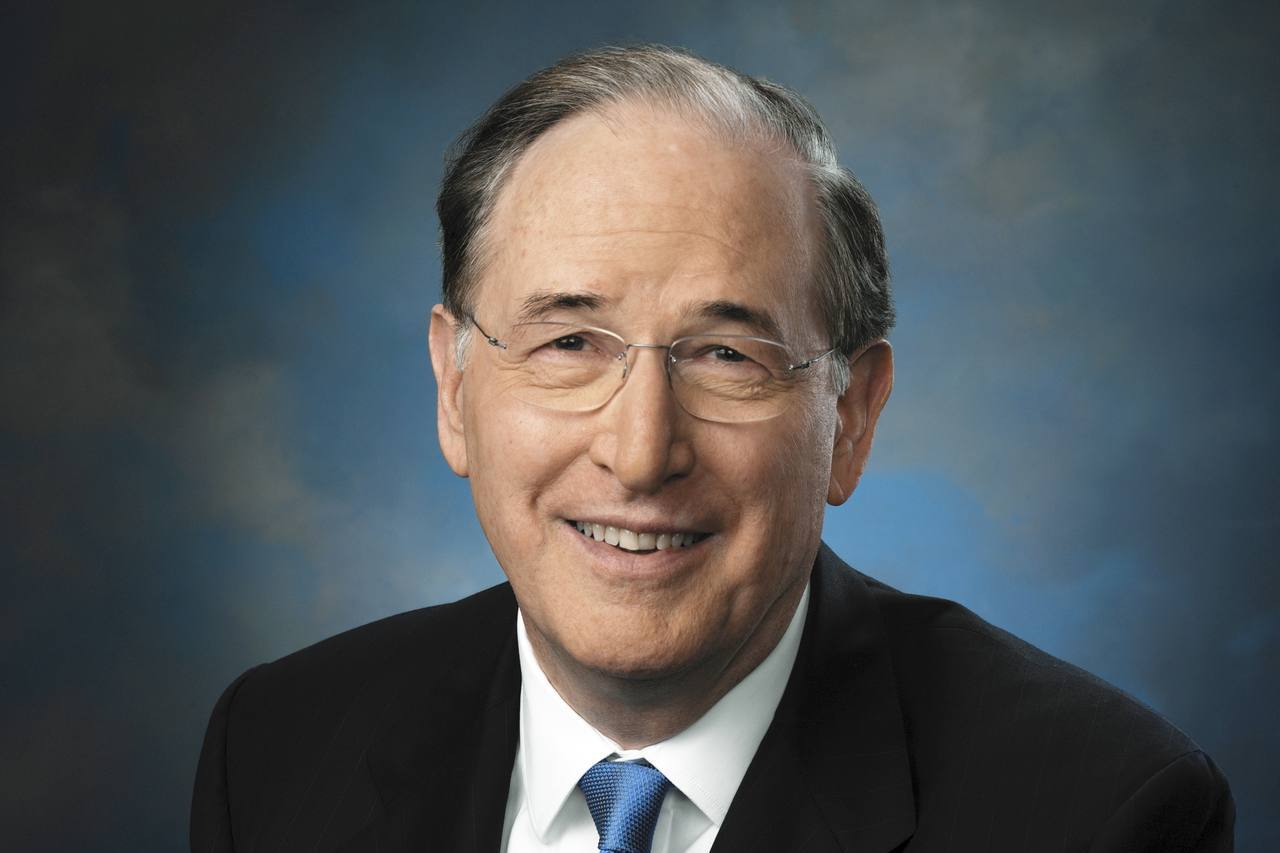
John Davison “Jay” Rockefeller IV, who served two terms as governor of West Virginia and then represented the state in the United States Senate for 30 years, has died at the age of 89, the Associated Press reported. He died at his home in Washington, D.C. — the AP reported he died on Thursday night, and his death was announced on Friday, November 6. His death was confirmed by Mary Stewart, vice-president for external affairs at WETA, the public broadcasting station where his wife, Sharon Percy Rockefeller, is president and chief executive. No cause of death was given.
Source: Associated Press
West Virginia Governor Patrick Morrisey ordered United States and state flags at government buildings to be flown at half-mast until sunrise on Friday, November 13, in recognition of Rockefeller’s public service. “West Virginia has lost a man who devoted much of his life to serving our state and its people,” Morrisey said, describing a career that spanned nearly five decades and a legacy he said would remain an important part of the state’s history.
From a New York fortune to a West Virginia mining town
Rockefeller was born on June 18, 1937, in New York City, the great-grandson of oil industrialist John D. Rockefeller and a member of one of America’s wealthiest families. He graduated from Harvard University in 1961 after spending three years studying Japanese at the International Christian University in Tokyo, worked for the Peace Corps in Washington, and in 1964 arrived in West Virginia as a Volunteers in Service to America (VISTA) worker, helping disadvantaged communities in Emmons, a mining community south of Charleston. He stayed, and entered politics as a Democrat despite coming from a prominent Republican family — he remains the only member of his family to have held office as a Democrat.
He was elected to the West Virginia House of Delegates in 1966 and became the state’s secretary of state in 1969, serving until 1973. After a period as president of West Virginia Wesleyan College from 1973 to 1975, he was elected governor in 1976 and re-elected in 1980, serving from January 17, 1977 to January 14, 1985 — years in which factory and mine closures and a national recession pushed West Virginia’s unemployment rate between 15 and 20 percent. In 1984, while still governor, he won election to the U.S. Senate, taking his seat on January 15, 1985.
Thirty years in the Senate: health care, miners and veterans
In Washington, Rockefeller chaired three major Senate committees — Commerce, Science and Transportation from 2009 to 2015, the Select Committee on Intelligence from 2007 to 2009, and Veterans’ Affairs in several periods — and sat on the powerful Finance Committee. He was closely associated with health care: he helped establish the Children’s Health Insurance Program (CHIP), which has provided health coverage for millions of low-income children, was a leading Senate voice for improved Medicare, and played a crucial role in the passage of the Affordable Care Act in 2010. He also championed mine safety and better benefits for coal miners suffering from black lung disease, and worked throughout his Senate career on veterans’ benefits and the reform of veterans’ health care.
When Senator Robert C. Byrd died in June 2010, Rockefeller became West Virginia’s senior senator. He announced in 2013 that he would not seek a sixth term, retired on January 3, 2015, and donated his senatorial archives to the West Virginia University Libraries. West Virginia University paid tribute to him as a former senator who had helped expand opportunities for students and address health-care needs across the state, in policy, politics, health care and neuroscience programmes developed with his backing.
Tributes from both parties
Senator Shelley Moore Capito, the Republican who succeeded Rockefeller in the Senate, said she was “deeply saddened” by his death and praised him as “a true gentleman” who treated her with “respect, kindness, and encouragement.” Former senator and governor Joe Manchin described Rockefeller as a mentor who had helped him when he first sought a full Senate term in 2012. “He showed me how to be an effective U.S. senator and best represent our state,” Manchin wrote in a statement.
Rockefeller’s story — an heir to America’s most famous fortune who built a nearly 50-year career in one of its poorest states — made him a national figure in debates over health care for children, the obligations owed to coal miners whose work powered the country, and the care owed to military veterans. The programmes he helped create, above all CHIP, continue to cover millions of American children today.
Family and what happens next
Rockefeller is survived by his wife, Sharon, their four children and nine grandchildren. Funeral and memorial arrangements had not been announced as of Friday, November 6. Flags ordered to half-mast by Governor Morrisey will remain lowered until sunrise on Friday, November 13. Awaaz Punjab will update this story when funeral arrangements and further official tributes are announced.