Latest News — Punjab, India, USA and the World
Awaaz Punjab is an independent digital news platform publishing original, source-verified reporting in English, Punjabi and Hindi. Every story below is published with its sources named and dated, and every article is available in all three languages. Our newsroom covers Punjab first — its politics, districts and the road to the 2027 assembly election — along with India, the Punjabi diaspora in the USA and Canada, and world affairs that touch Punjab's people, from the Gulf to North America.
Four pilgrims were killed on the spot and 18 others injured, 10 of them critically, when two buses of the Punjab government's Mukh Mantri Teerth Yatra scheme collided near Naushera Pannuan in Tarn Taran district on Saturday afternoon. The injured were taken to Tarn Taran Civil Hospital, where an emergency was declared; the identities of the dead had not been formally released and police say an investigation into the exact cause has begun.
Published 2026-11-14 · Awaaz Punjab
Around 8,000 participants are expected across six Telangana cities from December 11 to 22 for the eighth edition, featuring 27 competitive sports and two demonstration events.
Published 2026-11-16 · Awaaz Punjab
Rajesh Kumar Singh told the ANI summit in New Delhi that the internal procurement cycle is complete, the TKMS-Mazagon Dock strategic partnership proposal is before the CCS, and a three-boat Scorpene follow-on is also being looked at.
Published 2026-11-16 · Awaaz Punjab
UN Secretary-General António Guterres said in Manila on Monday that the UN is ready to be “fully engaged” in any denuclearisation programme agreed by Donald Trump, Xi Jinping and Vladimir Putin in Shenzhen on November 19 — while warning the outcome is “not yet guaranteed.”
Published 2026-11-16 · Awaaz Punjab
Spot gold fell 1% to $3,840.52 an ounce on Monday, touching its lowest since October 2025, as a dollar near its strongest since April 2025 and a 92% market bet on a December Fed hike kept pressure on bullion after last week's 4.5% drop.
Published 2026-11-16 · Awaaz Punjab
Caltrans District 3 will close eastbound State Route 20 between the Omega Scenic Overlook and the Interstate 80 junction from 8 p.m. Monday, November 16, to 5 p.m. Tuesday, November 17, for a concrete deck pour on the new westbound I-80 bridge in the $112 million Yuba Pass Separation Overhead Bridge Project. The eastbound I-80 off-ramp to Route 20 also closes; westbound Highway 20 stays open. Cars may detour via Highway 49 or Highway 174, but large trucks must use Highway 49 through Auburn.
Published 2026-11-16 · Awaaz Punjab
An Ohio State Highway Patrol release says a 2005 Jeep Grand Cherokee left County Road 27 (Bay Road) in Lee Township at about 8:38 a.m. on Sunday, November 15, struck an embankment and overturned. Front-seat passenger Benjamin Dickson, 22, of Carrollton, was ejected and pronounced dead at the scene; the 20-year-old driver was taken to Aultman Hospital in Canton with minor injuries. Alcohol is not suspected, and the crash remains under investigation.
Published 2026-11-16 · Awaaz Punjab
The second round of the SCORE Intelligence Punjab opinion poll, conducted from October 15 to November 13 among 28,186 respondents, projects the ruling AAP would win 66–79 of the 117 Assembly seats if elections were held now — still past the majority mark of 59, but down from 69–82 in round one as its projected vote share eased from 38% to 35%. The SAD improved its numbers, and a possible BJP–SAD alliance remains the biggest variable. This is an opinion poll, not an election result.
Published 2026-11-16 · Awaaz Punjab
Defence Secretary Rajesh Kumar Singh told the ANI National Security Summit in New Delhi on Monday that the internal procurement cycle for two submarine proposals is complete and both are at the highest level in government, ANI reported.
Published 2026-11-16 · Awaaz Punjab
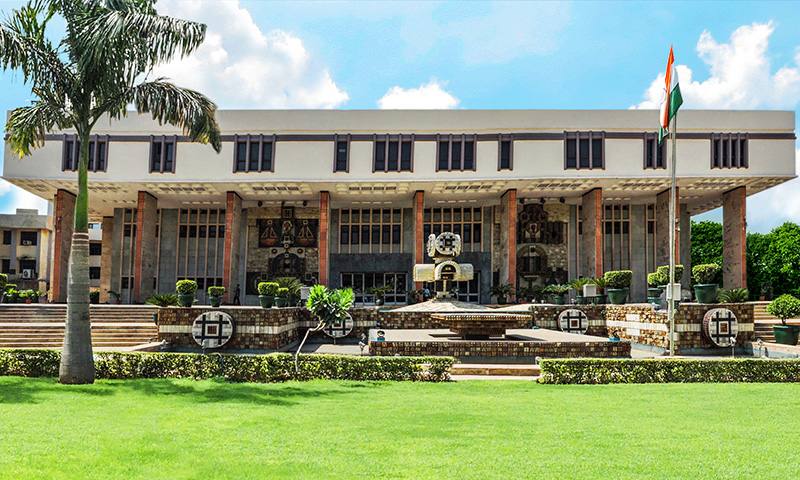
A Bench of Justices Joymalya Bagchi and V Mohana on Monday asked the Centre, states and Union Territories for updated reports after the government conceded little progress since the court's September direction to set up exclusive courts for speedy NDPS and NIA trials.
Published 2026-11-16 · Awaaz Punjab
Congress president Mallikarjun Kharge chaired a strategy meeting with senior Uttar Pradesh leaders in New Delhi on Monday, November 16, where the party decided to launch an intensive campaign in the first week of December for the 2027 Assembly elections. The INDIA alliance holds its first meeting on Tuesday, with Congress–Samajwadi Party seat-sharing still undecided.
Published 2026-11-16 · Awaaz Punjab
OPINION POLL — not an election result: SCORE Intelligence's second-round Punjab opinion poll, conducted from October 15 to November 13 among 28,186 respondents, projects the Aam Aadmi Party (AAP) winning 66–79 of Punjab's 117 Assembly seats in 2027, above the majority mark of 59, with Congress at 12–29 seats, the BJP at 4–12, the Shiromani Akali Dal (SAD) at 5–9 and Waris Punjab De at 0–4. AAP's projected vote share has slipped from 38% in the first round to 35%, Bhagwant Mann still leads the chief minister preference at 37.1%, and drugs have risen as voters' top concern, named by 29.9% of respondents.
Published 2026-11-16 · Awaaz Punjab
A Supreme Court bench of Justices Joymalya Bagchi and V Mohana on Monday asked the Centre, states and Union territories to file fresh status reports on setting up exclusive special courts for NDPS and NIA Act cases, after the Centre's counsel conceded that not much progress had been made since the court's September 7 direction. Of the 449 exclusive NDPS courts identified as necessary, only 176 are operational.
Published 2026-11-16 · Awaaz Punjab
Police say the attack happened at about 6:40 p.m. Sunday outside 2268 Webster Avenue in Belmont. The man died at St. Barnabas Hospital, the woman is in stable condition, and no arrests have been announced.
Published 2026-11-16 · Awaaz Punjab
The Gathering of Sudan Liberation Forces said Lt. Gen. Ahmed Abdallah Bishr Kater died on Saturday from injuries sustained when his home in Nyala was struck on October 19 — an attack the group blames on a Sudanese army drone, a claim the army has not commented on and which has not been independently verified.
Published 2026-11-16 · Awaaz Punjab
A tanker transiting outbound through the Strait of Hormuz was struck by an unknown projectile at 05:58 GMT on Monday, UKMTO said, sparking an engine-room fire with no casualties. Iran's navy separately claimed a tanker hit a mine east of the strait — it is uncertain whether the two accounts describe the same vessel.
Published 2026-11-16 · Awaaz Punjab
Justices Prashant Kumar Mishra and Shree Chandrashekhar allowed the NIA's transfer petitions in Union of India v. Arif Nisar @ Sahil, holding that the cases allegedly linked to the 'doctor module' conspiracy will be tried together at Patiala House. This follows the November 14 Delhi hearing where two accused denied the charges.
Published 2026-11-16 · Awaaz Punjab
A bench of Justices JB Pardiwala and K Vinod Chandran sought notes from NBCC, receiver R Venkataramani, the ED and NOIDA authorities before the December 7 hearing; only Rs 744.81 crore of Rs 5,619.47 crore allegedly diverted has been recovered so far.
Published 2026-11-16 · Awaaz Punjab
The Maharashtra Food and Drug Administration seized nutraceutical products worth Rs 1,38,95,852 from 17 establishments in a simultaneous statewide operation on November 13, after finding health supplements made with two ingredients whose approval applications had been rejected by the FSSAI.
Published 2026-11-16 · Awaaz Punjab
Three teenage boys are feared to have drowned in a stretch of the Punpun river in Patna's Mirzapur village on Sunday while helping prepare a Chhath ghat that police say was not an officially designated site, with NDRF and SDRF teams joining the search.
Published 2026-11-16 · Awaaz Punjab
Ukrainian drones struck the Russian city of Azov in Rostov region overnight on November 16, starting fires at four industrial facilities and reportedly setting an oil depot ablaze, regional governor Yuri Slyusar said. Three men were injured, and falling drone debris damaged three houses and a gas pipeline in a nearby village.
Published 2026-11-16 · Awaaz Punjab
A GMC Envoy crossed into oncoming lanes on FM 1960 Road East at about 2:10 a.m. on Sunday, November 15, hitting a Toyota carrying two adults and two children head-on; a second crash followed, seven people were hospitalized in total, the Envoy driver was charged with intoxication assault and aggravated assault, and investigators are also probing shots fired into the wrecked Toyota, the Harris County Sheriff's Office says.
Published 2026-11-16 · Awaaz Punjab
Martine Moise, whose husband President Jovenel Moise was assassinated in 2021, has registered as a candidate for Haiti's first presidential election since 2016 — one of three women among 33 registered candidates, with a first round set for July 2027.
Published 2026-11-16 · Awaaz Punjab
EU foreign policy chief Kaja Kallas told foreign ministers in Brussels on Monday that Europe must see a Russian ceasefire and clear concessions from Moscow before serious peace talks — and accused Russia of reviving its 2021 demands as a pretext to keep the war going.
Published 2026-11-16 · Awaaz Punjab
Published 2026-11-16 · Awaaz Punjab
Published 2026-11-16 · Awaaz Punjab
Published 2026-11-16 · Awaaz Punjab
Published 2026-11-16 · Awaaz Punjab
Published 2026-11-16 · Awaaz Punjab
Published 2026-11-15 · Awaaz Punjab
Published 2026-11-16 · Awaaz Punjab
Published 2026-11-16 · Awaaz Punjab
Published 2026-11-16 · Awaaz Punjab
Published 2026-11-16 · Awaaz Punjab
Published 2026-11-16 · Awaaz Punjab
Published 2026-11-16 · Awaaz Punjab
Published 2026-11-16 · Awaaz Punjab
Published 2026-11-16 · Awaaz Punjab
Published 2026-11-16 · Awaaz Punjab
Published 2026-11-16 · Awaaz Punjab
Published 2026-11-16 · Awaaz Punjab
Published 2026-11-16 · Awaaz Punjab
Published 2026-11-16 · Awaaz Punjab
Published 2026-11-16 · Awaaz Punjab
Published 2026-11-16 · Awaaz Punjab
Published 2026-11-16 · Awaaz Punjab
Published 2026-11-16 · Awaaz Punjab
Published 2026-11-16 · Awaaz Punjab
Published 2026-10-22 · Awaaz Punjab
Published 2026-10-19 · Awaaz Punjab
Published 2026-10-18 · Awaaz Punjab
Published 2026-10-18 · Awaaz Punjab
Published 2026-10-18 · Awaaz Punjab
Published 2026-10-18 · Awaaz Punjab
Original Reporting — Only on Awaaz Punjab
Some of what we publish exists nowhere else: our numbered Awaaz Punjab Jaanch Reports are original, document-based investigations, and our Punjab Election 2027 hub tracks all nine parties and all 117 MLAs with their official 2022 affidavit data, a promise-by-promise Vaada Tracker and reader polls — a permanent public archive built from primary records.
More from Awaaz Punjab
Our Editorial Standards
How we work: every story is checked against at least two independent, reputable sources before publication; allegations are labelled as allegations; figures carry the name of the outlet or agency that reported them and the date; corrections are published openly. Read our full verification method on the How We Verify page, our data desks on the School, Podcast and SUNO audio pages, and our numbered original investigations in the Investigations section.
Awaaz Punjab is an independent, trilingual newsroom — for Punjab, by Punjabis. We do not sell aggregated news; we publish investigations that stand on sources, with the outlet and date attached to every claim. Our first beat is Punjab's drug crisis, our second is Punjab politics. From Amritsar to Toronto — wherever a Punjabi lives, Awaaz Punjab reaches.