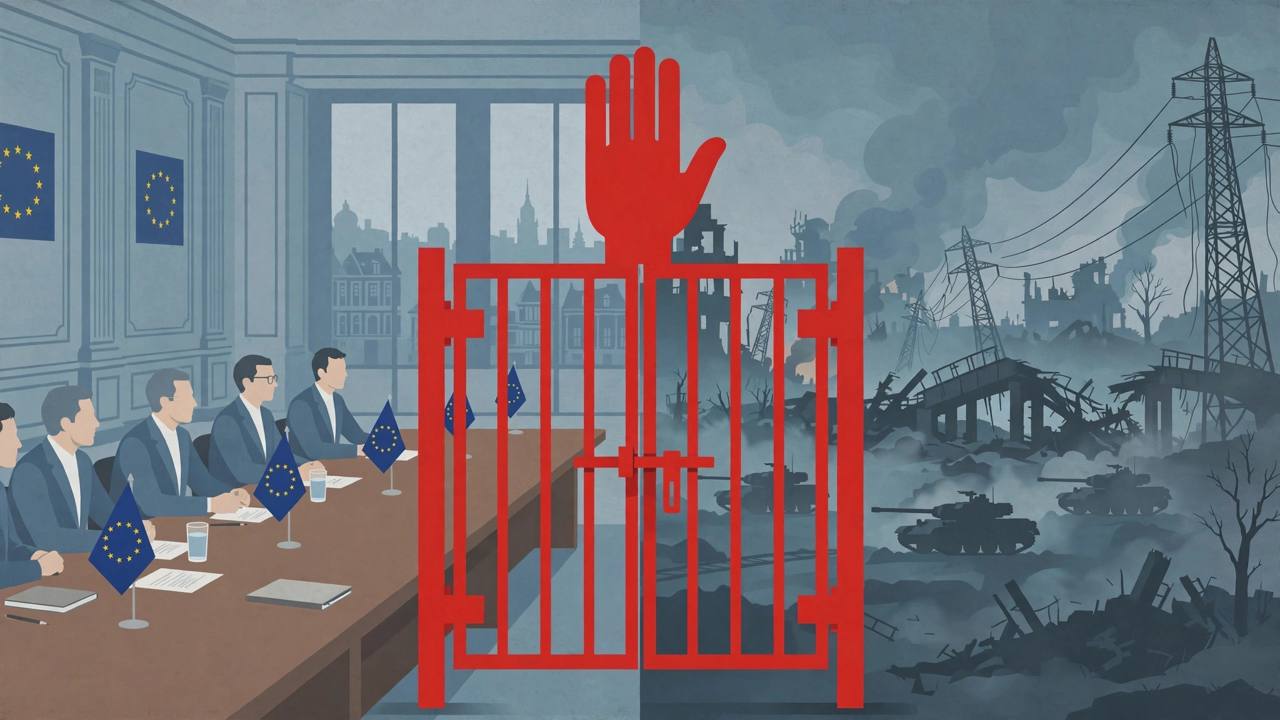
BRUSSELS — There must be a Russian ceasefire in Ukraine before any peace talks can take place, EU foreign policy chief Kaja Kallas said on Monday, ahead of a meeting of European Union foreign ministers in Brussels.
Source: Reuters via DevDiscourse, Nov 16, 2026
"We are wanting to see ceasefire, stop the killing of Ukrainians, stop attacking the civilian infrastructure," Kallas said. "[Then] we can then sit down and negotiate the peace agreement. Right now, what we need to see is ceasefire to actually start talks about anything else."
Kallas said Europe will also need to see concessions from Russia before serious talks can begin, and stressed that Europe must concentrate on the substance of any possible peace agreement and have a reply to Russia's "maximum demands", Reuters reported.
Source: Rapporteur, Nov 16, 2026
Russia 'presenting the same demands and adding to it'
Kallas called Russian demands for a peace deal "absurd" and said Moscow is not interested in peace. "Now they're presenting the same demands and adding to it. So this is also a clear pretext for keeping the war going," she said, referring to the demands Russia first presented in 2021, before its full-scale invasion of Ukraine in 2022.
She accused Russia of escalating its attacks while diplomacy is discussed: "We see that Russia is really escalating, attacking infrastructure when it comes to trains, when it comes to bridges, when it comes to energy to cause as much suffering for civilians so that Ukrainians would surrender, before this hard winter."
The Brussels meeting came on the same morning Ukraine struck the Kerch bridge linking Russia and Crimea, curbing traffic, according to Crimea's Russian-backed governor. Read the Crimean Bridge report
Dublin format agreed — now 'work on the substance'
Last week, at a summit in Dublin, EU leaders agreed a format to represent the bloc in future negotiations with Russia: the E5 group — Germany, France, Britain, Italy and Poland, Europe's main military powers — together with EU representatives will form the European delegation. Kallas, a former prime minister of Estonia, is not part of the proposed negotiation set-up, but she rejected suggestions that this was implicit criticism of her work. "Friday, the leaders decided on the format, but we need to work on the substance," she said, adding that the Americans say Europeans will be included in the next round of talks, which is why the format was agreed.
Polish foreign minister Radoslaw Sikorski said on Monday: "Poland will represent the whole of our region, the whole eastern flank."
Kallas also dismissed Russian calls for a new European security structure — "let's not blur the picture" — saying a security architecture already exists in the Helsinki and Budapest agreements Russia signed. "The problem is that Russia is not keeping to this agreement. That's why we need to see clear concessions from the Russian side that they would keep to this," she said.
113 new sanctions listings, and a funding gap ahead
At the same Brussels meeting, Ireland's foreign minister Helen McEntee said the EU will agree 113 new sanctions listings targeting Russia, ahead of further discussions this week on a broader 22nd sanctions package, according to reports from the meeting. Ministers were also assessing Ukraine's financial and humanitarian needs as Russia continues to attack the country's energy and water infrastructure.
On Wednesday, the European Commission is expected to propose how to tackle Ukraine's 70 billion euro funding gap for next year — yaani about 70 arab euro — and on Thursday the so-called Coalition of the Willing, a group of some 36 countries led by the UK, France, Germany, Italy and Poland, will meet in Berlin to discuss a possible peacekeeping or peace-enforcement mission if a ceasefire takes effect, the same reports said. What happens next depends on whether Moscow offers any ceasefire at all: on Kallas's terms, no ceasefire means no serious talks.