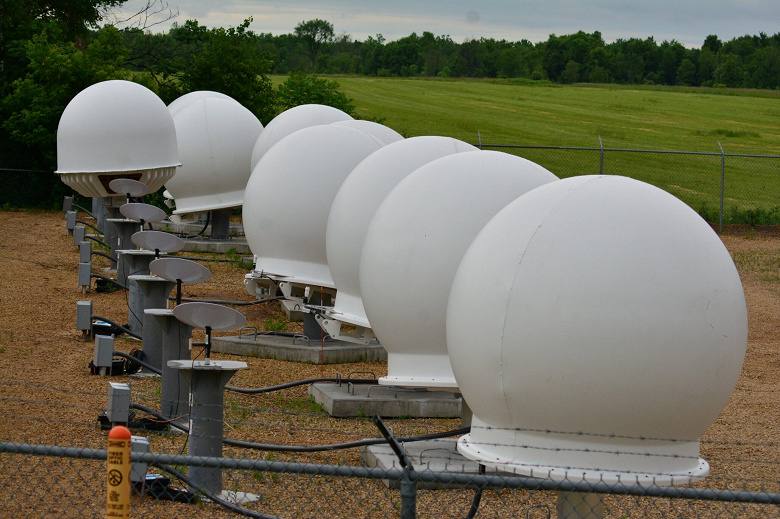
Four European Union countries — Poland, Germany, Lithuania and Bulgaria — are planning a joint investigation into a series of arson attacks on Starlink satellite communications infrastructure in eastern Europe, Polish radio RMF24 reported on Monday.
Prosecutors from the four countries are scheduled to meet in early December to coordinate the investigation and set out a joint strategy, according to Espreso.tv.
Three separate attacks have struck Starlink ground facilities in the past four months — in Poland on 23 September, in Bulgaria on 9 October and in Lithuania on 18 October.
The three attacks
In Poland, a fire hit a Starlink ground station in the village of Wola Krobowska, about 50 kilometres south of Warsaw, on 23 September. The fire destroyed the facility's power distribution panel and damaged its backup generator. Polish prosecutors opened an investigation into sabotage and activity on behalf of a foreign intelligence service. Prime Minister Donald Tusk described the attack as hybrid warfare and blamed Russia.
In Bulgaria, two masked people crossed from Serbia into Bulgaria on 9 October and set fire to antennas at the Plana Teleport facility near Sofia at about 10:25 p.m. local time. Three antennas were completely destroyed and two more were partly damaged. The attack was not publicly disclosed until 12 October, and Bulgarian prosecutors have charged two German nationals in absentia.
In Lithuania, a Molotov cocktail attack struck Starlink equipment at Aukštieji Paneriai on the edge of Vilnius at about 2 a.m. on 18 October. Lithuania's government blamed Russia-linked sabotage, and terrorism charges were filed. Two suspects in their early twenties, living in Germany, were arrested in the German city of Duisburg on 23 October, and five others were detained across Germany and Poland.
Poland's special services minister, Tomasz Siemoniak, said: "We have no doubt that Russian intelligence services are behind this act of sabotage." That claim has not been independently verified, and no Russian response to the joint-probe announcement was reported.
Why Starlink matters
Starlink's ground stations link the satellite constellation to the internet backbone, and Ukraine's military depends on Starlink and its Starshield service for battlefield communications. Destroying a ground station is not the same as destroying a satellite, but it can cut connectivity across Central and Eastern Europe — including the services Ukraine relies on.
Investigations by Der Spiegel and Die Welt have linked the recruits behind the attacks to the Daltons, a Turkish-Kurdish gang whose leader is reportedly living in a Russian government safe house, according to those reports.
What happens next: prosecutors from the four countries meet in early December, and investigators will try to establish whether the three attacks were the work of a single coordinated network. Starlink is operated by SpaceX.