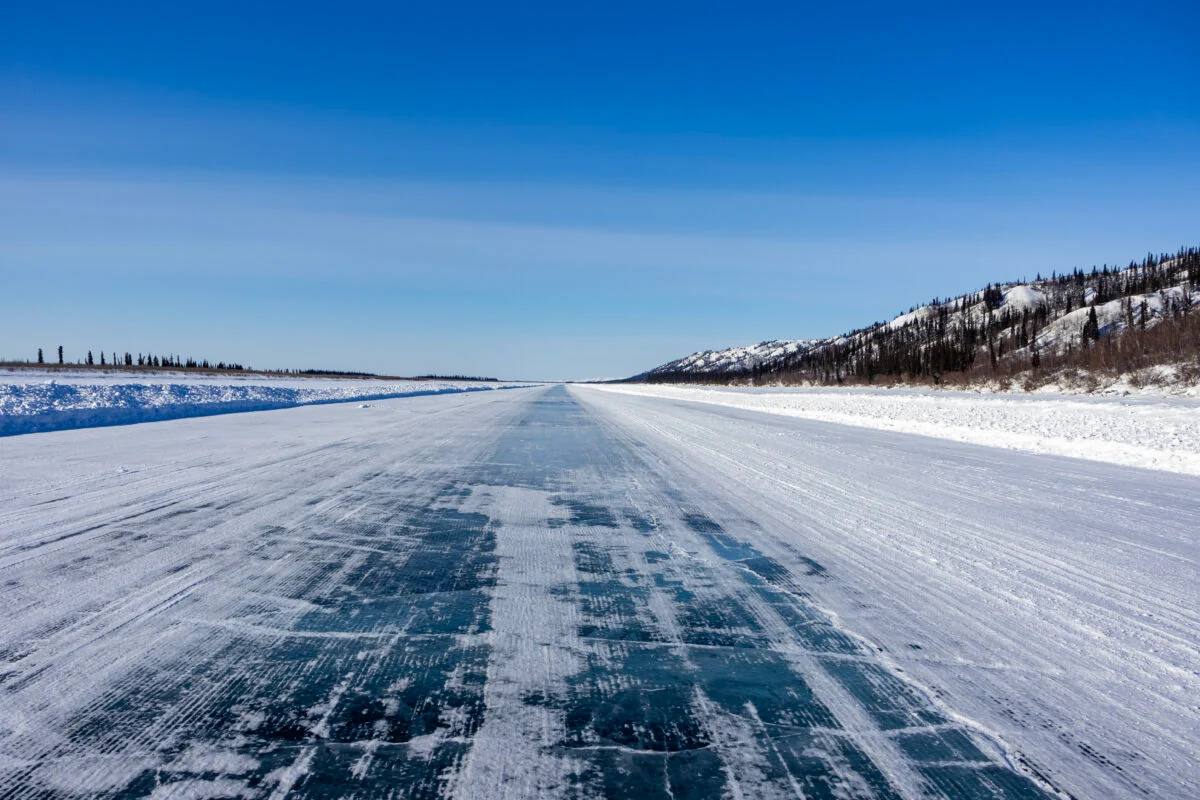
Prime Minister Mark Carney on Friday announced that the Mackenzie Valley Highway is now listed as a project of national interest under the Building Canada Act — the first project in Canada's North to receive the designation.
Source: Prime Minister of Canada
The proposed 800-kilometre all-season gravel highway will run the length of the Mackenzie Valley, linking Highway 1 at Wrigley to the Dempster Highway south of Inuvik, passing near Tulita, Norman Wells and Fort Good Hope. It will give year-round road access for the first time to about 2,000 people in those three communities, and improve access for more than 10,000 people across the region.
Source: Prime Minister of Canada
Fully funded — after decades of stalling
The federal government is committing to fully fund the highway's construction and certain maintenance costs. Budget 2026 earmarked $3.1 billion through 2031 for the project, on top of $405 million announced in September through the Arctic Infrastructure Fund. The full construction cost is currently estimated at $4.2 billion — a figure that does not include new bridges over the Great Bear, Liard and Mackenzie rivers, nor ongoing maintenance, which remains under negotiation.
Source: CBC News
"For decades, funding for different proposals of this highway came incrementally, stalling progress," Carney said at the announcement in Yellowknife. "Budget 2026 changes that by committing to fully fund the construction of the Mackenzie Valley Highway."
Source: Global News
Ottawa will also create a new Crown corporation to manage major projects including the highway. Budget 2026 set aside $187 million over five years, and $24.2 million a year after that, for the new entity.
Source: CBC News
A second Arctic road
Carney also announced more than $120 million — yaani 12 crore dollar — from the Arctic Infrastructure Fund to advance the Arctic Economic and Security Corridor. Led by the Tłı̨chǫ Government and the Yellowknives Dene First Nation, in partnership with the Government of the Northwest Territories, the project would build an all-season road from Yellowknife to the Nunavut border, with route selection, environmental studies, engineering and regulatory work to make it shovel-ready by 2029. Once connected to the Grays Bay Road and Port, the corridor would provide access to a deepwater port on the Arctic Ocean, unlock access to critical minerals and strengthen Canada's Arctic security.
Source: Prime Minister of Canada
The highway is being built in partnership with the people of the North. On November 25, Sahtu Secretariat Incorporated, the Gwich'in Tribal Council, Pehdzéh Kı̨́ First Nation, the Government of the Northwest Territories and the Government of Canada signed a Leadership Governance Understanding for the project.
Source: Prime Minister of Canada
The project still needs to go through treaty-based assessment and environmental review by the Mackenzie Valley Environmental Impact Review Board. If the review is completed and the project approved, construction could begin in late 2027.
Source: CBC News
The announcements build on the government's March 2026 plan to defend, build and transform the North, which includes more than $35 billion in federal investments — yaani 35 arab dollar — and major projects representing around $10 billion in investment. The Mackenzie Valley Highway is the third project listed as being of national interest under the Building Canada Act, after southern designations including the Pacific Link pipeline and the Port of Vancouver expansion.
Source: Prime Minister of Canada
What is solid
- The Mackenzie Valley Highway was listed as a project of national interest on November 27
- Budget 2026 earmarked $3.1 billion through 2031 for the highway
- More than $120 million was announced for the Arctic Economic and Security Corridor
What is only claimed
- The final cost — the $4.2-billion estimate excludes the river bridges, and the maintenance share is still under negotiation
For northern communities that today rely on winter ice roads and air freight, an all-season road would cut travel times and the cost of bringing in food and fuel — and give Canada a year-round land link to its Arctic coast.