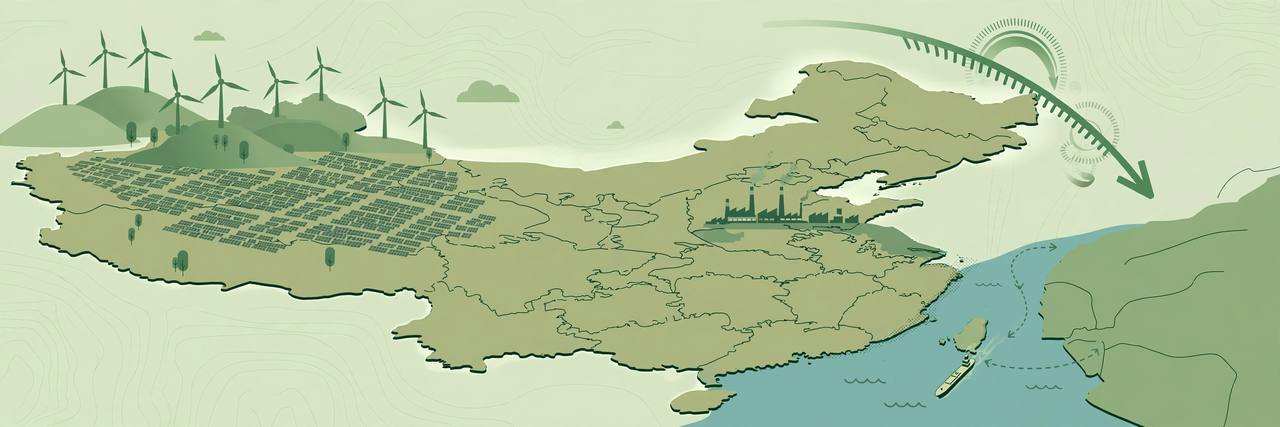
China's carbon dioxide emissions fell 3.1 per cent in the third quarter of 2026 from a year earlier - the biggest quarterly drop since the Covid pandemic - as the Middle East war and the disruption of shipping through the Strait of Hormuz cut the world's biggest emitter's use of oil and coal, according to an analysis published on Friday by the Helsinki-based Centre for Research on Energy and Clean Air (CREA) for Carbon Brief.
Source: Reuters, Nov 6, 2026 (CREA analysis for Carbon Brief)
The fall covered emissions from energy and industry, including cement. China's oil use dropped 4 per cent in the July-to-September quarter as the Hormuz crisis curbed energy shipments to the world's largest crude importer, and oil consumption for transport fell even more sharply, by 9 per cent, CREA found. Coal use also fell - by 3 per cent overall, with coal-fired power generation down 3.3 per cent - as demand growth slowed, mild weather helped, and less wind and solar power was wasted.
Source: Carbon Brief / CREA analysis, Nov 6, 2026
A trend that began before the war - and a shock that sped it up
The quarter extends a pattern that predates this year's war: CREA says China's emissions have been flat or falling since March 2024, a run now lasting more than two years, and the 0.5 per cent fall across the first three quarters of 2026 means the decline could hold for the full year. Clean power did much of the work in the third quarter - electricity generation from solar, wind and nuclear rose by a combined 110 terawatt-hours from a year earlier.
Source: Carbon Brief / CREA analysis, Nov 6, 2026
CREA's lead analyst Lauri Myllyvirta cautioned that oil consumption would likely rebound if prices come down, but said China's oil use had probably already peaked before the shock - the Hormuz crisis, in his assessment, accelerated a shift towards electrification and away from oil that was already under way, including the continued gain in electric-vehicle share. Separately, CREA estimated China saved $9.1 billion on oil and gas imports between March and August by drawing on its large crude inventories and alternative energy as the Iran war pushed oil above $100 a barrel - yaani about 9.1 arab dollars (roughly $9,100 million) of import bills avoided in six months.
Source: Reuters, Nov 6, 2026; OilPrice (CREA estimates), Nov 6, 2026
What is solid
- CREA's analysis for Carbon Brief, reported by Reuters and AFP on Friday, puts China's Q3 CO2 emissions down 3.1% year on year, the biggest quarterly drop since the pandemic
- Oil use fell 4% and transport oil use 9% in the quarter; coal use fell about 3% and emissions are down 0.5% for the first nine months of 2026
- The figures are an analysis of official statistics and commercial data, not a Chinese government emissions release
What is only claimed
- Whether the fall is a lasting structural turn or a war-driven dip: CREA's own lead analyst says oil use may rebound if prices fall, while judging that Chinese oil demand probably peaked before the shock
- Agencies phrase the record slightly differently - Reuters calls it the biggest drop since the pandemic, Carbon Brief specifies since the 2022 Covid lockdowns
China is the world's biggest carbon emitter and its biggest crude importer, so a Hormuz-driven cut in its fuel use is one of the clearest measures yet of how the Middle East war is reshaping global energy demand. If the flat-or-falling emissions trend that began in March 2024 holds for the full year, 2026 would mark another year without emissions growth from the country that has driven global increases for two decades - achieved, this time, partly by a war closing the world's most important oil chokepoint rather than by climate policy alone.