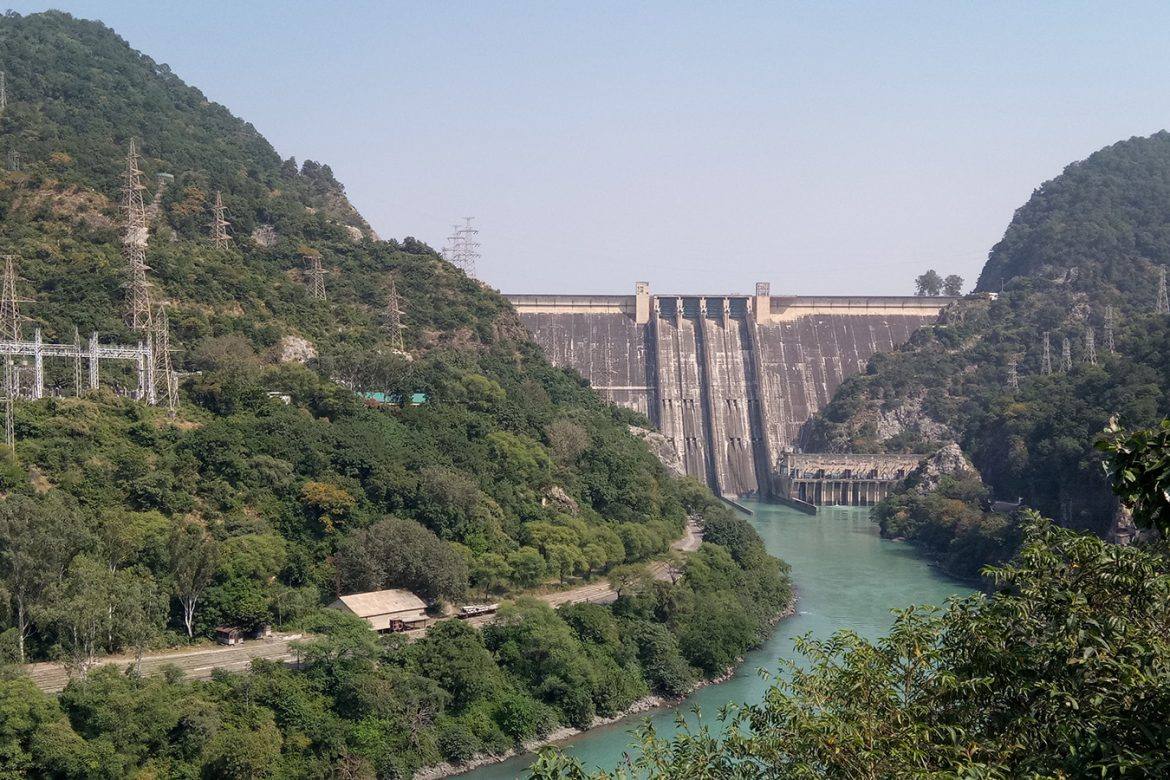
New Delhi, November 6: The Supreme Court on Friday directed Punjab and Haryana to supply approximately 11,973 million units (MU) of electricity to Himachal Pradesh over a period of 20 years, bringing to a close a decades-long dispute over the sharing of power generated from the Bhakra-Nangal and Beas hydroelectric projects. A bench of Chief Justice of India Surya Kant and Justices Joymalya Bagchi and V. Mohana accepted the Centre's cashless proposal for payment of the dues in energy terms rather than in money, Live Law reported.
Source: Live Law
Under the directions, the two states will supply the arrears at the rate of approximately 598 million units per year during the lean seasons — October to March, when river flows and generation are at their lowest. Himachal Pradesh's liability towards its 7.19 per cent share of the capital cost of the projects, assessed at Rs 420.77 crore, will be adjusted against the energy arrears: the electricity will be valued at Rs 3.85 per unit for this purpose, resulting in an adjustment of approximately 1,093 million units. Himachal will pay the charges determined by the Bhakra Beas Management Board (BBMB) for the year in which each tranche of electricity is received.
Source: Live Law
A dispute running since 1966
The case began as a suit filed by Himachal Pradesh in 1996 under Article 131 of the Constitution, seeking its share in the electricity generated from the two hydroelectric projects run by the BBMB. In its 2011 judgment, the Supreme Court declared Himachal Pradesh entitled to 7.19 per cent of the power attributable to the erstwhile composite state of Punjab; the 2011 decision fixed the shares of Punjab at 51.80 per cent, Haryana at 37.51 per cent and Chandigarh at 3.50 per cent, with Himachal's share applying to the Bhakra project from November 1, 1966, the Dehar project from November 1977 and the Pong Dam project from January 1978. The implementation of that decree, however, led to fresh disputes over the quantum of arrears, the applicable tariff and the states' capital-cost liabilities, and the case kept returning to court.
Source: The Hindu via DomainFork
The Union of India had computed Himachal Pradesh's total energy arrears at 13,066 million units for the period from November 1, 1966 until October 2011, and proposed that the arrears be supplied in kind over 15 years, with the capital-cost liability adjusted against the energy entitlement. Punjab disputed the computation, contending that the arrears should be reduced after accounting for the additional power supplied to Himachal Pradesh and that the capital-cost liability should be calculated differently; Haryana also raised objections on the quantum of its liability. According to The Hindu, Punjab initially opposed the Centre's 15-year proposal and later sought implementation over 30 years, while Himachal Pradesh sought implementation within 10 years.
Source: Live Law
Court rejects Punjab's objections, stretches the period to 20 years
The Supreme Court rejected Punjab's objections, observing that they were 'vague and superficial' and amounted to an attempt to relitigate issues already settled by the Court's 2011 decree. 'It is particularly unfortunate that a dispute which has remained pending for several decades continues to be prolonged, requiring further judicial time and attention,' the Court remarked. While the Union of India had proposed a 15-year period for supplying the arrears, the Court extended it to 20 years to ease the burden on Punjab and Haryana and to bring the longstanding dispute to a close.
Source: Live Law
Emphasising the binding nature of its directions, the Court stated: 'The directions issued by this Court are binding and are required to be acted upon without reservation. The expectation of decree, having remained pending for several decades, cannot be rendered fruitless by reason of the unwillingness or recalcitrance of a Judgment Debtor.' The suit was accordingly disposed of, The New Indian Express also reported.
Source: Live Law
Sukhu claims Rs 500-1,000 crore a year for Himachal
Reacting to the verdict at Mehla in Chamba, Himachal Pradesh Chief Minister Sukhvinder Singh Sukhu described it as favourable for his state and a victory for its people. Sukhu said Himachal Pradesh would receive 55 crore units of electricity, which the BBMB would have to provide over the next 20 years; if the electricity is sold at Rs 6 per unit, the state could earn around Rs 500 crore annually, and if power purchase agreements are signed with other states at Rs 15.50 per unit, on the lines of Rajasthan, the annual revenue could reach approximately Rs 1,000 crore — these are the Chief Minister's stated estimates, reported by The North News. Sukhu cited the Wildflower Hall, JSW and Kishau Dam matters as other cases in which his government had pursued the state's claims, and said the issues of water cess and Himachal Pradesh's rights in Chandigarh were still pending.
Source: The North News
What happens next: the BBMB will now have to schedule the supply of roughly 598 million units a year to Himachal Pradesh during each October-to-March lean season for the next 20 years, taken from the shares of Punjab and Haryana — a real reduction in the power available to Punjab in the winter months, when the state already leans on outside purchases. No reaction from the Punjab government to the verdict had been reported by the time of publishing; this story will be updated if the state government responds.