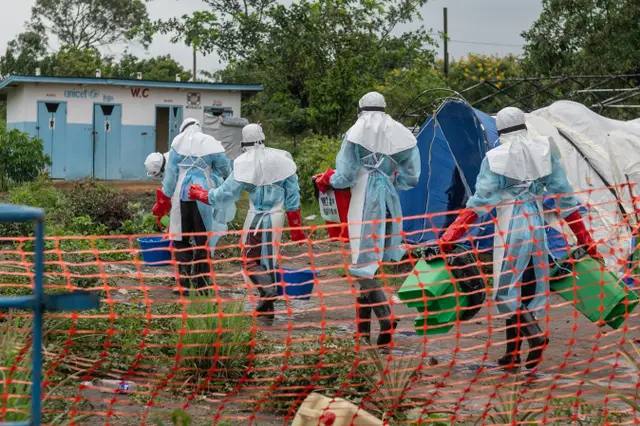
The Ebola outbreak in the Democratic Republic of Congo has passed 12,000 confirmed cases, government data showed on Thursday, as fighting between the army and rebels disrupts efforts to contain the disease.
The figures, reported by Reuters and The Associated Press from Congo's Ministry of Health data, make it the fastest-growing Ebola outbreak in history and the deadliest of Congo's 17 outbreaks. It is the second-largest Ebola outbreak ever recorded, behind only the 2014–2016 West African epidemic, which killed more than 11,000 people — a toll this outbreak is on track to pass.
The outbreak, declared in mid-May in Ituri province in the country's northeast, is caused by the rare Bundibugyo virus, for which there is no approved vaccine or treatment.
Fighting blocks the response
Fighting between the army and rebels earlier this week prevented response teams from reaching some communities, disrupted monitoring of people exposed to the virus and left some treatment centres short of staff, Dr Catherine Smallwood, the World Health Organization's Ebola incident manager, said on Wednesday.
About a dozen people, including two WHO personnel and Congolese health officials, were evacuated to Bunia on Tuesday after spending three full days trapped in a hospital in Akwe, northeast of the provincial capital, amid intense crossfire, Smallwood said.
The WHO said earlier this week that heavy fighting near a hospital in Ituri province had disrupted the Ebola response and its team had been temporarily moved from the Mongbwalu area until the situation calms. On November 18, the WHO said the outbreak remains a public health emergency of international concern.
Spread across eight provinces
The virus has spread to eight of Congo's 26 provinces. Ituri remains the hardest-hit area: the WHO said the province had recorded 7,946 cases and 3,751 deaths as of November 17.
The latest totals are up sharply from November 16, when Congo's public health institute reported 11,376 cases and 5,568 deaths — 645 more cases and 336 more deaths in 10 days.
The virus has also crossed Congo's borders. Kenya has reported nine confirmed cases and two deaths, and Nigeria has reported one imported case, according to the WHO.
The WHO has recommended two new Bundibugyo vaccine candidates for testing, including one developed by the Serum Institute of India and the University of Oxford. Gavi, the vaccine alliance, has secured up to 1.5 million doses of an experimental Ebola vaccine for Congo.
On November 18, the WHO kept the outbreak a global emergency as cases passed 11,376 with 5,568 deaths. Read the earlier report
What happens next: the WHO and Africa CDC have unveiled an updated Bundibugyo preparedness and response plan running from November 2026 to May 2027, while response teams try to reach cut-off communities once the fighting eases.