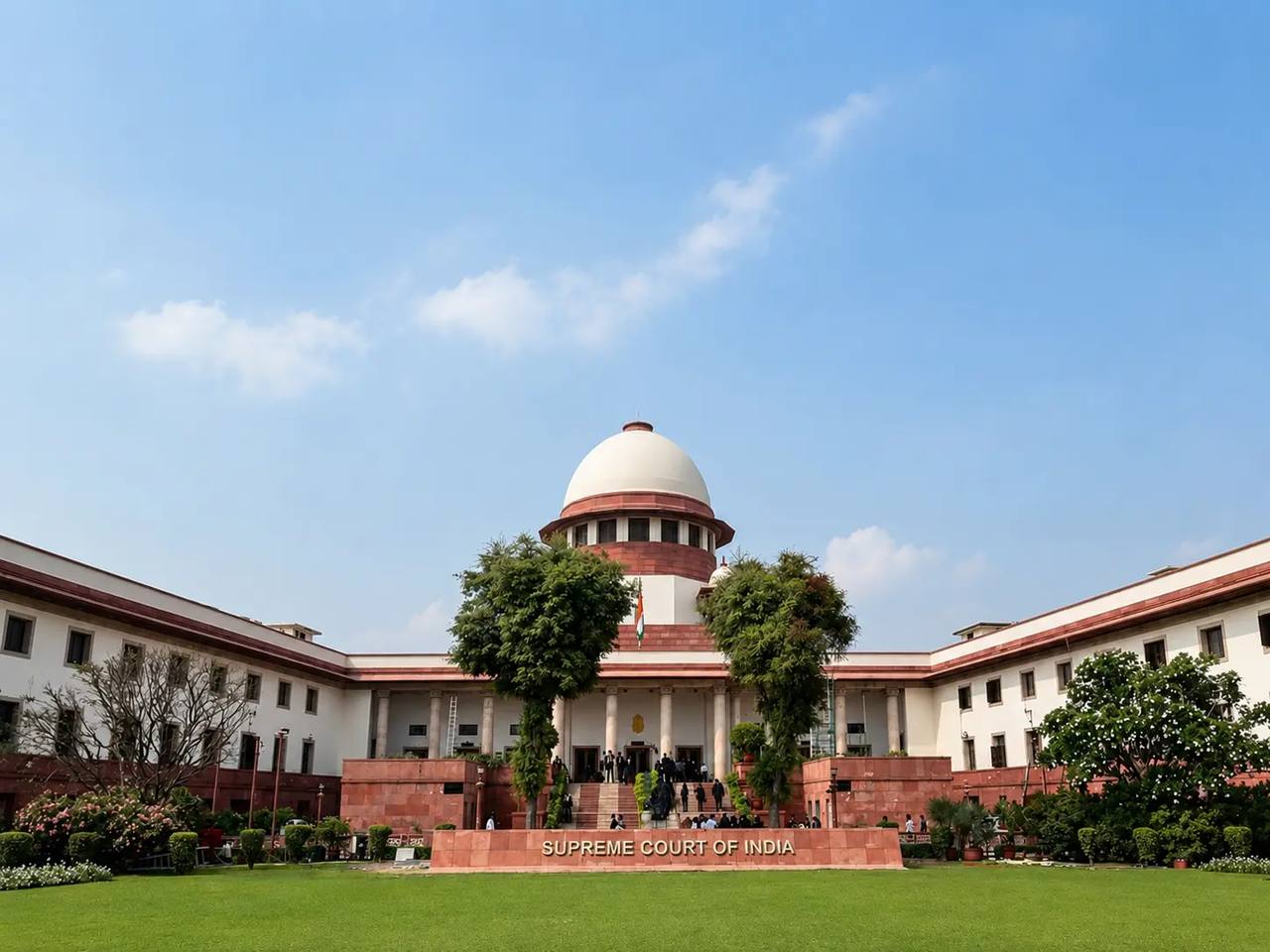
The Supreme Court on Thursday agreed to examine a plea seeking uniform guidelines and a standard operating procedure (SOP) to govern public protests and demonstrations, issuing notice to the Centre and to leaders of the CJP, including Abhijeet Dipke, Saurav Das and Ashutosh Ranka.
A bench comprising Chief Justice Surya Kant and Justices Joymalya Bagchi and V Mohana issued the notice on the plea filed by the lawyers' body Lawyers Voice. Senior advocate Mahesh Jethmalani appeared for the petitioners.
What the plea asks for
The plea asks the court to direct the authorities to review, modify, formulate and implement an SOP for dealing with public protests held in violation of applicable law, lawful restrictions or valid directions of the competent authorities, so that coordinated action is taken in time and normal public life is ensured.
It argues that while dissent is part of democracy, protests must stay within legal bounds and must not paralyse the capital or disrupt the livelihoods of lawyers, among others.
The protests the plea cites
The petition refers to the protests organised by the CJP during July and October 2026. It says the Delhi Police, by way of a "one-time exemption", permitted the CJP to hold a dharna at Jantar Mantar on June 6, 2026, strictly between 10 am and 5 pm, on the strength of an undertaking furnished by its organisers.
Permission was sought and granted again for a single day on June 20, 2026, confined to the same hours, but the demonstration was not discontinued when the permitted hours expired, the plea says. No extension was ever granted, it adds, and the organisers unilaterally announced an indefinite sit-in, which is reported to have continued until July 25, 2026 — a period of about 35 days — during which a march towards Parliament was also undertaken on July 20, 2026, without the permission of the authorities.
The plea further says a letter was received on October 7 from Das seeking permission for a protest at Jantar Mantar on October 10, with the organisers indicating that thousands of persons were expected to participate. The Delhi Police refused permission on October 9, the plea says, on the ground that the intimation had been furnished merely three days before the proposed event, as against the 10 days prescribed, and that the organisers had previously failed to adhere to lawful directions and to their own undertakings. About 1,500 persons had to be detained by the forenoon of October 10 to prevent a breach of public order, the plea says, while other media reports put the number detained higher.
The wider case before the court
The plea comes as the Supreme Court continues to hear a cluster of cases arising from the Delhi protests, including pleas by traders' associations over losses and disruption caused by demonstrations. Earlier this month, the court observed that the right to protest must be balanced with the rights of other citizens, and that no group can occupy a designated demonstration site indefinitely.
The court had earlier issued notices on a plea by Delhi traders' associations against the protests. Read the earlier story
The Centre and the CJP leaders named in the notice will now have to respond to the plea. The reports do not mention the next date of hearing.
Source: The Hindu