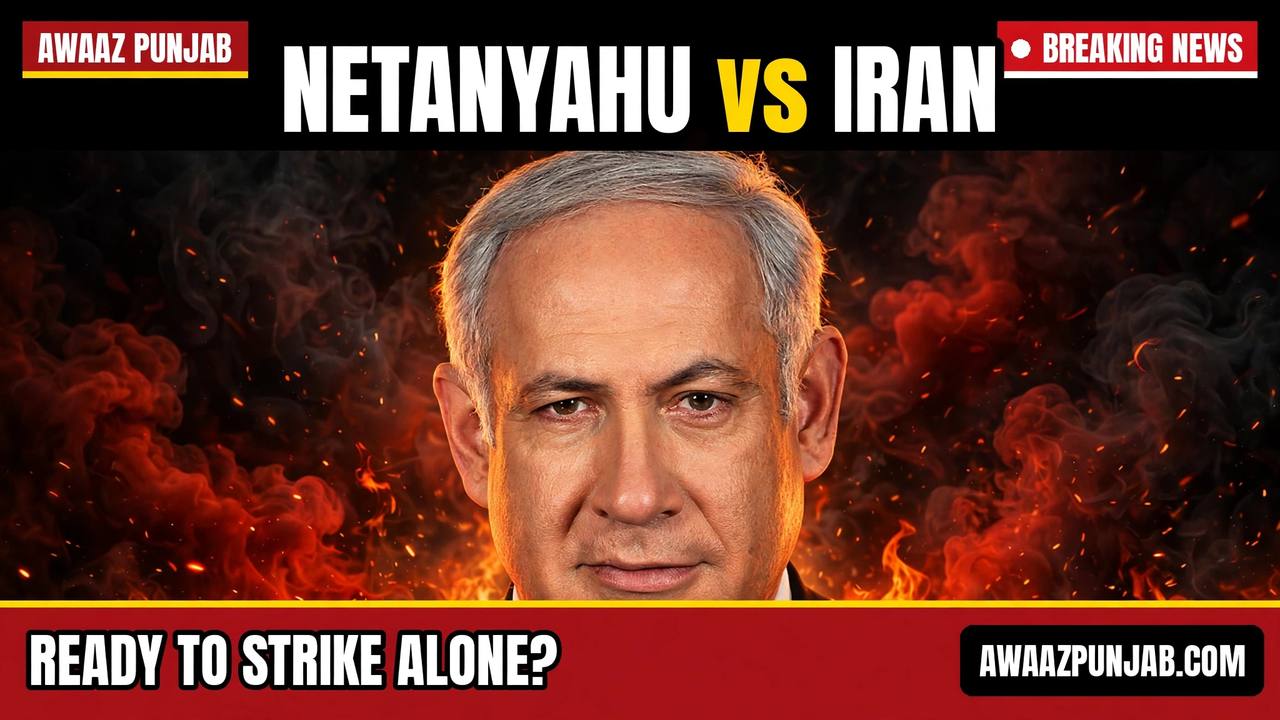
Israel is prepared to launch attacks on Iran "with force at any given moment, even independently, without the Americans", Israeli military spokesperson Brigadier General Effie Defrin said on Thursday morning — the bluntest public signal yet that Jerusalem could act alone if it chooses. The remarks were reported by Israeli public broadcaster Kan and carried by Middle East Eye.
Source: Middle East Eye
Defrin said Iran still poses a threat and that its "vision of destroying" Israel has not expired. He said the military was closely monitoring developments in Iran and was ready to strike with force at any moment.
Netanyahu calls security cabinet for Thursday evening
Prime Minister Benjamin Netanyahu is set to convene his security cabinet on Thursday evening, The Times of Israel reported, citing the office of a government minister, amid reports that Jerusalem and Washington are preparing for the possibility of renewed military action against Iran. On Wednesday evening, the security cabinet had already ordered the military to step up preparations for a possible attack, according to Kan, as reported by Al Jazeera.
Iran has warned that it would expand any new war beyond the region. Mohsen Rezaei, secretary of Iran's Supreme National Security Council, said in a social media post that if the United States launches another war against Iran, "every military base involved in the aggression, from West Asia to Europe, will be a legitimate target for Iran's lethal strikes."
Divisions inside Israel over timing
The push for early action is not unanimous inside Israel. Channel 13 reported that the Israeli military establishment sees no urgent need to attack Iran, an assessment presented to Netanyahu and to opposition leader Gadi Eisenkot during a briefing on Wednesday. Eisenkot — who has been asked to form the next government after Netanyahu's coalition lost its parliamentary majority in the October 27 election — has publicly warned the caretaker prime minister not to deploy the military "without a direct and immediate threat" until a new government is formed.
Washington, for its part, has signalled caution. US Central Command dismissed reports that the United States had directed Israel to prepare for a new round of confrontation as "mere speculation", Al Jazeera reported. US President Donald Trump has said he is "not rushing" into fresh strikes, and diplomatic efforts to avert a return to all-out war continue through mediators in Qatar.
Background: a war in its ninth month
The US-Israeli war on Iran began on February 28, 2026, and the Strait of Hormuz — through which about a fifth of the world's traded oil and natural gas passed before the war — has been effectively shut by Iranian attacks on shipping. Brent crude traded at $94.71 a barrel early on Thursday, after finishing Wednesday 3.5 percent higher, as markets priced in the risk of a new round of fighting. Iran's foreign minister Abbas Araghchi has said negotiators are in Qatar discussing a proposal that could reopen the strait within two days if Washington meets several conditions.
Read our earlier report on the Qatar talks and Iran's proposal to reopen the Strait of Hormuz. Read the earlier report
What happens next will be decided in the coming hours: tonight's security cabinet meeting in Jerusalem, whether Washington signs on to any new operation, and whether the Qatar channel produces a deal before the military option is used. For the lakhs of Punjabi and Indian workers living in the Gulf, any new round of strikes would mean fresh danger, disrupted flights and another shock to oil prices and remittances.