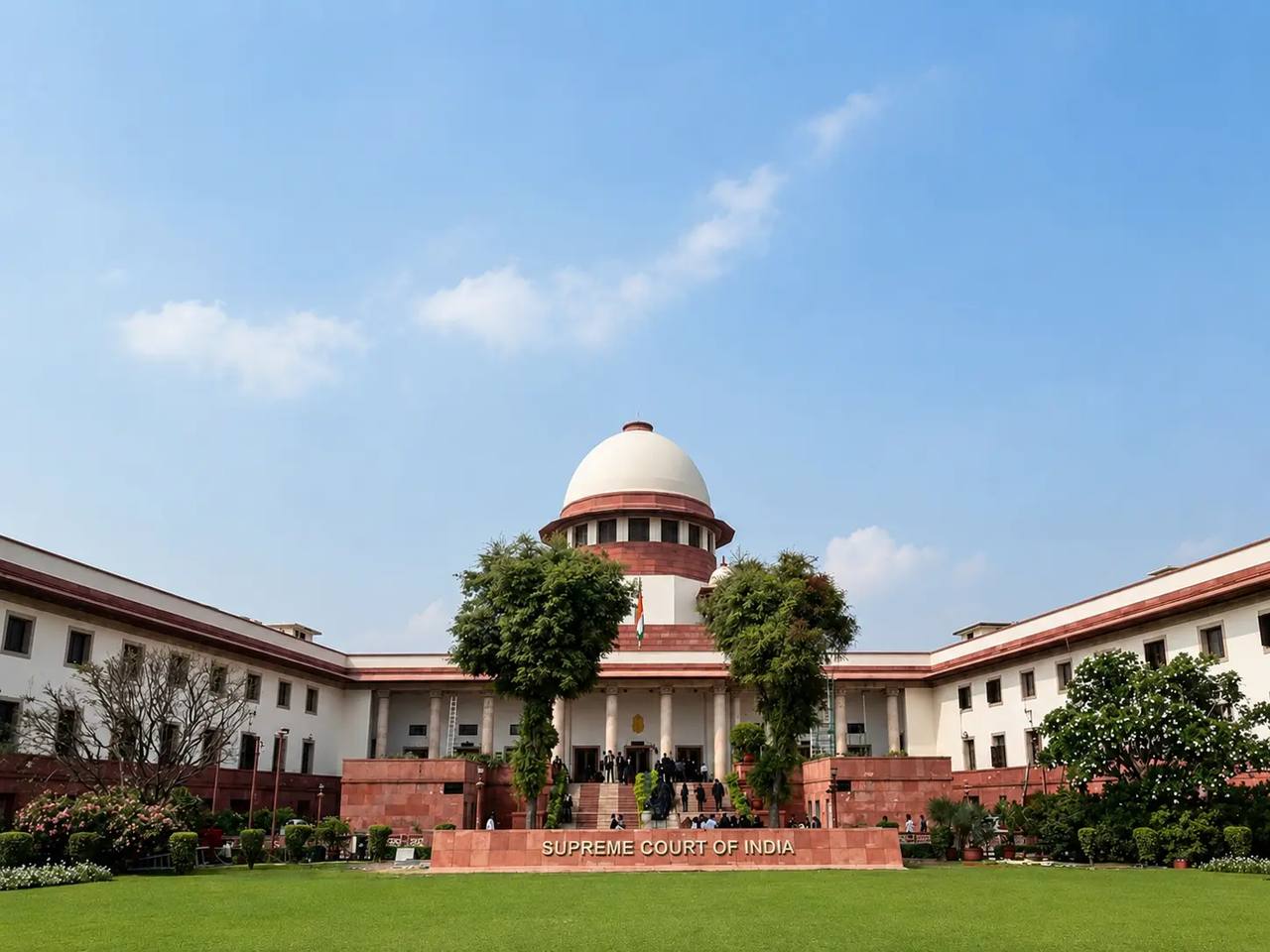
The Supreme Court on Thursday ruled that a bench of the Adjudicating Authority under the Prevention of Money Laundering Act (PMLA) must include a judicial member when it hears and finally decides whether an Enforcement Directorate (ED) attachment of property should be confirmed.
Source: LawChakra
A three-judge bench headed by Chief Justice of India Surya Kant, with Justices Joymalya Bagchi and V. Mohana, pronounced the judgment in Union of India v. J. Sekar, a batch of appeals from different High Court decisions. The bench had reserved its verdict in September.
The court drew a line between two stages of the process. Issuing a show-cause notice under Section 8(1) of the PMLA — after the ED provisionally attaches property under Sections 5 and 17 — does not need a judicial member, because no disputed issue is decided at that stage.
But the hearing and final adjudication under Sections 8(2) and 8(3), where the authority decides whether the property is involved in money laundering, must necessarily include a judicial member, the court held.
“Consequently, we hold that while the issuance of a show cause notice under Section 8(1) does not require the participation of a judicial member of the Adjudicating Authority, the bench that undertakes the hearing and final adjudication under Sections 8(2) and 8(3) must necessarily include a judicial member.”
The court said the stakes justified the safeguard: an order under Section 8(3) can lead to the government taking possession of the property, with the owner dispossessed until the money-laundering trial ends.
The court also clarified two related points: there is no legal requirement that the Chairperson of the Adjudicating Authority be a judicial member, and a single-member bench can carry out the adjudication — provided that member is judicially qualified.
In the same judgment, the court urged the Centre to consider setting up multiple adjudicating authorities, noting the rising number of complaints and the 180-day statutory timeline for completing adjudication. Before a 2009 amendment, the PMLA allowed more than one such authority, the bench noted.
Source: Bar and Bench
What changes now
Provisional attachments by the ED are unaffected, but no attachment can be finally confirmed without a judicial member on the deciding bench. The ruling is expected to shape how pending confirmation proceedings are constituted — and how quickly they move, with the court pressing for more benches to handle the load.
The judgment settles a question that had divided High Courts: whether the authority, constituted under Section 6 of the PMLA, must include a judicial member at all, and whether it could function through a single member.