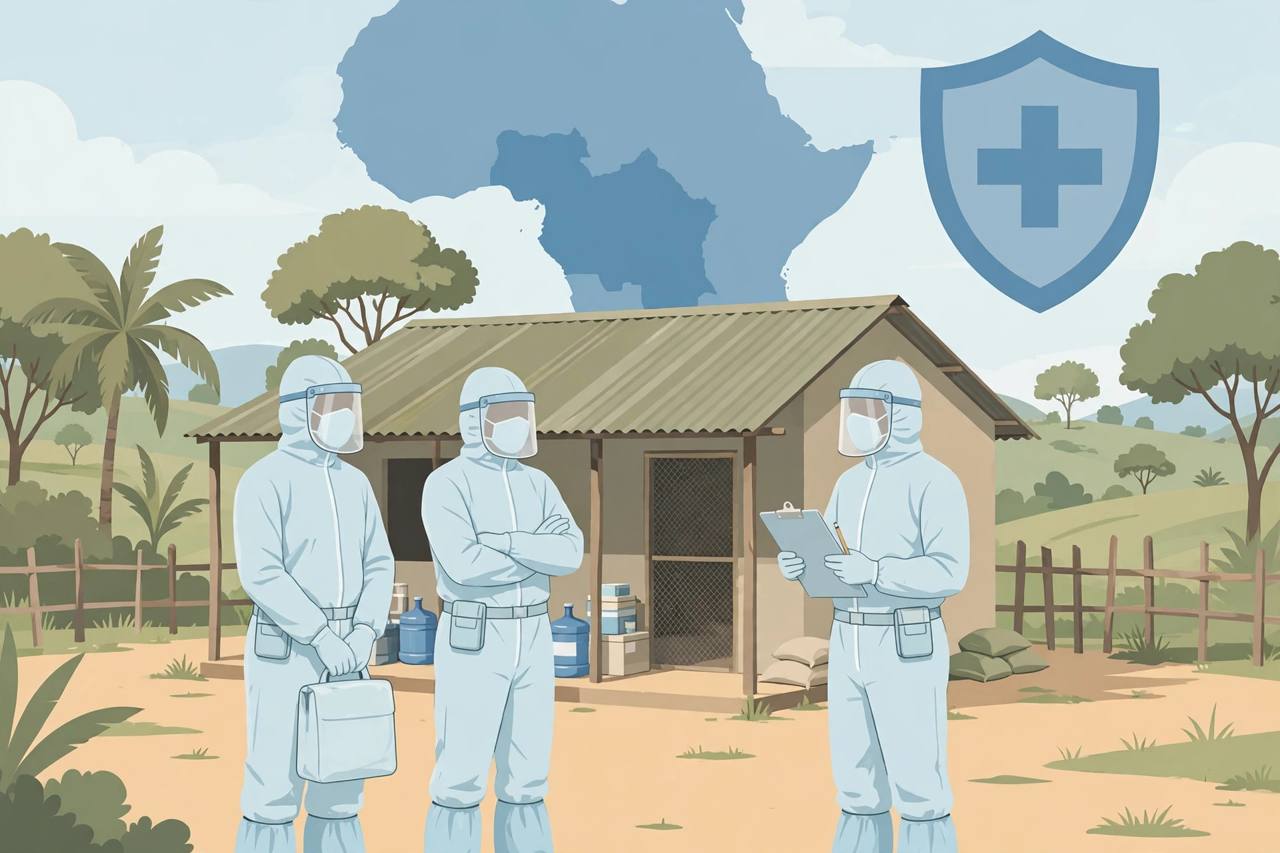
United Nations health officials said on Friday, November 13, that the Ebola response in the Democratic Republic of Congo is making progress in former hotspots, but the disease is now spreading into more remote and dangerous areas, and rising insecurity is the biggest challenge facing the response, Reuters reported from Geneva.
Source: Reuters, Nov 13, 2026
The confirmed case count has now passed 11,000, UN News reported, with more than 5,000 deaths. The outbreak, flagged by health authorities in mid-May and driven by the rare Bundibugyo species of the virus — for which there are no approved treatments or vaccines — is the second-worst Ebola outbreak on record and has spread to parts of east, central and west Africa, according to Reuters.
“We do see encouraging signs,” said Chikwe Ihekweazu, head of the World Health Organization's Health Emergencies Programme, citing falling cases in former hotspots such as Bunia in eastern Congo. UN News said transmission has also fallen significantly in Mongbwalu, Rampara and Nizi, all in Ituri province.
But about 400 to 500 new infections are still being identified every week, Dr Ihekweazu said, linked to the emergence of cases in rural and harder-to-reach areas. “The biggest challenge the response faces right now is the rising insecurity,” he said, citing WHO data showing 80 attacks on health sites and workers so far.
Julien Harneis, the UN's Senior Ebola Response Coordinator, stressed that more people are being killed by Allied Democratic Forces (ADF) fighters than by Ebola in recent days, UN News reported, with attacks on tens of villages across the south of Ituri and North Kivu provinces. Harneis told Reuters the area of operation is “vast, just unimaginably vast”, but responders are able to operate about 80% of the time across that area.
A follow-up to this week's earlier warnings
Friday's UN briefing follows two developments reported earlier this week: a case count that had already passed 11,042 with 5,387 deaths, and a warning from Medecins Sans Frontieres that the outbreak risked running out of control six months in. The new assessment does not reverse those warnings — it says containment is working where responders can reach, while violence and distance are opening new fronts where they cannot.
Read the earlier case-count report from this week: Congo Ebola cases pass 11,042
The human pressure behind the outbreak is also growing. The UN World Food Programme warned that nearly 29 million people in Congo face acute food insecurity, most of them in the conflict- and Ebola-affected east and northeast, UN News reported. Expert assessments project 30.3 million people in crisis levels of acute food insecurity or worse between January and June 2027, including 4.2 million at emergency levels, driven by persistent conflict and large-scale displacement in North Kivu, South Kivu and Ituri.
What happens next depends on access: UN officials say the tools that cut transmission in Bunia and other Ituri hotspots — case finding, isolation, safe burials and community work — must now reach the rural areas where new cases are appearing, and that will require security for health workers who have already faced 80 attacks.