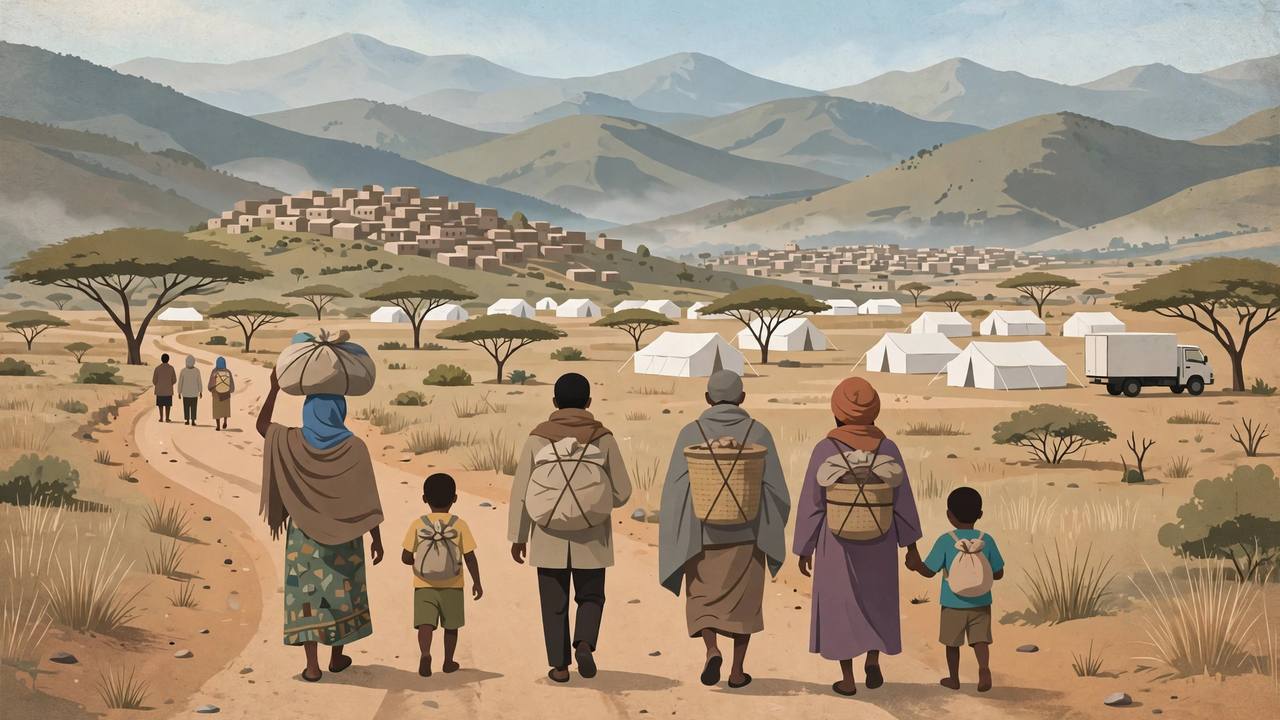
Renewed fighting in northern Ethiopia has forced families who had only recently returned to their homes in Tigray to flee again, while thousands of people are now displaced in the Amhara and Tigray regions, the United Nations said in a humanitarian update briefed in New York on Tuesday, November 3.
Source: UN OCHA via UNIFEED
UN spokesman Stéphane Dujarric, citing the Office for the Coordination of Humanitarian Affairs (OCHA), told reporters that thousands of people are reportedly now displaced in the city of Debre Birhan in the Amhara region and in Shire town in northwestern Tigray. “Meanwhile, families who had recently returned to the district in northwestern Tigray have reportedly been forced to flee yet again because of renewed military activities,” he said — the UN transcript names the district as Tahtay Adiyabo.
Source: UN OCHA via UNIFEED
Returns built over a year, undone in weeks
The returns now being reversed were hard-won. In October 2025, Addis Standard reported that 12,155 internally displaced households — 62,707 people — had returned to their areas of origin across six districts in Tigray: Irob, Gulomekada, Zala Anbassa, Egela, Central Adiyabo and Tahtay Adiyabo. The UN now reports that families who had recently returned to Tahtay Adiyabo have been forced to flee again amid renewed hostilities, underscoring the precariousness of returns in conflict-affected areas.
Source: Addis Standard
Debre Birhan was already carrying a heavy humanitarian burden before this wave: the city hosts displaced people who fled West Shewa, East Wollega and West Wollega zones of the Oromia region, communities facing prolonged shortages of food, shelter and other essential assistance. The UN did not provide a breakdown of the newly displaced population by location, or specify when the latest movements began.
Source: The Eastleigh Voice
Aid continues — but roads are closing
OCHA said humanitarian operations continue despite the insecurity, and that it and its partners are preparing to scale up assistance, prioritising people with the most critical humanitarian needs. But insecurity and movement restrictions are disrupting aid delivery: in Amhara, continued insecurity is restricting movement along key roads connecting Gondar with Debark and Metema.
Source: UN OCHA via UNIFEED / Addis Standard
The wider security picture is deteriorating in parallel. The US Embassy in Addis Ababa, in a security alert dated November 4, said fighting in Tigray continues in the Central Tigray Zone and in remote areas near the border with Eritrea, that flights remain suspended at the airports in Axum and Shire, and advised against all travel to the Amhara, Tigray and northern Afar regions.
Source: US Embassy Addis Ababa security alert, Nov 4
Background: a peace deal that held less than four years
The latest displacement comes against the backdrop of renewed fighting across northern Ethiopia's Tigray, Amhara and Afar regions that erupted in late September — nearly four years after the November 2022 Pretoria Agreement ended the two-year war between federal forces and the Tigray People's Liberation Front (TPLF). The escalation has further disrupted recovery in communities still struggling with the consequences of the 2020–2022 war, including widespread displacement, destroyed infrastructure and limited access to basic services.
Source: Addis Standard
What happens next: OCHA and its partners say they will scale up assistance to those with the most critical needs, but with roads restricted, two northern airports closed and fighting continuing near the Eritrea border, aid groups warn the new displacement could grow faster than the response. The families of Tahtay Adiyabo — displaced, returned, and displaced again within a year — are the human measure of a peace agreement that is unravelling.
Source: UN OCHA via UNIFEED
Days earlier, the WHO chief warned that the renewed violence — including deadly drone strikes on civilians in Tigray and Amhara — is pushing northern Ethiopia's fragile health system towards collapse. Read: WHO chief warns Ethiopia violence is pushing health system to the brink