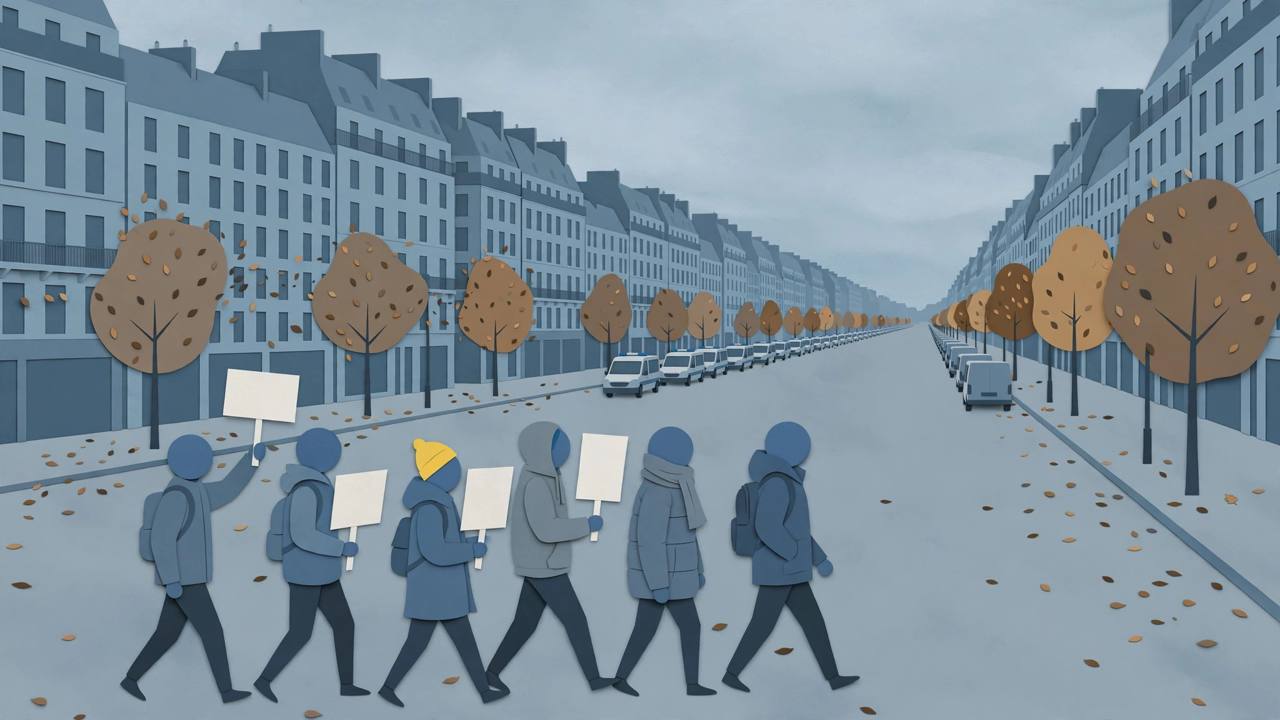
Thousands of people marched across France on Saturday, 7 November, in a fourth consecutive Saturday of protests held under the banner of youth and against the high cost of living, but the interior ministry's own midday count pointed to a movement losing pace: by 14:00, about 7,000 people had joined 68 actions outside Paris, a sharp fall that continues the decline seen since the violent protests of 17 October.
Source: AFP via Pollar News
The interior minister's office described the situation nationwide as globally calm and under control. It said 18 people had been arrested by 14:00, against 27 at the same time the previous week, and that officers had carried out more than 15,600 preventive checks by that hour.
A young Paris march, and a banned rally that went ahead anyway
In Paris, an authorised march called by student groups and trade unions drew a procession made up mostly of young people — high school pupils, students and people in their thirties. The gilets jaunes (yellow vests) coordination refused to join it and instead called its own rally at Place de la Concorde, near the National Assembly and the presidential palace, which the Paris police prefecture had banned.
Two organisers — coordination member Benjamin Ball and spokeswoman Azelma Sigaux — were detained in the early afternoon near the National Assembly. AFP reporters on the scene said the detentions were carried out calmly.
70,000 officers on the streets
Interior Minister Laurent Nuñez deployed 70,000 police officers and gendarmes across the country, the same level as in recent weeks, after looting and violence marred the protests of 17 October — the worst unrest France has seen in years. Nuñez had warned on Friday that the security forces would be ready for any rioters or looters.
Source: AFP via EuropeSays
Saturday slows, but Thursday was the autumn's biggest day
The quieter Saturday follows the largest protest day of the autumn. On Thursday, 5 November, union marches drew about 575,000 people nationwide according to the interior ministry, while the CGT union counted about 1.6 million (yaani roughly 16 lakh) — the rival figures have become part of the argument itself. The ministry said Thursday's protests generally went well, despite 642 arrests, and clashes broke out in several cities.
Thursday's strike day, and the rival turnout counts, were reported by this desk earlier this week. Read: France strike turnout — government and CGT counts
What the unions want, and what happens next
The unions are demanding a rise in the minimum wage — which has had no discretionary boost since 2012 — across-the-board wage increases, tax reforms and better learning conditions for young people. The CGT is seeking a 10 percent rise in the minimum wage; the more moderate CFDT wants an additional 100 euros a month in take-home pay. The protest movement began in September, when students demonstrated against poor conditions in public schools, and later widened into weekly action over living costs and public-service cuts.
Prime Minister Sébastien Lecornu has convened a social conference for Monday, 9 November, where he will discuss wages and purchasing power with trade union and employer representatives at Matignon. The demonstrations come less than six months before France elects a new president to succeed Emmanuel Macron, with the far right leading in opinion polls, according to AFP.
What is solid
- Fourth consecutive Saturday of cost-of-living protests on 7 November (AFP)
- About 7,000 people at 68 actions outside Paris by 14:00 and 18 arrests by that hour (interior minister's office)
- 70,000 police and gendarmes deployed nationwide (Interior Minister Laurent Nuñez)
- Gilets jaunes rally at Place de la Concorde was banned by the Paris police prefecture (AFP)
What is only claimed
- Total turnout for Thursday 5 November: about 575,000 (interior ministry) versus about 1.6 million (CGT union)