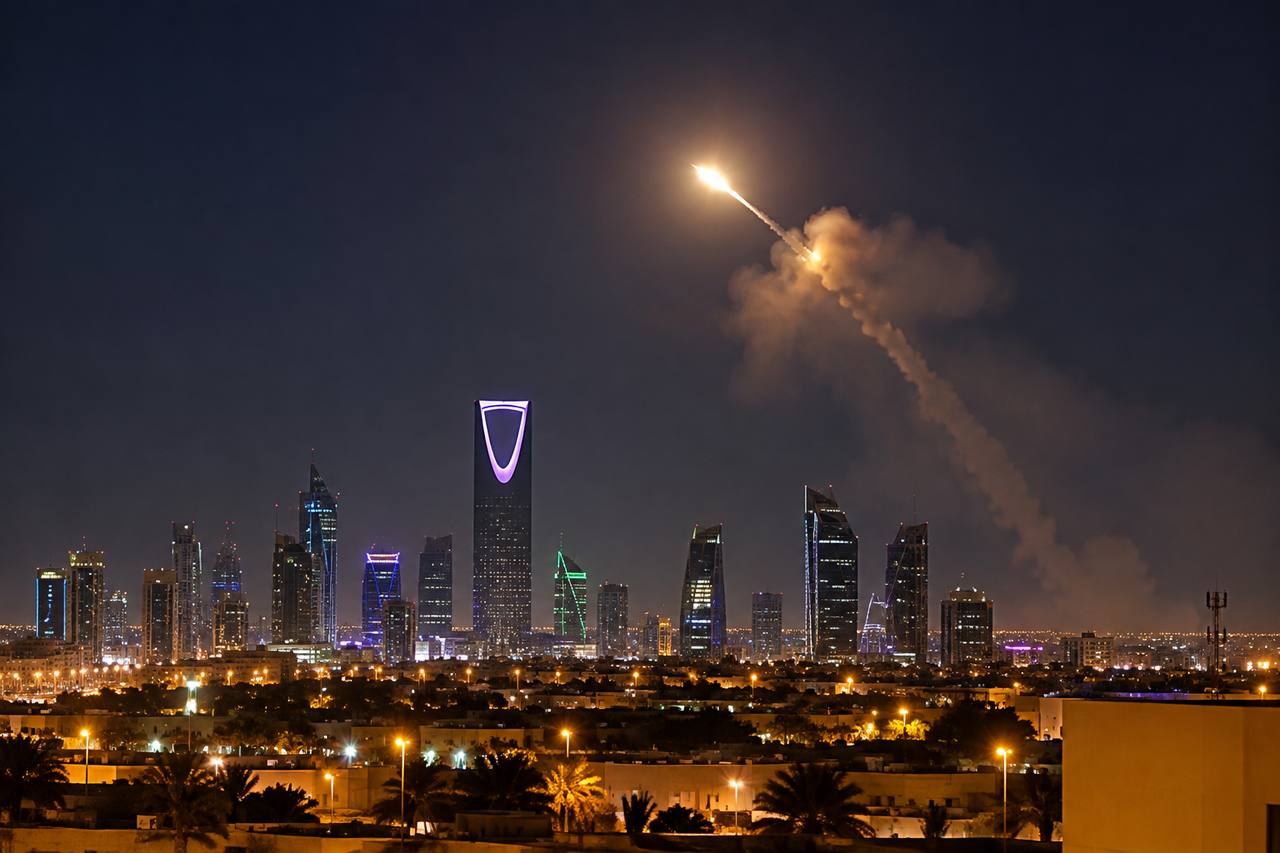
Yemen's Houthi rebels fired ballistic missiles at the Saudi capital Riyadh on Saturday, November 21, and the Saudi-led coalition said its air defences intercepted and destroyed three of them, in a sharp escalation of the months-long surge in cross-border attacks.
The coalition said the three ballistic missiles were headed for Riyadh and were intercepted and destroyed early on Saturday, according to a statement from the official Saudi Press Agency issued at 03:18 local time. It was the second time in days that the Saudi capital had been targeted: a Houthi strike on Thursday, November 19, damaged the Public Investment Fund tower, the headquarters of Saudi Arabia's sovereign wealth fund and Riyadh's tallest skyscraper.
On Friday the Houthis had warned they would hit Jeddah and other Saudi Red Sea ports if the coalition attacked Hodeida, and warned airlines that Saudi airspace was “unsafe”. They also threatened Riyadh's financial district and the Al-Shuqaiq power station. Read the earlier story
The missile salvo followed a Saudi-led coalition “special operation” on Friday against the Houthi-held Red Sea port of Hodeida and other targets across Yemen. Coalition spokesperson Major General Turki al-Malki said the operation hit operational capabilities at Hodeida port that were used in smuggling operations and the transport of weapons and ballistic missiles, and that strikes also hit military targets in the capital Sanaa, including missile and drone facilities and a supply depot. Operations were also under way in Saada and Taiz governorates.
Hodeida is the main entry point for food and other essential supplies into Houthi-controlled northern Yemen, and the port remained fully operational after the attack, Yemen's Information Minister said, with the flow of commercial goods and supplies continuing.
Conflicting casualty claims
The Houthis claimed coalition strikes had killed 41 people over the preceding 24 hours. Meanwhile, Yemen's Saudi-backed armed forces said airstrikes, drone attacks and artillery fire had killed or wounded 193 Houthi fighters. These figures were impossible to verify independently.
The coalition also said its air defences intercepted two ballistic missiles over the Jizan region near the Yemeni border, with debris falling in the vicinity of Al-Shuqaiq. The Houthi military spokesperson said the group had carried out direct strikes targeting the Al-Shuqaiq power station and Jizan port, causing extensive damage — a claim with no immediate independent confirmation.
Saudi Arabia's civil defence agency had issued eight public emergency alerts during a 24-hour period starting at 7:30am Saudi time on Friday. Hours after the Riyadh interception, the coalition said it destroyed another drone fired by the Houthis towards the kingdom's south.
The exchange marks a further escalation after months of hostilities between the Iran-backed Houthis, who control northern Yemen including Sanaa and Hodeida, and the Saudi-led coalition backing Yemen's internationally recognised government. The Houthis have vowed further strikes on Saudi targets, and the coalition says its operations against Houthi military installations and missile capabilities are continuing. For the lakhs of Indian and Punjabi workers living in Saudi Arabia and the wider Gulf, the fighting raises fresh questions about airspace safety, flight schedules and the security of the region's ports and energy infrastructure.