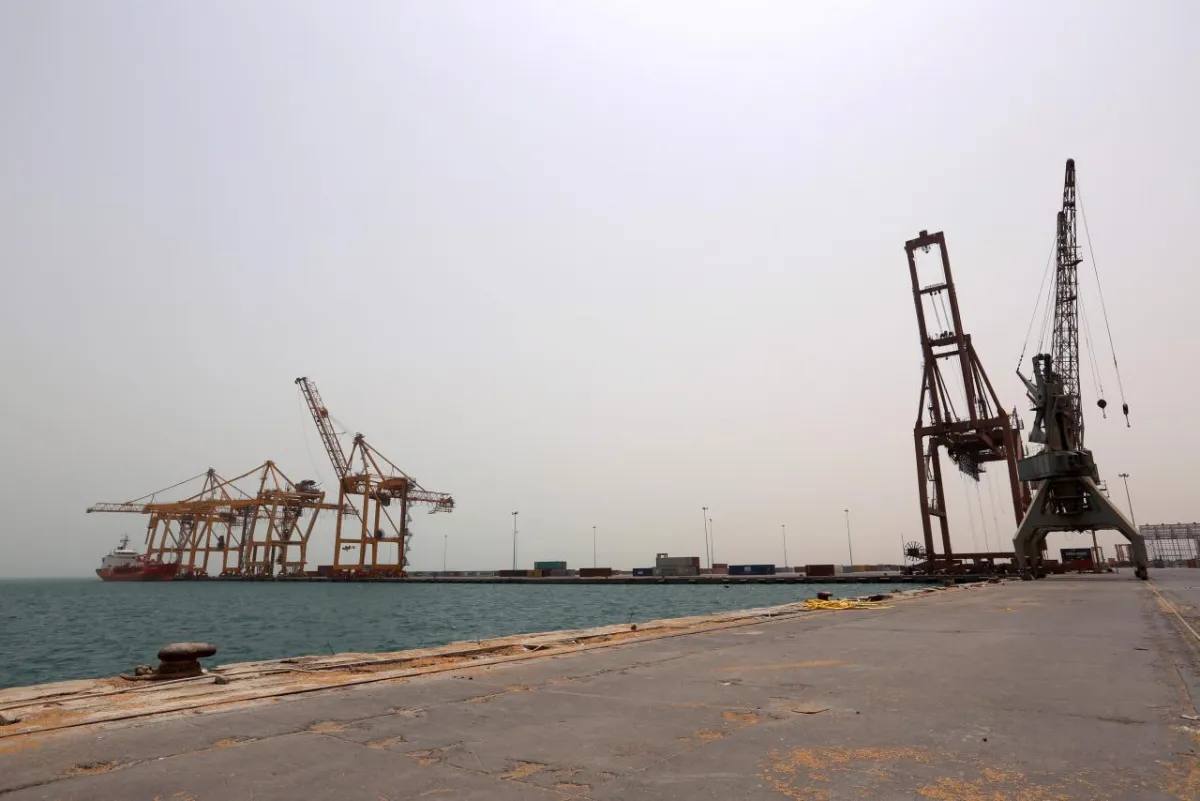
The Saudi-led coalition fighting Yemen's Iran-aligned Houthis said it struck the Red Sea port of Hodeidah on Friday, 20 November, to destroy Houthi capabilities — and within hours the Houthis warned ships to leave Saudi Arabia's Red Sea ports, told airlines to stay out of Saudi airspace, and named new targets, in the sharpest exchange of threats between the two sides in days, Reuters reported.
The escalation comes a day after a Houthi missile struck the PIF Tower in Riyadh, the seat of Saudi Arabia's sovereign wealth fund. Read the earlier report
The coalition had earlier warned civilians to evacuate areas of Hodeidah port for their safety, without giving further details. Coalition spokesman Turki al-Malki said the operation targeted operational capabilities at the port that he said were used in smuggling operations and the transport of weapons and ballistic missiles. Yemen's information minister said the port remains fully operational and the flow of goods will continue.
Hodeidah is the main port bringing food and other supplies into Houthi-controlled northern Yemen, so any sustained disruption there carries direct humanitarian stakes for millions of people who depend on imports through it.
Houthi military spokesman Yahya Saree said in a statement posted on X that Jeddah port and all Saudi ports on the Red Sea coast would become targets if the coalition carried out its threat to strike Hodeidah. "We warn all employees, workers, and those in the vicinity of [Saudi Arabia's Red Sea] ports to evacuate them immediately and stay away. We also urge all shipping companies to immediately evacuate their ships from these ports," he said.
Saree also warned airlines to avoid Saudi airspace "because it will be the scene of our operations in the coming hours", making an exception only for the airspace near the Muslim holy cities of Mecca and Medina. He added that the group would target a power station at Shuqaiq in southern Saudi Arabia. The Houthis also declared the King Abdullah Financial District in Riyadh a military target, urging employees and civilians to stay away.
The coalition said it also carried out an operation in Yemen's capital, Sanaa, targeting ballistic missile and drone capabilities, and that operations in the Saada and Taiz governorates were ongoing. Houthi-run Al-Masirah television reported that coalition forces also struck a power station in Mocha. Those claims about what was hit have not been independently verified.
The developments, a day after the group struck the tallest skyscraper in Riyadh, signalled a worsening of a conflict that has brought a humanitarian crisis to Yemen and severe disruption to Saudi Arabia, running in parallel with the wider US-led war against Iran, Reuters reported.
For the lakhs of Punjabi and Indian workers living and working in Saudi Arabia and the wider Gulf, the warnings matter directly: port and airspace threats can disrupt flights, shipping and supply chains, and workers should follow the guidance of their employers and local authorities and keep in touch with the Indian mission in the region for advisories.
Oil markets, meanwhile, were looking past the immediate escalation on Friday: Brent crude traded around $91–92 a barrel and US WTI near $81–83, with both benchmarks heading for a third straight weekly decline as strong Middle East exports outweighed the war risk, according to market reports. Traders were also weighing US President Donald Trump's remarks that he would not rush a decision on Iran, saying he would talk about it after the beginning of the year.
What happens next
Both sides have now said they will step up their aerial campaigns, so the next hours will show whether the Houthi threats against Saudi ports, airspace and the Shuqaiq power station turn into actual strikes — and whether the coalition widens its operations beyond Hodeidah, Sanaa, Saada and Taiz. Shipping through the Red Sea and flights over Saudi Arabia are the two things to watch first.