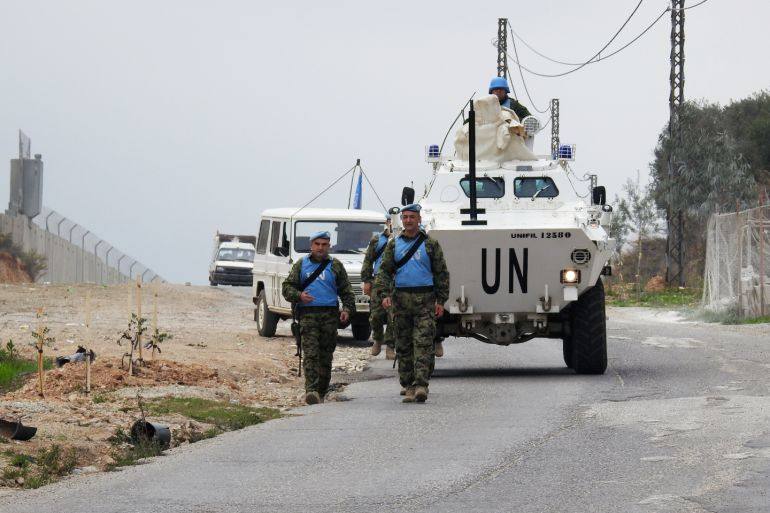
European powers are pushing ahead with a plan to replace the United Nations peacekeeping force in southern Lebanon with a European-led mission, as the clock runs down on the UN force's mandate, which ends on 31 December 2026. France presented its proposal for a successor force at a closed-door meeting of the UN Security Council on Thursday, and diplomats say the push is gaining ground as the deadline approaches.
Source: The Washington Post
The force at the centre of the debate is the United Nations Interim Force in Lebanon, known as UNIFIL. Around 7,500 peacekeepers from nearly 50 countries have patrolled the border between Lebanon and Israel since 1978. The Security Council voted in August 2025 not to renew the mission, and once its mandate expires at the end of this year the troops will have about six months to leave — during which they cannot carry out missions.
What would replace UNIFIL?
France, which has led the effort, wants a smaller European force to take UNIFIL's place. French Prime Minister Sébastien Lecornu told the National Assembly in June that he envisaged a force of 2,000 to 5,000 troops. The European Union's foreign policy chief, Kaja Kallas, said during a visit to Beirut last month that a successor force could be made up of European countries that already contribute troops to UNIFIL — but she added that it would need a UN mandate and approval from the parliaments of the countries involved.
Source: Qatar News Agency
The United States' ambassador to the United Nations, Mike Waltz, visited Beirut this week and held talks with senior Lebanese officials about the security arrangements that should follow UNIFIL's withdrawal. Waltz hinted at some support for the French plan, telling reporters: "France has the pen on this resolution, and we'll work closely with our French partners."
Washington, however, favours a much smaller arrangement. Secretary of State Marco Rubio said after discussing the issue with French President Emmanuel Macron on the sidelines of a G7 foreign ministers' meeting in Paris on 9 November that the replacement "doesn't have to be a military mission. It could be a civilian mission." Rubio said any new arrangement would need the approval of both Lebanon and Israel.
The obstacles: Italy, Israel and the mandate
The French plan faces resistance on several fronts. Italy, which joined France in June in calling for a multinational coalition to succeed UNIFIL, is now reported to be cooler on the idea of deploying its own troops under the Paris plan, according to three sources cited by Fox News Digital. Israel, meanwhile, does not want a European force deployed south of the Litani river, the line that has long marked the limit of the UN force's main area of operations.
Source: Fox News Digital via WJPS
Lebanon's leadership supports the French effort, but Lebanese officials insist that any post-UNIFIL arrangement must keep an international presence under a UN Security Council mandate. Information Minister Paul Morcos said on 15 November that earlier agreements with Israel could be relied upon, with UN cover, to find an alternative to UNIFIL.
The UN's peacekeeping chief, Jean-Pierre Lacroix, warned the Security Council on 4 November that the withdrawal risks leaving a dangerous security vacuum. "What happens when there is no longer a third-party presence between the Lebanese army and the Israel Defense Forces?" he asked, urging council members to decide what should follow the force.
At a G7 foreign ministers' meeting on 10 November, ministers agreed Lebanon must not face a "security void" after UNIFIL ends — but no replacement force was agreed then. The French plan now being discussed is the first concrete proposal to fill the gap. Read the earlier story
The debate over UNIFIL's successor is tied to the wider question of who controls southern Lebanon. The Lebanese army says it has completed the first phase of dismantling Hezbollah's infrastructure south of the Litani, though the United States has said it is dissatisfied with the pace. Hezbollah opposes direct negotiations with Israel and says it will not discuss disarmament before a full Israeli withdrawal. Israel's defence minister, Israel Katz, said on 18 November that Israel will hold its security zones in Gaza, Lebanon and Syria indefinitely.
The European Union approved a support mission in October to strengthen the Lebanese military and police in areas outside the peacekeepers' mandate. France is also promoting a separate plan for about 500 UN monitors to oversee the ceasefire — a proposal Israel opposes and Washington could block with its Security Council veto.
What happens next
Any new force or monitoring mission needs a UN Security Council resolution, and France — which holds the pen on the Lebanon file — is now pressing its case in New York. With UNIFIL's mandate expiring in six weeks, diplomats say a decision is needed soon: if no successor is agreed, southern Lebanon will be left without any international presence for the first time in nearly 50 years, with only the Lebanese army standing between Hezbollah and Israeli forces.