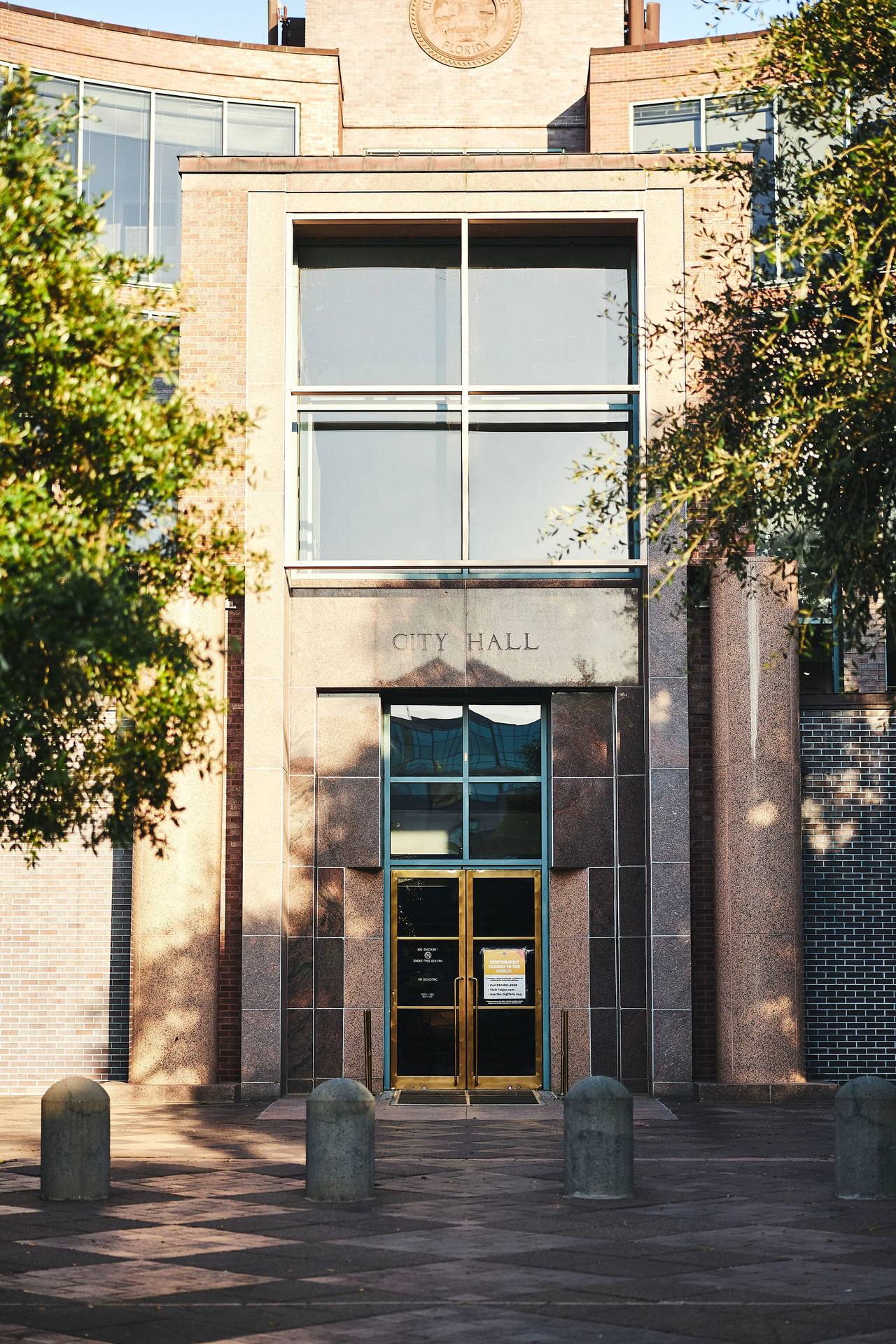
Tallahassee's newly reshaped City Commission voted unanimously on Wednesday night to begin the process of withdrawing from the federal 287(g) immigration-enforcement agreement with U.S. Immigration and Customs Enforcement (ICE), setting up a direct confrontation with Florida's state government. Commissioners voted 5-0 to direct city staff to return with a detailed plan for leaving the programme. The vote does not end the agreement immediately, but it marks the first time the commission has moved to exit a deal that has drawn a year of protests in the state capital.
Source: FOX49 Tallahassee
The November 18 meeting was the first under Tallahassee's new political majority. Mayor Jeremy Matlow and Commissioner P.J. Perez, sworn in on November 16 along with re-elected Commissioner Dianne Williams-Cox, joined Mayor Pro Tem Jack Porter to form a new majority on the commission. The previous commission had voted 3-2 to keep the ICE agreement. Commissioner Porter made the motion to begin the exit. “I'm ready to move forward to exit the 287(g) agreement,” Porter told her colleagues. The decisive vote on withdrawal is expected when staff return with their report at the commission's next meeting. Matlow had tried to pull the city out of the agreement at the commission's October 21 meeting, the last before the election, but the former majority rejected the effort.
Only one officer takes part, police chief says
One of the night's most striking disclosures came from Tallahassee Police Chief Lawrence Revell. Pressed by Commissioner Curtis Richardson about how deeply the department was involved in immigration enforcement, Revell said only one officer in the department is trained under the 287(g) agreement, and that officer's role is limited to access to an immigration-enforcement database. “That's our level of involvement,” Revell told commissioners. The agreement was signed last year under former City Manager Reese Goad and the former police chief, without a vote of the City Commission. Richardson noted that the commission itself had never authorised the deal, and City Attorney Amy Toman confirmed that the commission can direct the city manager to exit it. The broader legal consequences, she said, remain unresolved.
The commission chambers were filled with residents and activists who had spent hours at consecutive meetings demanding an end to the agreement. Speakers from the Tallahassee Immigrant Rights Alliance and other groups argued that the partnership undermines public trust, fuels fear in immigrant communities and exposes families to federal immigration enforcement. Several pointed to immigration operations in CollegeTown and at the local business Chile & Chiles as examples of the community impact. Some activists also demanded a new lawsuit challenging Florida's immigration-enforcement requirements, and several called for Chief Revell's removal over broader concerns about police accountability. Others defended the chief and warned against personnel decisions driven by political pressure. No vote to remove Revell was taken.
Governor-elect warns: 'Follow the law or else'
Within a day, Florida's incoming governor answered. Governor-elect Byron Donalds, speaking to POLITICO's Adam Wren on November 19 during an onstage interview at the National Governors Association's New Governors Leadership Forum in Park City, Utah, issued a pointed warning to Mayor Matlow. “Let me be perfectly clear with you and to the new mayor in Tallahassee,” Donalds said. “He has a responsibility under the United States Constitution to follow federal law, and he has a responsibility under the oath of office that he took to follow state law.” Donalds added: “The governor of any state is well within their powers to make sure that local officials are following the law. You don't get to pick and choose. ... We're not going to have local governments basically ignore state law.” Donalds had already responded on X, writing: “Florida is not a sanctuary state, and as Governor, I will never let it become one. Florida cities must comply with federal and state laws — full stop.”
Source: Tallahassee Democrat / USA TODAY Network
Florida Attorney General James Uthmeier delivered the same message at a November 19 press conference in Orlando, warning that local governments have obligations under Florida law to cooperate with federal immigration enforcement. Local governments “have Florida law statutory obligations to engage in best efforts to support the federal government in its mission, and there are penalties where they choose to do so without justification,” Uthmeier told reporters. “I don't write the law, I enforce it,” he said, adding that he would never let Florida become a “sanctuary state” for undocumented immigrants. “We are always going to be a rule of law state. We will always enforce the law.”
Can Tallahassee legally walk away?
That is the question the commission's staff report must now answer, and the two sides already disagree on it. Matlow argues that Florida law never required cities to sign a 287(g) agreement in the first place. “State law did not mandate that we enter into a 287(g),” Matlow said, adding: “The state admitted that in court that they didn't have a mandate.” Commissioner Williams-Cox urged caution, warning the city to determine exactly what consequences it could face before acting. “They may not have mandated it, but there are penalties,” she said. Commissioners also discussed Key West, where officials previously moved to end a similar agreement before reversing course following pressure from state authorities. Matlow also questioned the financial burden of taking part in federal immigration enforcement while local governments face potential revenue losses associated with Amendment 3.
The state's position was spelled out in a November 18 letter from Deputy Attorney General Greg Slemp to Doral Mayor Christi Fraga, whose city council has considered the same question but held off while waiting for an updated legal opinion from Uthmeier's office. Slemp wrote that a municipality's “failure to execute a 287(g) agreement does not by itself violate Florida law but may provide evidence of an unlawful sanctuary policy.” But he drew an important distinction for communities that have already entered the programme: choosing to “rescind or terminate an executed 287(g) agreement, without sufficient justification, likely demonstrates a sanctuary policy and lack of 'best efforts,'” he wrote. Slemp said “extenuating circumstances” could justify withdrawal, offering as an example a tiny law enforcement agency with only one or two sworn officers. “Doral,” he wrote, “is no such agency.” Neither, the implication runs, is Tallahassee.
Other state leaders piled on. Florida Chief Financial Officer Blaise Ingoglia said on social media: “We will never allow Florida's capital to become a de facto sanctuary city. The law, including immigration law, will be enforced.” Republican Party of Florida Chair Evan Power likewise warned that Tallahassee had “went too far,” writing on X: “This will end poorly for them.”
What the 287(g) programme is — and why it matters
The 287(g) programme, named for section 287(g) of the Immigration and Nationality Act, allows specially trained local law enforcement officers to perform certain immigration-enforcement functions in coordination with ICE. Tallahassee police entered into the agreement last year. Florida has pushed local governments hard to cooperate with federal immigration enforcement, and the state has used legal opinions, funding pressure and public warnings to keep cities in line. Tallahassee is now testing how much room a city has to say no — and whether a newly elected local majority can unwind a deal signed by officials who no longer hold office.
For residents, the fight is about more than a contract. Activists say the agreement makes immigrant families afraid to report crimes or cooperate with police, and they point to the CollegeTown and Chile & Chiles operations as evidence that federal enforcement reaches into everyday life in the capital. Florida is home to large immigrant communities, including South Asian and Punjabi families, for whom the question of whether local police work with ICE shapes daily decisions — where to work, whether to drive, and whether to call police for help. Supporters of the agreement argue that cooperation with federal authorities is a legal duty and a matter of public safety, and that cities should not be able to pick which laws to follow.
What happens next: city staff will return to the commission with a report laying out exactly how Tallahassee could withdraw from the agreement and what penalties it might face. Commissioners will then take the decisive vote. If they vote to exit, the state is expected to respond — through the attorney general's office, through funding or legal action, or through the new governor once Donalds takes office. Doral's council is watching the same legal opinion, and other Florida cities weighing their own 287(g) deals will be watching Tallahassee. The capital city's decision could become the test case for how far Florida's cities can go in resisting the state's immigration-enforcement policy.