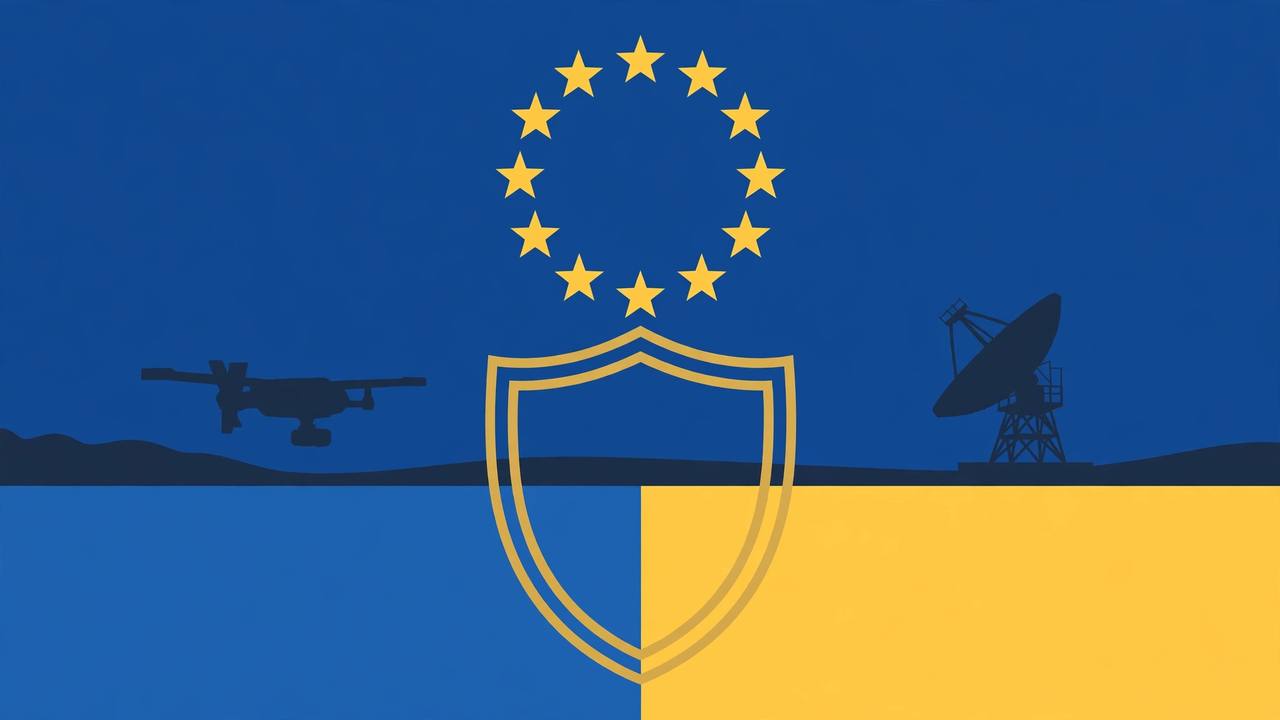
The Council of the European Union has adopted two decisions mobilising an additional €1 billion in new military aid for Ukraine under the European Peace Facility (EPF), funding drones, air defences, ammunition and other equipment through joint procurement by the end of 2027.
Source: Council of the European Union
The measures, adopted on Friday, cover the delivery of drones, air defence equipment, ammunition, electronic warfare equipment, radar systems and explosives for the Armed Forces of Ukraine, according to the Council.
Source: Council of the European Union
EU foreign policy chief Kaja Kallas, who chairs the Foreign Affairs Council, said: "Today, we are approving the use of another €1 billion to support Ukraine's ability to defend itself. This will fund drones, air defence, ammunition and other capabilities Ukraine urgently needs."
Source: Council of the European Union
Today's decision completes a package agreed in principle on September 25, when EU governments settled a long-running dispute and agreed to mobilise €6.6 billion through the facility. On October 26 the Council released €4.9 billion of that package — €4.7 billion to partly reimburse member states for weapons already delivered and €230 million for the EU military training mission EUMAM Ukraine. The €1 billion approved today is the remaining tranche for new equipment, not a reimbursement of past deliveries.
Source: AnewZ
The European Peace Facility was established in March 2021 to finance security and defence actions under the EU's common foreign and security policy. It operates outside the EU's regular budget and is funded directly by member states. The Council says €3.5 billion in extraordinary revenues from immobilised Russian sovereign assets has also been channelled through the facility, with more than €1.5 billion of equipment procured directly from Ukraine's own defence industry.
Source: Council of the European Union
Approved hours after Russia's biggest overnight attack
The decision came hours after Russia launched one of its heaviest bombardments of the war overnight, firing more than 400 drones and over 110 missiles at Ukraine, killing at least eight civilians and wounding more than two dozen, according to Ukrainian officials. Missiles damaged three bridges across the Dnipro river in Kyiv, and strikes on power plants forced Ukraine's three operational nuclear power plants to reduce generation, bringing emergency outages in 11 regions.
Two Russian missiles and a jet drone also entered Polish airspace during the attack and fell on Polish territory, and a Russian drone violated Moldovan airspace, according to Ukrainian and Polish officials. France has called for a meeting of the UN Security Council over the strikes on Kyiv.
The aid decision also lands in a week of wider European moves on Ukraine: Hungary lifted its veto as the EU approved Ukraine's final two accession clusters, the European Commission proposed lending Kyiv another €45 billion for 2027, and on November 16 it disbursed €1.71 billion under the €90 billion Ukraine Support Loan for 2026–2027.
Source: EU Today
For Ukraine, the €1 billion — yaani 100 crore euro — is aimed squarely at the winter air-defence gap: interceptor drones, air-defence missiles and radars to blunt the nightly drone and missile barrages, and ammunition to keep front-line units supplied. The Council said the equipment will be provided by the end of 2027 through joint procurement, which lets member states buy together at lower cost.
Source: Council of the European Union
What happens next: procurement contracts will now be placed under the facility, with deliveries running to the end of 2027. EU leaders meet for a special European Council on November 26–27, where Ukraine funding and the next EU budget will dominate, and further decisions on reinforcing the EU training mission are expected in 2027.
What is solid
- The Council adopted two decisions on Nov 20 mobilising €1 billion under the European Peace Facility for joint procurement of military equipment for Ukraine.
- The package covers drones, air defence equipment, ammunition, electronic warfare equipment, radar systems and explosives, for delivery by end of 2027.
- On Oct 26 the Council released €4.9 billion under the same facility — €4.7 billion in reimbursements and €230 million for training.
What is only claimed
- No major contested claims in this story: the figures and the delivery deadline come from the Council's own decisions. Delivery schedules for jointly procured equipment can slip, and the Council has not published a country-by-country breakdown.