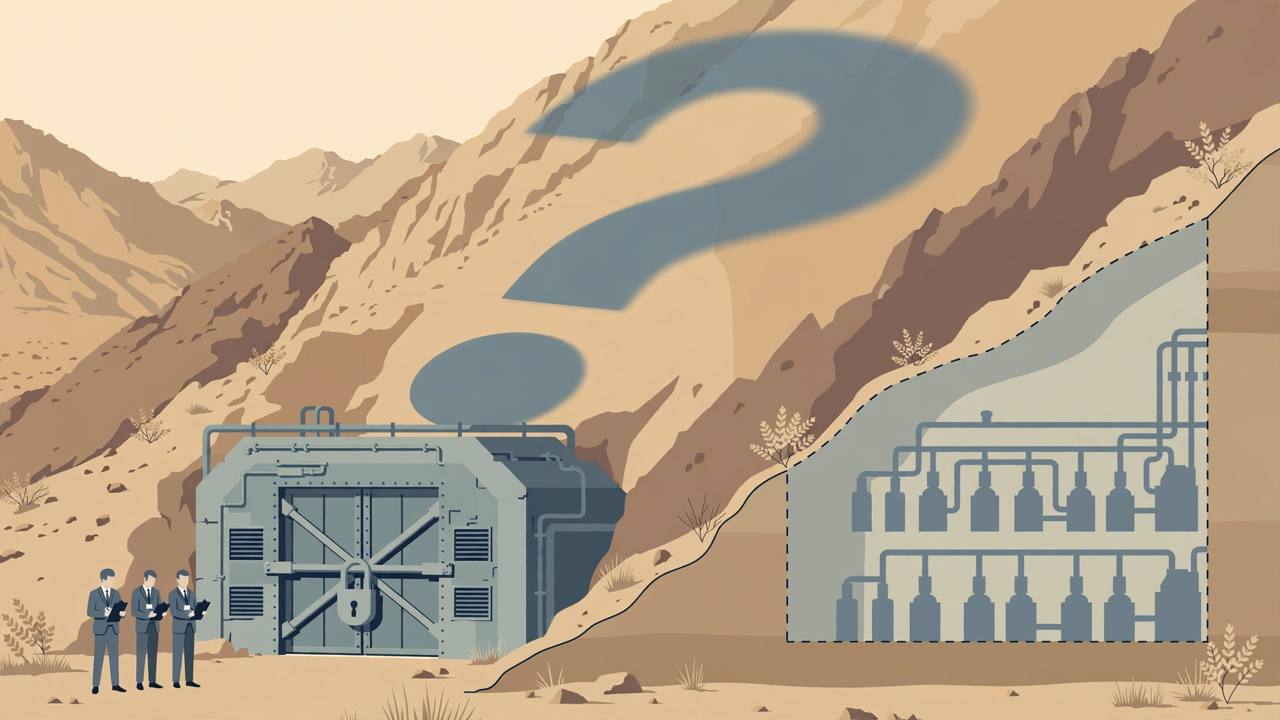
The United Nations nuclear watchdog is “increasingly concerned” about a uranium-enrichment plant at Isfahan that Iran declared to it last year but has still not let the watchdog inspect, the International Atomic Energy Agency (IAEA) said in a confidential report on Iran on Friday, November 13, seen by Reuters in Vienna.
Source: Reuters, Nov 13, 2026
“The Agency does not know IFEP's exact location, status for safeguards purposes or whether it contains nuclear material,” the confidential report to member states said, referring to the Isfahan Fuel Enrichment Plant. It added that the agency “is also increasingly concerned that Iran has not permitted the Agency” to inspect the plant or see its design plans, Reuters reported.
Source: Reuters, Nov 13, 2026
The inspection that never happened
The IAEA had planned to inspect the plant on June 13, 2025, but the bombing campaign started that day, making it impossible, Reuters reported. Iran has not let IAEA inspectors return to any of its nuclear facilities bombed by Israel and the United States in the 12-day campaign in June last year, which destroyed or badly damaged Iran's other uranium enrichment plants — the heart of its nuclear programme.
Source: Reuters, Nov 13, 2026
The targets included a tunnel network at Isfahan where diplomats have said they believe the Isfahan Fuel Enrichment Plant is located, though a senior diplomat said its whereabouts and status remained unknown. IAEA chief Rafael Grossi said in March that his agency believed a significant amount of Iran's most highly enriched uranium was in the tunnel complex at Isfahan, Reuters reported.
Source: Reuters, Nov 13, 2026
Serious proliferation concern, utmost urgency
While the report singled out the Isfahan plant, it also reiterated that Iran should inform the IAEA of the status of its enrichment plants as well as its stock of highly enriched uranium — which includes material close to weapons grade — and let inspectors return to the bombed sites and account for the enriched uranium, Reuters reported.
Source: Reuters, Nov 13, 2026
“The Agency's lack of information about this nuclear material and access to facilities to verify it is a matter of serious proliferation concern … and needs to be rectified with the utmost urgency,” the report said, according to Reuters.
Source: Reuters, Nov 13, 2026
What is solid
- The IAEA's own confidential report, seen by Reuters, states the agency does not know the Isfahan plant's exact location, safeguards status or whether it contains nuclear material
- Iran declared the plant on June 12, 2025, and the first planned inspection on June 13, 2025 never took place because the bombing campaign began that day
- Inspectors have not been allowed back to any of the bombed nuclear facilities since the June 2025 campaign
What is only claimed
- Where the Isfahan plant actually is: diplomats believe it is in a tunnel network at Isfahan, but a senior diplomat said its whereabouts and status remain unknown — this is belief, not a verified location
The new report follows the agency's earlier finding that Iran's highly enriched stockpile remained unverified after the bombed sites were closed to inspectors. Read the earlier report
The confidential report goes to the IAEA's 35-member Board of Governors, which meets in Vienna next week. Without inspections, the agency cannot verify how much enriched uranium Iran holds or where it is — the core of its safeguards role — so the Isfahan plant is expected to be a central item in the board's discussion of Iran's nuclear file.