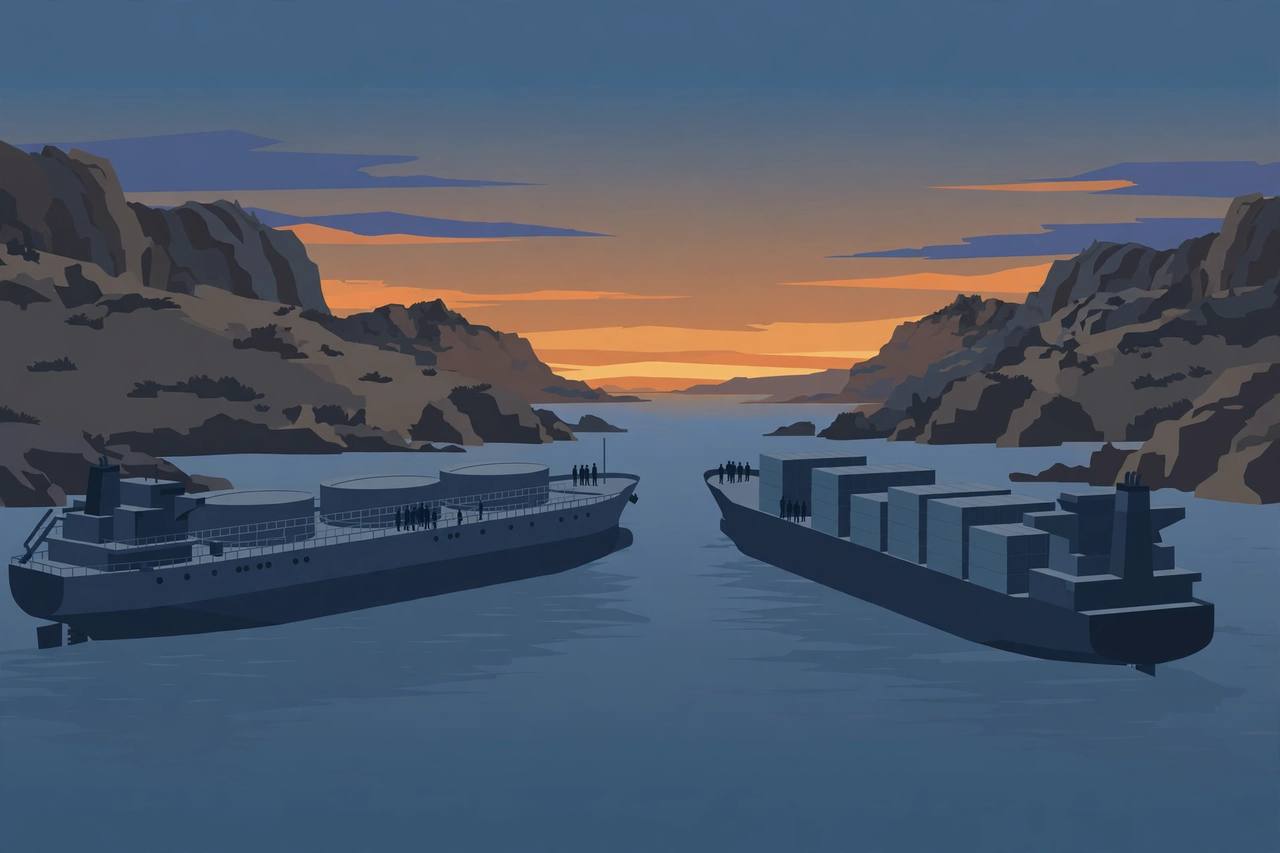
At least 25 civilian seafarers have been killed in and around the Strait of Hormuz since the United States and Israel launched their war on Iran on February 28, the International Maritime Organization (IMO) — the United Nations agency for shipping — has recorded, in the clearest official count yet of the human cost the war has imposed on the merchant crews who keep Gulf oil, gas and cargo moving.
Source: Al Jazeera, Nov 9 2026
The updated toll emerged after the IMO Council, which has 40 member states, ended a five-day meeting on November 6. Secretary-General Arsenio Dominguez said seafarers are still being killed and seriously injured, while others are abandoned and kept away from their homes. The IMO count stood at 22 in mid-September, so three more deaths have been added in under two months — and the agency gave no new figure for how many seafarers remain trapped in the Gulf, beyond saying they number in the thousands.
Source: Marine Insight (IMO via TASS, APA, Trend), Nov 8 2026
Who the victims are
The victims are largely civilian merchant sailors working on oil tankers, cargo ships and other commercial vessels — many from countries far removed from the conflict. India has suffered particularly heavy losses, with at least 16 of its nationals killed, Al Jazeera reported. India is one of the world's largest suppliers of merchant sailors, and its crews — including sailors from Punjab and other states working far from home — sail on a large share of the tankers that cross the Gulf.
Source: Al Jazeera, Nov 9 2026
In June, three Indian sailors were killed in US strikes on commercial vessels near Oman, prompting New Delhi to summon a senior American diplomat. In October, 12 crew members were injured when the Panamanian-flagged tanker On Peace was struck near Oman — 11 of those injured were Indian nationals. People from other countries have also died: in September, two Filipino crew members were killed when the Saudi tanker Sidr was hit by projectiles near the Strait of Hormuz.
Source: Al Jazeera, Nov 9 2026
The most recent death in the IMO count was a crew member of the Marshall Islands-flagged tanker Velos Sapphire, which suffered an explosion north of Qatar on November 5 — a killing Awaaz Punjab reported when it happened. Read: Velos Sapphire seafarer killed in Gulf missile strike
An Indian seafarer from Gujarat, Gandhar Nahim Ajij, also died this past week after the cargo vessel MSV Al Jusufi was struck off Oman; 13 other Indian crew members were rescued. Read: Indian seafarer killed in Al Jusufi attack off Oman
October was the most dangerous month at sea
According to the IMO, at least 129 incidents involving commercial shipping have been reported since the war began, and October was particularly dangerous, with at least 31 vessels hit. Before the war, roughly one-fifth of global oil consumption passed through the Strait of Hormuz, which connects the Gulf to the Arabian Sea. Iran essentially closed the strait after the US-Israeli attacks began, warning that ships sailing without authorisation could be targeted, while Washington imposed a naval blockade on Iranian ports; attacks have involved missiles, projectiles and naval mines that have damaged vessels, set them on fire or sunk them.
Source: Al Jazeera, Nov 9 2026
On Sunday, Iran's Islamic Revolutionary Guard Corps said three oil tankers travelling what it called an unauthorised route in the strait were hit by explosions and severe fires — a claim reported as the IRGC's own statement. Iran has since said navigation aids in the strait were destroyed and warned against unauthorised transit. Read: Iran says navigation aids destroyed, warns on Hormuz transit
"It is unacceptable that throughout this conflict seafarers have been placed in harm's way," the International Chamber of Shipping (ICS), the shipping industry's trade association, told Al Jazeera. "It is incumbent on all parties to take all necessary steps to safeguard the safety of seafarers who are simply going about their job and have found themselves, through no fault of their own, in a highly volatile situation," an ICS spokesperson added. Shipowners are working to give affected seafarers mental-health support and more contact with family, the spokesperson said — beyond the threat of death or injury, the ICS said, the war has taken a heavy toll on sailors' mental health.
Source: Al Jazeera, Nov 9 2026
Rights on paper, danger at sea
About 6,000 seafarers remained stranded near the Strait of Hormuz in October, the IMO said in late August. Protections exist on paper: in March, an arrangement negotiated between maritime unions and shipping companies through the International Bargaining Forum gave seafarers the right to refuse to enter designated danger zones, with company-funded repatriation and compensation equivalent to two months of basic wages; the International Transport Workers' Federation said the deal also provides increased wages and twice the standard compensation for seafarers who die or suffer a disability. But those protections do not necessarily cover every seafarer, and the IMO's own efforts since June to arrange evacuations of stranded sailors have faced repeated obstacles as attacks continue. Under Article 38 of the UN Convention on the Law of the Sea, ships enjoy a right of transit passage that no country may suspend — but as academic Abdul Khalique, head of the Liverpool John Moores University Maritime Centre, told Al Jazeera: "The law is clear on the obligations. The gap is political will and practical enforcement."
Source: Al Jazeera, Nov 9 2026
Iranian civilian maritime workers have also suffered. In May, the head of Iran's merchant marine union said at least 44 Iranian seafarers had been killed and 29 injured since the start of the war — a figure far above the IMO's global count, which Tehran's union count is not part of; the two counts have never been reconciled publicly, and Awaaz Punjab reports both with their sources rather than treating either as settled.
Source: Al Jazeera, Nov 9 2026
What is solid
- The IMO has recorded at least 25 seafarer deaths since Feb 28 and at least 129 shipping incidents
- The IMO Council (40 member states) ended its five-day meeting on Nov 6; the toll was 22 in mid-September
- The most recent death was a Velos Sapphire crew member after the Nov 5 attack north of Qatar
- At least 16 of the dead are Indian nationals (Al Jazeera, from IMO-based reporting)
What is only claimed
- Iran's merchant marine union claims 44 Iranian seafarers killed and 29 injured — a separate, unreconciled count
- The IRGC's claim that three tankers on an 'unauthorised route' were hit on Sunday is Iran's own statement
- Exact numbers of seafarers still stranded vary by date and source; the IMO gave no new figure at the Nov 6 meeting
What happens next
Seafarer safety now turns on the same question as oil prices and Gulf shipping: whether the US-Iran talks produce a settlement that reopens the strait. US President Donald Trump said on Sunday he was highly unlikely to order fresh attacks on Iran as long as talks progress, and Qatar's prime minister is due at the White House on Monday in the mediation effort — but Iran's foreign minister has said the talks have made no progress since the US midterm elections, and ships are still being hit. Until transit through Hormuz is safe and authorised again, every tanker crossing remains a workplace risk for the thousands of Indian, Filipino, Iranian and other crews aboard — and for the families in India and the diaspora waiting on their wages and their safe return.
Source: Al Jazeera, Nov 9 2026