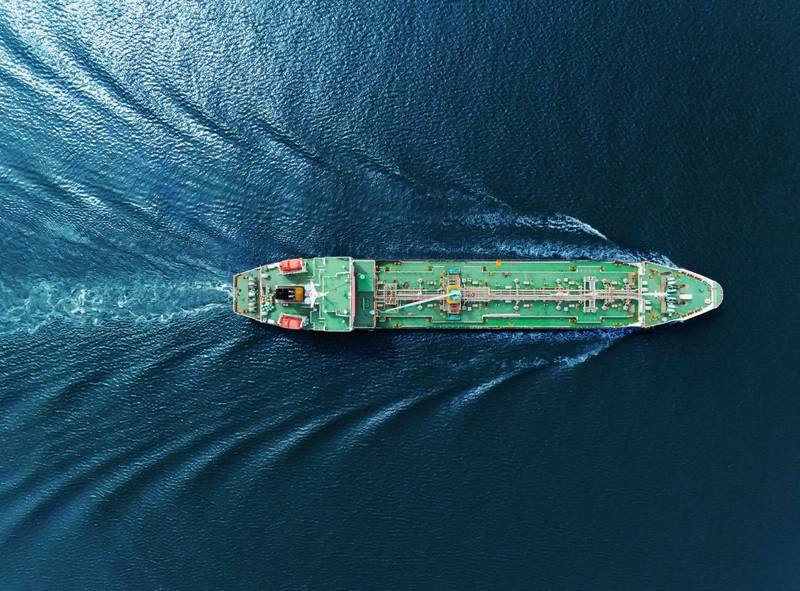
One seafarer has been killed in an explosion believed to have been caused by a missile attack on an oil products tanker in the Gulf, the ship's Greek manager confirmed on Friday — the first confirmed death in the latest wave of attacks on commercial shipping in the region.
Source: Reuters
The Marshall Islands-flagged tanker MT Velos Sapphire was sailing unladen towards Bahrain when it was hit on Thursday, its Athens-based management firm Velos Tankers said in a statement. The dead seafarer had at first been reported missing after the explosion and was later found on board with fatal injuries, the company said.
"The company is greatly saddened to report the death of one of its seafarers, who was found fatally injured on board after having initially been reported missing in the aftermath of the explosion," Velos Tankers said. No other crew member was injured, and the crew extinguished a fire on board caused by the blast. The company reported no pollution from the incident.
The tanker has been taken to Bahrain's Khalifa Bin Salman Port, where an investigation will be launched, the manager said. The extent of the damage to the vessel's hull was still being assessed. The company did not name the dead seafarer or give his nationality, and no government or armed group has claimed responsibility for the attack or commented on who fired the suspected missile.
The attack is the same incident first reported on Thursday, when Britain's UK Maritime Trade Operations (UKMTO) agency said a tanker had been hit by two projectiles about 50 nautical miles north of Qatar's Madinat ash Shamal — deep inside the Arabian Gulf, far west of the Strait of Hormuz. The ship's identity and the death were confirmed only on Friday. Read the first report: tanker hit by two projectiles off Qatar
A pattern of attacks far beyond Hormuz
The Maritime Executive, a specialist shipping publication, reported that open-source analysts matched the Velos Sapphire's movements to the UKMTO alert: the 2007-built, roughly 75,000-tonne products tanker had left Fujairah on November 3 bound for Sitra in Bahrain, and its tracking signal went dark late on Wednesday night. Splash 247, another shipping outlet, reported that the International Maritime Organization (IMO) has identified the vessel and recorded damage with no pollution; the IMO's latest figures count 129 confirmed maritime incidents in the region and 24 seafarer deaths since the US-Israeli war on Iran began on February 28.
Shipping through and around the Strait of Hormuz has been under attack for months, and the pace has not slowed: UKMTO data cited by Reuters on Friday showed attacks on oil-carrying ships still running close to record levels, with overall flows through the strait estimated at under 60 percent of capacity. Those attacks helped push Brent crude back towards $100 a barrel on Friday, even as the benchmark remained on course for a weekly fall of around 12 percent on hopes that the Iran war could move towards a negotiated end.
Why it matters for Punjabi and Indian workers
The Gulf's ships, ports and oil terminals are crewed and staffed in large part by workers from India, including Punjab — seafarers, port hands and energy workers whose families depend on Gulf wages and remittances. Every confirmed death at sea sharpens the safety question hanging over those workers while the war continues. The dead man's name and nationality have not been released, and it would be wrong to guess at them; what is confirmed is that a working seafarer who was reported missing on Thursday is now confirmed dead, and that his ship reached a Bahraini port with a damaged hull and a crew that had to fight a fire at sea.
What happens next: the investigation at Khalifa Bin Salman Port is expected to establish what struck the Velos Sapphire and from where. Until an authority confirms the weapon and its origin, the missile account rests on the ship manager's assessment, reported by Reuters — and shipping firms, insurers and the thousands of Indian crew members working Gulf routes will be watching both the findings and whether attacks this deep inside the Gulf continue.