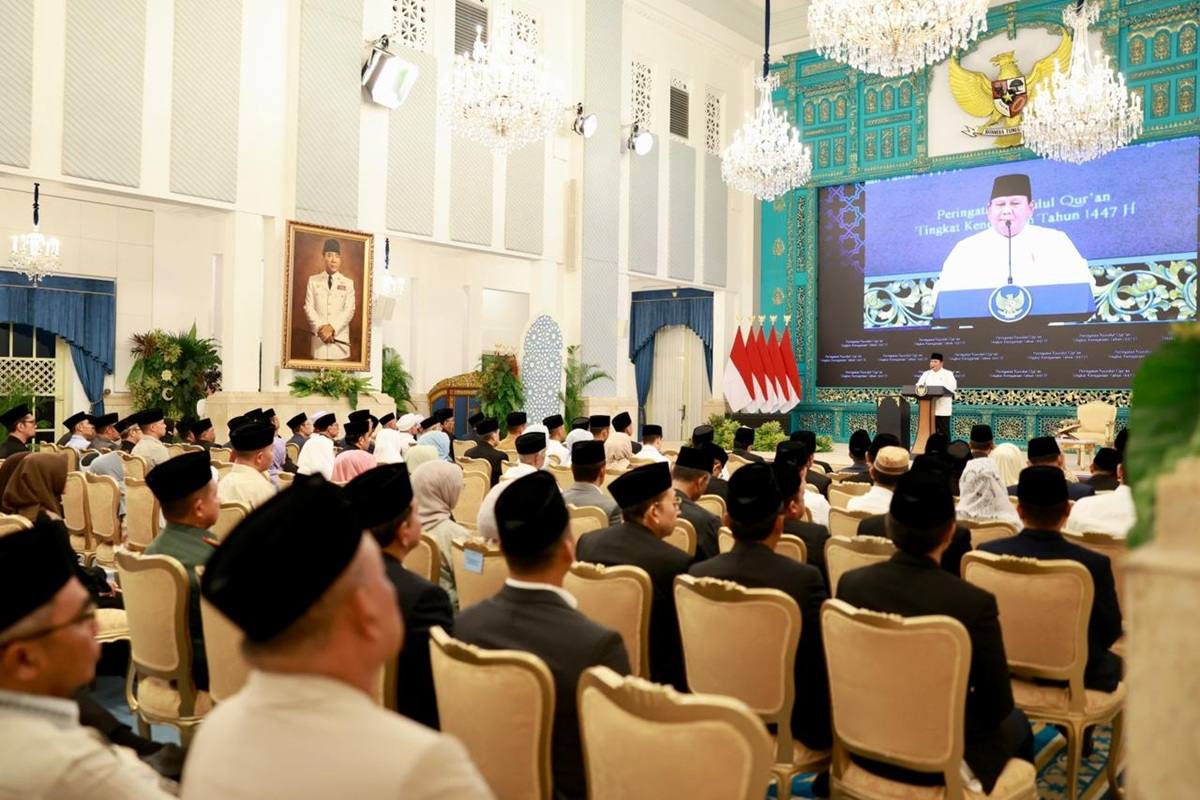
Jakarta, November 6: Indonesian police have named a fourth senior officer as a suspect in the alleged wiretapping of President Prabowo Subianto, as authorities continue to investigate the motives behind a scandal that has exposed a deepening rift between the president and his predecessor, Joko Widodo, Reuters reported.
Source: Reuters
At a press conference late on Thursday, police named a senior law enforcement official with the initials SU as the new suspect, and said he served as monitoring chief at Indonesia's Criminal Investigation Agency between 2010 and 2019. Local media later identified him as Slamet Uliandi. Investigators alleged that SU, who was head of the investigation agency's information and technology unit from 2021 to 2026, gave the go-ahead for the wiretapping, said cyber crime unit director Suhermanto at the press conference. "When the other two suspects were about to wiretap, they got approval from SU. They also asked his approval before deleting interception records," Suhermanto said, adding that SU had not yet been detained due to a health condition.
The fourth naming follows the development Awaaz Punjab reported on November 4, when three senior officers were arrested — including the former national police chief and Prabowo's chief of staff, Listyo Sigit Prabowo, who is widely known as a Widodo loyalist. Read the earlier story
Police are still investigating the motives behind the attempts to intercept Prabowo's communications, and have so far questioned 13 police officers and five criminal and IT experts. The national police chief has also formed a special team to investigate the case, spokesperson Trunoyudo Wisnu Andiko said. Jakarta remained calm on Thursday and Friday despite the deployment of thousands of troops in the wake of the wiretapping revelations, with military tents and buses seen in the capital alongside a small number of soldiers, Reuters reported.
Intelligence chief raises treason — ministers urge caution
On Friday, State Intelligence Agency (BIN) chief Muhammad Herindra told reporters after meeting Prabowo at the Presidential Palace in Jakarta that the alleged illegal wiretapping could point to treason. "I think it was an illegal act and one that points toward treason. That is all," Herindra said. He had come to brief the president but declined to disclose the contents of his report, did not say who may have ordered the alleged surveillance, and did not explain what evidence led him to describe the case as potentially treasonous.
Source: The Kabar News
Coordinating Law, Human Rights, Immigration and Correctional Services Minister Yusril Ihza Mahendra stressed that investigators had not reached a final conclusion and had not charged the suspects with treason. "The elements are beginning to point in that direction, but investigators are still examining them," Yusril said. "It would be premature to immediately classify the case as treason because that conclusion must be supported by sufficient facts and evidence." The current investigation focuses on alleged illegal interception, unauthorized electronic access and the deletion of electronic evidence.
What investigators allege
Police have named four police generals as suspects: former National Police Chief Listyo Sigit Prabowo, Ahrie Sonta Nasution, Eko Hadi Santoso and Slamet Uliandi. Investigators allege the suspects entered telephone numbers belonging to Prabowo and other prominent figures into a lawful-interception system without the required verification and with no connection to a legitimate law enforcement investigation; other alleged targets included government officials, political figures and media representatives. The alleged interceptions took place between 2025 and 2026, police said. Investigators also accuse the suspects of ordering officials to delete interception records in October 2026 to conceal evidence. The most serious charge publicly announced so far carries a maximum prison sentence of 10 years, and all four suspects retain the presumption of innocence.
Herindra's assessment does not establish that treason occurred. Article 191 of Indonesia's Criminal Code applies when someone commits treason intending to kill the president or vice president, deprive either of their liberty, or render them unable to govern — punishable by the death penalty, life imprisonment or a maximum 20-year prison term. Prosecutors would therefore need to prove more than illegal surveillance: they would have to connect the alleged operation to one of those specific intentions. The Constitutional Court upheld Indonesia's treason provisions in 2018 but warned authorities to apply them carefully so they do not suppress lawful expression. Prabowo has instructed the police to investigate the case objectively and transparently.
The case has piled more pressure on Prabowo, Reuters reported, with public discontent growing over his costly populist policies and weakening investor confidence in Indonesia's $1.5 trillion economy (yaani about $1.5 lakh crore). Lawmakers are also considering a probe into the eligibility of Vice President Gibran Rakabuming Raka, Widodo's son, in what could be the first step toward removing him from office.
What happens next
Investigators are examining digital records to establish the chain of command, determine how the suspects may have used the intercepted information, and identify any other parties involved. Officials said preliminary indications suggested the surveillance may have sought to undermine the government, but until investigators establish the operation's purpose and the intended use of the intercepted information, the treason allegation remains a preliminary legal assessment — not a proven offence.