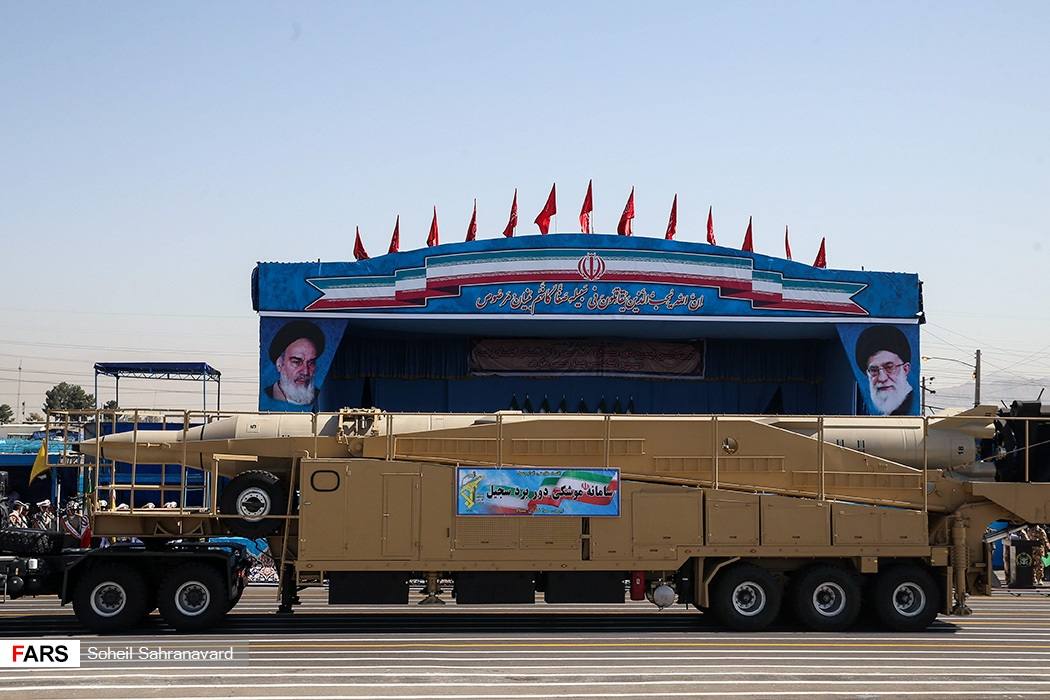
Iranian lawmakers have issued Tehran's most explicit threat yet against European territory, warning that if the United States uses its bases in Europe for a renewed attack on Iran, Iranian missiles will be fired towards Europe — with Italy and Germany named directly. The warnings, delivered on Friday, November 6, come as President Donald Trump weighs whether to resume major strikes on Iran after the US midterm elections.
Ahmad Bakhshayesh Ardestani, a member of the Iranian parliament's National Security Committee, told Euronews directly: "If America uses its bases in Europe, including in Italy and Germany, Iran's missiles will be fired towards Europe." Ardestani argued that European nations had, in his words, "already been at war with Iran" during the previous phase of the conflict simply by allowing their bases to be used — a framing that treats any future base access as an act of co-belligerence that invites a direct response.
Source: Euronews via Latin Times
A second lawmaker, Hosseinali Haji Deligani, told Iran's Tasnim news agency that "the range of the responding missiles will also encompass Europe, and this will lead to the oil price crossing the $150 threshold." He said Iran's response to any new US or Israeli attack would be "massive, multiplied and strategic", without geographical limits, and he described the US naval blockade of Iran as "a form of war", warning that Iranian forces would attack "at the appropriate moment".
Source: Tasnim via Hatha Alyoum English
A third lawmaker, Kamran Ghazanfari, went further still in remarks reported this week, claiming Iran could retaliate against US assets in Europe and potentially on American soil if Washington launched new strikes from bases in Arab states. Iran's state broadcaster Press TV also reported Deligani's warning on Friday, saying retaliatory strikes reaching Europe could push oil prices to new record highs.
A week of widening threats
The lawmakers' statements follow an order issued on October 31 by Iran's Supreme Leader, Ayatollah Mojtaba Khamenei, for the armed forces to prepare retaliation "without geographic restrictions" and to expand their target list beyond regional assets. On Tuesday, Iran's top military commander likewise warned that the armed forces would respond to any threat without "geographical limits". Iran's Kayhan newspaper, close to the leadership, has declared that every US, Israeli and NATO facility as far as "the heart of Europe" falls within range of Iran's precision missiles, and a banner hung on the wall of the German embassy in Tehran this week cited National Security Council Secretary Mohsen Rezaei: "Europe will pay the price for supporting Israel."
Britain pushed back. Cabinet minister Steve Reed told the BBC this week that there is "no assessment to substantiate" the claim that Iran is currently targeting Europe, with no intelligence suggesting it is actively attempting to do so. NATO has said it is prepared to defend all member states. These are threats and counter-claims, not attacks: no Iranian missile has been fired at Europe, and no new US strike order has been announced.
What is solid
- Iranian lawmakers Ardestani, Deligani and Ghazanfari made the Europe warnings on the record this week, in comments to Euronews and Tasnim
- Supreme Leader Mojtaba Khamenei ordered a response 'without geographic restrictions' on October 31
- The UK government says it has no assessment that Iran is currently targeting Europe
What is only claimed
- Iran's claim that its missiles can reach targets across Europe, including Western European capitals — analysts cited in reporting say the declared ranges of the Khorramshahr (about 2,000 km) and Emad (about 1,700 km) cover south-eastern Europe, while Western capitals would need longer-range systems Iran has not publicly confirmed as operational
- Deligani's claim that such an escalation would drive oil above $150 a barrel — a lawmaker's prediction, not a market figure
The missiles behind the words
Reporting on the threats notes that in March 2026 Tehran fired two intermediate-range ballistic missiles at the joint UK-US base on Diego Garcia, roughly 4,000 kilometres from Iranian territory — a demonstration that, if accurate, places south-eastern Europe within reach. Iran's late Supreme Leader Ali Khamenei had for years maintained a stated policy limiting missile development to a 2,000-kilometre ceiling. Parliament Speaker Mohammad Bagher Ghalibaf struck a more measured tone than the lawmakers, saying Iran had given Washington a "firm and rational response" and that "the ball is now in America's court" — dual-track messaging that pairs maximum threats with a diplomatic opening.
The threats land in the middle of a decision week in Washington, where Trump has said he will soon decide whether to resume all-out war on Iran, and of a mediation track in which Iran has sent Washington a nuclear proposal through Qatar while refusing talks until its seven conditions are met. Read: Iran's nuclear proposal via Qatar and its seven demands
For the lakhs of Punjabi and Indian workers across the Gulf, and for families in Punjab who depend on Gulf remittances and watch fuel prices at home, the stakes in this rhetoric are direct: a wider war that reaches European bases and closes shipping lanes is the scenario most likely to push oil sharply higher and put Gulf jobs and flights at risk. For now, though, what has changed is the language — Tehran is attaching country names to threats it previously left general, in an apparent effort to make European governments think twice before offering Washington basing rights. What happens next depends on the decision Trump says is coming soon.