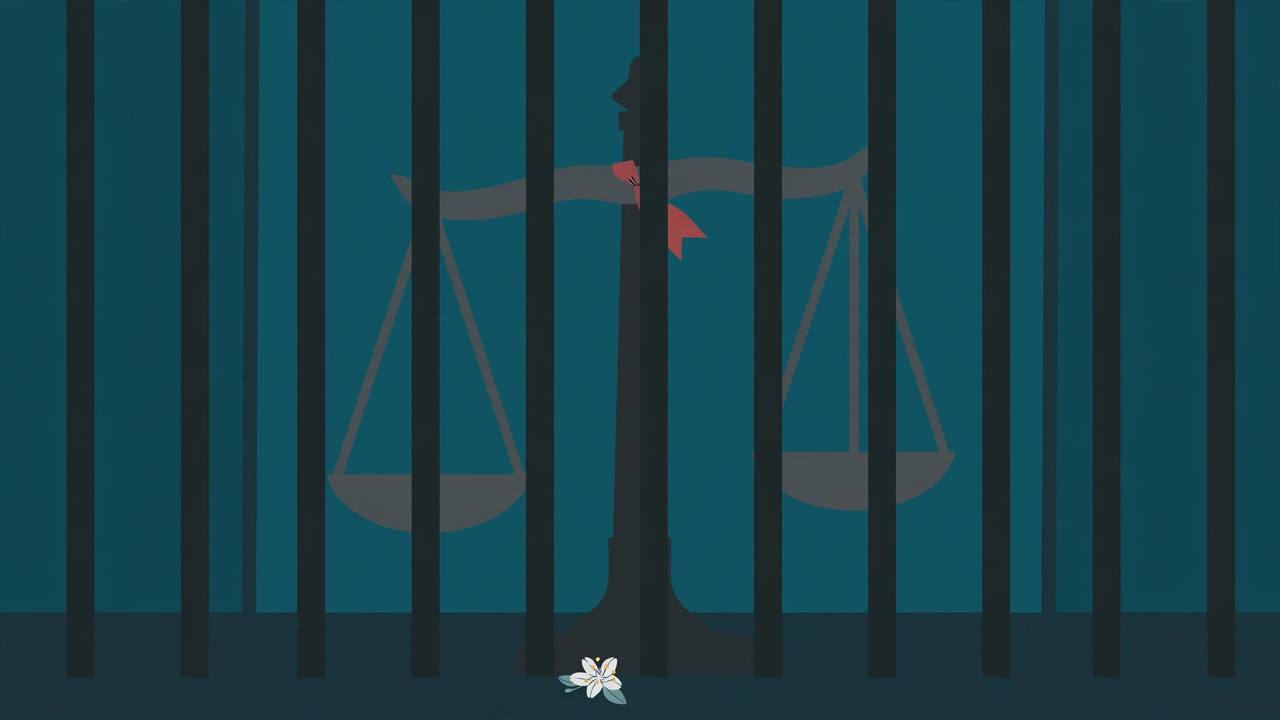
Six women have been sentenced to death in Iran this year in connection with the anti-government protests that swept the country in January, according to Mai Sato, the United Nations human rights rapporteur for Iran — and rights groups say women protesters and dissidents are being handed death sentences in numbers not seen for decades.
Source: BBC News
Among them is Taraneh Rahimi, 21, who is on death row. Her twin sister Romina was sentenced to 25 years in prison. The sisters were arrested in late January after joining the protests, and were tried over demonstrations in Isfahan, in an area of the city where a member of the Islamic Revolutionary Guard Corps (IRGC) was killed. Their cousin, Masoud Nourmohammadi, told BBC News Persian that in recent weeks Taraneh has been unable to walk properly after her legs were beaten, and an ear infection caused by an untreated head injury has affected her balance.
When the twins' mother first saw them in prison, their faces were so swollen and bruised and their hair so pulled out that she could only recognise them by their voices, Nourmohammadi said. He said Taraneh signed a confession after interrogators threatened that her sister would be raped in front of her. Both women deny all the charges. The BBC has seen part of a sentencing document which says Taraneh was convicted of moharebeh, a capital offence under Iran's Islamic Penal Code, including drawing a bladed weapon with intent to endanger people's lives. Her cousin says there is no evidence she had a bladed weapon.
The other women facing execution
Mahboubeh Shabani, widely reported to be 33 and a civil engineer, was sentenced to death in September under Iran's espionage law after transporting injured protesters, according to rights groups. From jail in Mashhad, she said in a voice message: "Everyone is in a terrible place mentally, especially those whose sentences have been finalised." Najmeh Amini, reported to be 23 and also jailed in Mashhad, was sentenced to death after being convicted of blasphemy in a social media post. In a voice message attributed to her, she said: "As long as I am alive, I have one hope, and that is to see a free and prosperous Iran before my life ends by the noose."
Mojdeh Hashemi Bazargani, reported to be 27, is also facing execution, according to rights groups, after being convicted of charges including espionage following her arrest in April, during the current war between Iran and Israel and the United States. In audio shared by the US-based Iranian rights group Tavaana, she described being beaten in the head, neck and body and made to sign a confession. "They accused me of espionage. They say you've been paid for it. If I had been paid for espionage, I would have a car or a house. I have nothing," she said. Amnesty International describes the charges in all of these cases, and the twins' case, as politically motivated.
Sato said the sisters were part of a case in which 10 people were sentenced to death, but that there was no clarification of the acts attributed to each individual. She said that as well as the six women linked to the protests, a further three women have received death sentences this year — for blasphemy, corruption on Earth charges in relation to the war in March, and espionage and moharebeh. Together, the nine sentences are more than the Human Rights Activists News Agency (Hrana) recorded for women for similar offences over the whole decade to 2025, with no more than three in any one year.
The death sentences in three of the cases Sato identified as linked to the protests have since been overturned — though two of those have been sent for retrial. Sato said she is concerned by an increasingly frequent pattern in which overturned death sentences are later reimposed by a parallel branch of the judiciary once public attention has subsided. Amnesty's Iran researcher Raha Bahreini called it a "horrific rise" in politically motivated executions. Iranian human rights lawyer Musa Barzin, based in Turkey, said it appears that factors such as gender or age now carry less weight in determining the severity of punishment.
What Iran says
The Iranian embassy in London told the BBC that claims of an increase in the use of the death penalty in protest-related cases were "misleading". It categorically rejected allegations of torture, and said the death penalty has not been imposed solely for peaceful protest, which it called a "legitimate, and protected right". It said death sentences in relation to the "riot in January 2026" were issued in cases involving "intentional murder" or "moharebeh (the taking up of weapons with the intent to threaten or wreck the people's lives or property)". The embassy said confessions obtained under duress have no legal validity, and that judicial proceedings in Iran are conducted in accordance with the Constitution and rule of law.
Background: the January protests and the war
The January protests began in late December over economic grievances and grew into Iran's largest against the clerical establishment since the 1979 Islamic Revolution. Hrana says it has identified more than 7,000 people killed in the crackdown that followed, most of them protesters, but believes the true figure is much higher. The Iranian government says 3,117 people died, including members of the security forces, and blames the United States and Israel for fomenting the unrest. The country is also in the middle of a war with the United States and Israel that began in February. Sato said there was a turning point for women in Iran during the 2022 protests over the death of Mahsa Amini, who died in custody after being detained over an alleged breach of Iran's dress code. "Their political agency, visibility and leadership have made them targets of state repression," she said.
What is solid
- Six women have been sentenced to death this year in connection with the January protests, according to UN rapporteur Mai Sato.
- At least 39 people have already been executed in connection with the January protests, according to Sato.
- Taraneh Rahimi was convicted of moharebeh, according to part of a sentencing document seen by the BBC.
What is only claimed
- Whether Taraneh Rahimi carried a bladed weapon — the sentencing document says she did; her family says there is no evidence she did.
- Whether confessions in these cases were coerced — families and lawyers allege torture and sexual abuse during interrogation; the Iranian embassy categorically rejects the allegations.
- The true death toll in the crackdown — Hrana has identified more than 7,000 killed; the Iranian government says 3,117 died.