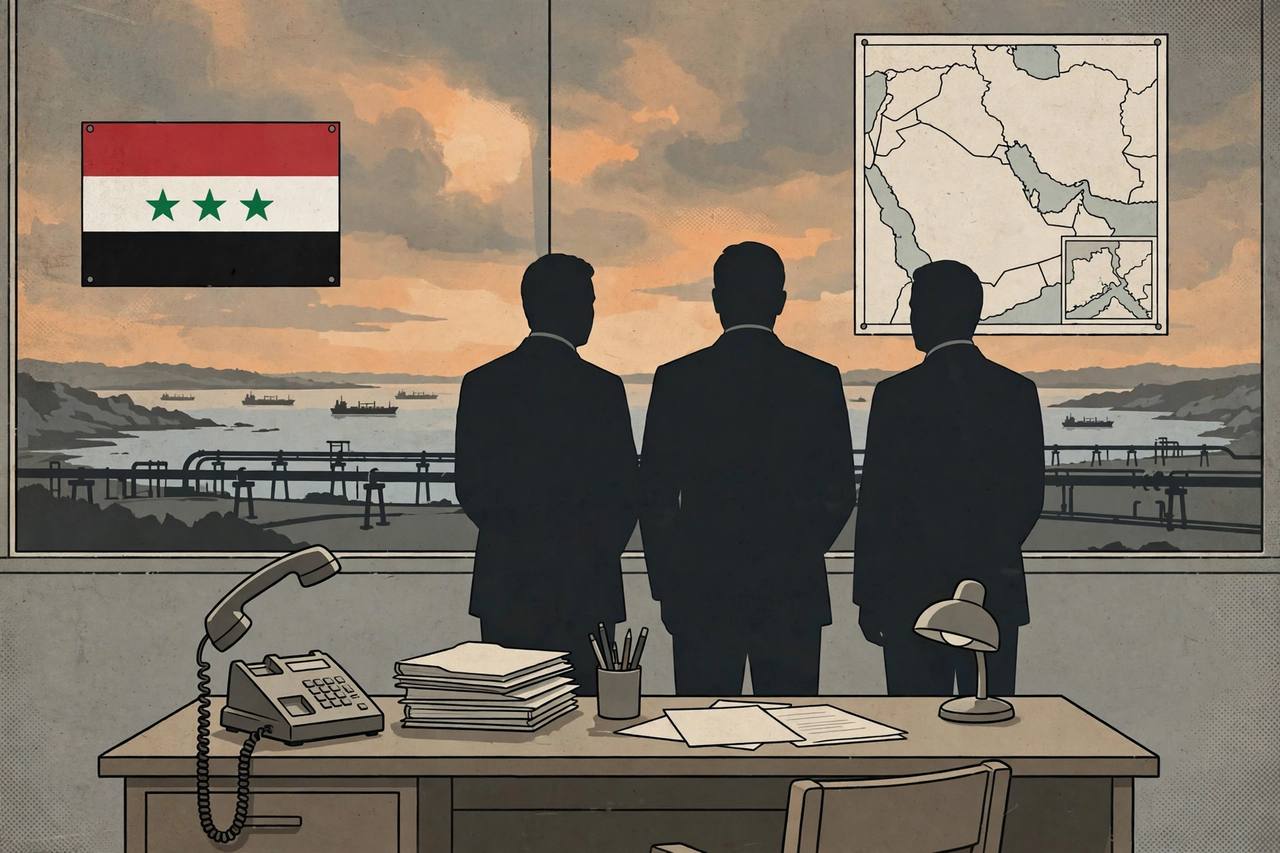
Iraqi Prime Minister Ali al-Zaidi has told US President Donald Trump that Baghdad will not let Iraqi territory be used to attack neighbouring countries, his office said, in a phone call on Thursday, November 5, that came as diplomatic efforts intensify to avert renewed US attacks on Iran.
Source: Al Jazeera
The two leaders “discussed the evolving situation in the region, security developments, and prospects for the next phase”, al-Zaidi's office said. The prime minister reaffirmed Iraq's call “for respect for the sovereignty of states and for Iraqi territory not to be used as a launching point for attacks against neighbouring countries”, and stressed the need for diplomacy and dialogue to safeguard the region's security and stability. The Iraqi statement said the two sides agreed to coordinate on containing tensions and stopping the conflict from spreading, with priority given to dialogue and diplomacy.
Source: Iraqi Prime Minister's office via Shafaq News / The Insight International
Foreign minister: a new war would be a “disaster” for Iraq
Foreign Minister Fuad Hussein told Dijlah TV on Thursday that the possibility of renewed US military attacks against Iran is “not a secret”, and warned Iraqi armed groups against joining in any Iranian retaliation. “Pushing Iraqi society into the war will lead to a disaster,” he said. “We are not prepared for war. Neither Iraqi society nor the armed forces are prepared for war.”
Source: Al Jazeera
Hussein said Iraq had been turned into a battlefield after the US struck Iran, coming under attack from both the US and Iran as well as from armed groups inside Iraq. “We are not part of any axis, and we do not want to let the Iraqi arena be turned into a battlefield,” he said. “We have good relations with the US and with our neighbour Iran… We need a clear policy that we are not a part of the war, and we do not want to be a part of the war.”
Source: Al Jazeera
A pledge that has already been tested
Baghdad's assurance has been tested before. Iraqi authorities said drones that hit Saudi Arabia's East-West oil pipeline on September 11 were launched from Iraq's Maysan province, and al-Zaidi gave Saudi Crown Prince Mohammed bin Salman the same assurance in Riyadh on October 14. A spokesperson for the Hikma Movement, part of the ruling Coordination Framework, said on Monday that Iraq had received official warnings of sanctions, mainly from the United States, if it is drawn into a renewed war with Iran. Since taking office in May, al-Zaidi has prioritised the disarmament of all fighter groups in the country, including several powerful pro-Iran groups that have launched attacks in support of Iran across the region during the war.
Source: The Insight International / Al Jazeera
What is solid
- The Iraqi statement did not say what Trump told al-Zaidi, and the White House had not released its own account of the call by Thursday evening.
- US special envoy Tom Barrack also met al-Zaidi in Baghdad on Thursday, for talks on regional tensions, economic cooperation and armed groups operating outside state control.
What is only claimed
- Gulf states accuse Iran-aligned Iraqi militias of firing missiles and drones at them since the war began in February — Baghdad's own account is that it is trying to rein those groups in, and no timeline or enforcement steps were announced after Thursday's meetings.
Background: caught between Washington and Tehran since February
Iraq, which neighbours Iran, has struggled to maintain a balancing act between US and Iranian interests since the US-Israeli war on Iran began on February 28. The call came two days after the US midterm elections, while Qatar mediates indirect talks between Washington and Tehran, and after Trump said on Tuesday that US forces had struck an air-defence site on Iran's Qeshm Island near the Strait of Hormuz. Trump has since said Washington will “soon” decide whether to resume major strikes on Iran. Iraq has been one of the few countries granted an exemption by Iran to pass freely through the Strait of Hormuz — a lifeline for an economy whose oil sales fund about 90 percent of the federal budget.
Source: Al Jazeera / The Hindu BusinessLine
What happens next: Baghdad's message to both capitals is that Iraq will not be a launchpad, a battlefield or a party to the war — but that pledge depends on armed groups inside Iraq staying out of any Iranian retaliation, the very thing Foreign Minister Hussein was warning against on Thursday. For the lakhs of Punjabi and Indian workers across the Gulf, Iraq holding its neutrality is one more barrier between the US-Iran standoff and a wider regional war.
Source: US envoy meeting report, The Insight International
Iran has exempted Iraq — along with India, China and Qatar — from its Strait of Hormuz restrictions, the waterway that carries about 90 percent of Iraq's oil exports. Read: Iran exempts India, China, Iraq and Qatar from Hormuz restrictions
The call came as Trump weighs whether to resume major strikes on Iran after the Qeshm Island strike and the midterm results. Read: Trump says he will soon decide on resuming the war on Iran