A woman was killed and several children were injured in Israel's latest attacks in Lebanon over the past day, Al Jazeera reported on Friday, adding that civilians made up the majority of the victims of the past 24 hours. The children were not named, and no consolidated casualty toll was issued by Lebanese authorities for Friday's strikes.
Source: Al Jazeera, Nov 13, 2026
The Israeli army said on Friday that it had hit 40 Hezbollah sites in the past day in renewed air strikes across southern Lebanon — a figure given by the military itself. Hezbollah said it had retaliated with several attacks on Israeli forces inside Lebanese territory. Both claims are the parties' own and could not be independently verified in full.
Source: Al Jazeera (Israeli army and Hezbollah statements), Nov 13, 2026
On the ground, Lebanon's National News Agency reported a large explosion south of the town of Khiam in the Marjeyoun district, artillery shelling around Kfar Tebnit, Zawtar al-Sharqiyah, Mayfadoun, Tallousa and Bani Hayyan, and Israeli drones flying at low altitude over Beirut, with no strikes reported inside the capital itself.
Source: Lebanese National News Agency via Voice of Emirates, Nov 13, 2026
The 'Yellow Line' and the evacuation warnings
Al Jazeera reported that the Israeli army is holding a zone amounting to roughly 10 percent of Lebanon's territory and has drawn a so-called "Yellow Line" south of which it treats the area as a no-go zone. On Thursday, the Israeli military warned residents of eight Lebanese towns outside its declared buffer zone to leave their homes immediately before strikes; the same order has previously been issued to 20 villages, the broadcaster said.
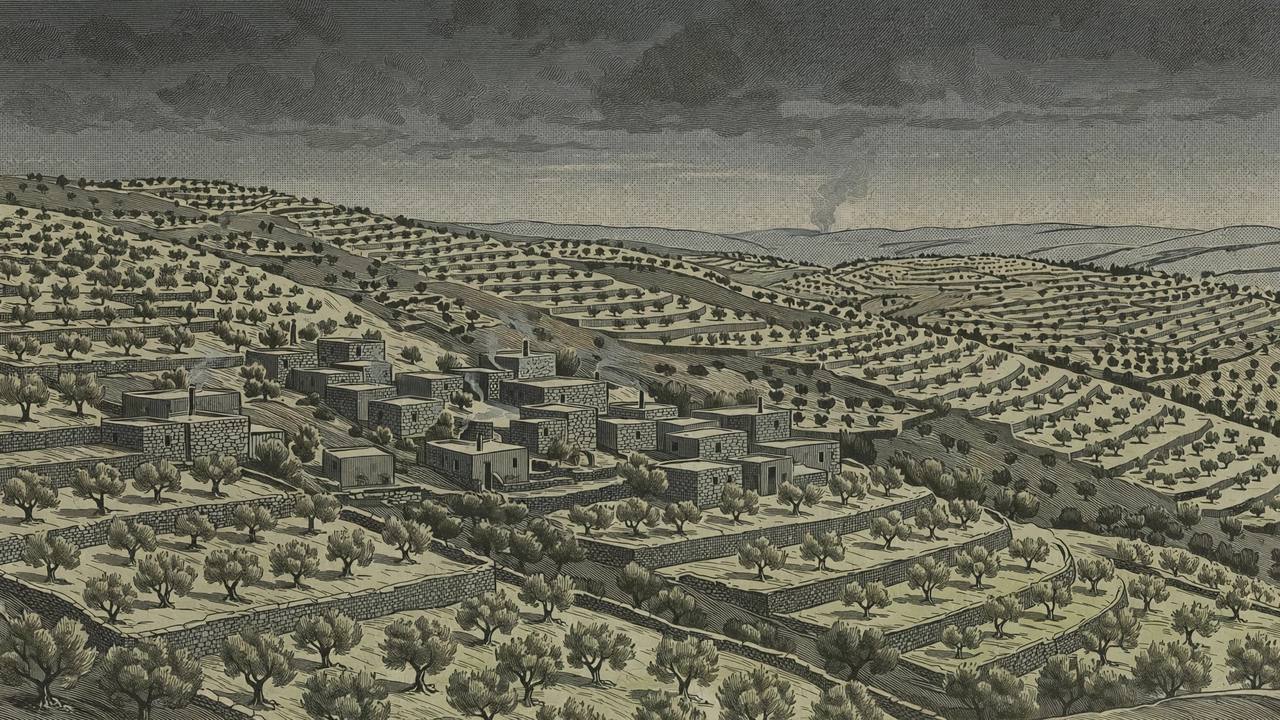
In Mais al Jabal, in the southern Marjayoun district, resident Mounir Kabalan described finding his damaged home and olive trees planted with his father and brothers in 2007 uprooted: "What hurt me when I saw the uprooted olive trees that I planted with my father and brothers in 2007, and we took care of it like we took care of our children." Activists and observers cited by Al Jazeera accuse Israeli troops of systematically destroying homes, infrastructure and water networks in the border villages; Israel has shared satellite imagery showing entire neighbourhoods levelled, and says its operations target Hezbollah.
A ceasefire under strain
The attacks continue despite a US-brokered ceasefire that began last month. Al Jazeera put the number killed in Israeli air strikes during the truce at 40. Lebanon's army, meanwhile, said on Friday it had seized a weapons depot in Beirut's southern suburbs — a separate development in the government's effort to assert control over armed groups' stockpiles.
The strikes came on the same day Lebanon's army announced the seizure of a weapons depot in Beirut's southern suburbs. Read: Lebanon army seizes weapons depot in Beirut's southern suburbs
Diplomatically, Al Jazeera reported that President Joseph Aoun and parliament speaker Nabih Berri are divided on how to approach negotiations to end the war, while the US embassy in Beirut said on Thursday that Lebanon is "at a crossroads" and its people have an opportunity to reclaim their country through peace talks with Israel.
What is solid
- Israeli strikes and shelling across southern Lebanon on Friday were reported independently by Lebanon's National News Agency and Al Jazeera, naming Khiam, Kfar Tebnit and Zawtar al-Sharqiyah among the locations.
- The Israeli military publicly warned residents of eight towns to evacuate on Thursday, a step reported before Friday's strikes.
What is only claimed
- The figure of 40 Hezbollah sites hit is the Israeli army's own claim; Hezbollah's account of retaliatory attacks is likewise its own, and neither was independently verified in full.
- Casualty reporting for Friday remains incomplete: Al Jazeera reported one woman killed and several children injured, while the NNA field summary carried no consolidated toll.
What happens next: with evacuation warnings extending to towns beyond the declared buffer zone and the truce death toll rising, the immediate question is whether the US-brokered ceasefire's guarantors press Israel to halt the near-daily strikes — and whether Hezbollah's retaliation stays limited to Israeli forces inside Lebanon or widens.