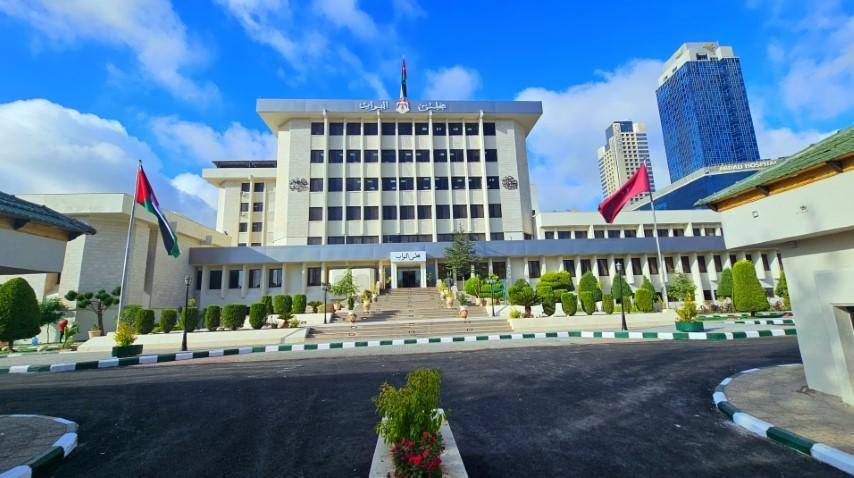
Jordan's parliament has begun debating tougher anti-terrorism laws after last month's deadly attack on a church in Karak, with the House of Representatives voting on Wednesday to send draft amendments to its Legal Committee for review.
Source: Al Jazeera
The government-backed amendments to the 2006 Anti-Terrorism Law would double the minimum prison sentences for terrorism-related offences, raising them to 10 years and up to 15 years in certain cases, while keeping the death penalty for the most serious offences, the state-run Jordan News Agency reported.
House Speaker Ibrahim Tarawneh said the chamber had pledged to review the legislation after the attack on the church in southern Jordan and the killing of a police officer in the capital, Amman. The House voted on Wednesday to refer the draft amendments to the Legal Committee; the legislation will return to the chamber for debate and a vote before going to the Senate and, if approved, for royal ratification.
The Karak attack that prompted the law
On October 23, gunmen opened fire during a funeral at the St George's Greek Orthodox church in the village of Hamoud, in Karak governorate, in a rare attack on Jordan's Christian minority. Nine people were killed and 34 others were wounded, according to the authorities.
Security forces arrested three men — two Jordanian brothers and their relative by marriage — on October 26 after a shootout at an abandoned house in Karak. Last week, Jordan's State Security Court sentenced all three to death for the attack. The ruling is subject to appeal and automatic review by the Court of Cassation, the state news agency Petra reported.
On Wednesday, the same court sentenced another man to death for killing a police officer in Amman. The officer was stabbed on November 5 while on guard duty near the Sri Lankan embassy in the capital.
Criticism inside parliament
The proposals drew criticism from First Deputy Speaker Ayatollah Freihat, who said legislation should not be based on knee-jerk reactions to events. He raised concerns that the amendments could harm freedom of expression in Jordan, and called on the government to withdraw the draft and form a committee of legal experts to review the state's criminal policy. He criticised what he called 'vague' formulations in defining terrorism, including 'disrupting public order' and 'harming the public interest', the Jordanian news agency FactJo reported.
King Abdullah II had earlier said the kingdom would not be shaken by the attack on the church. Opening the new session of parliament this month, he said 'the treacherous hand of terrorism' had reached out 'to test the resilience of our state and the resolve of our people'.
Jordan also responded to the attack beyond its borders: in late October, the Jordanian air force carried out airstrikes on militant hideouts in southern Syria, days after the Karak shooting. Major militant attacks have been rare in Jordan compared with its neighbours, and the two fatal incidents in quick succession — the church shooting and the killing of the police officer — have shaken the capital, Amman.
Jordan's State Security Court sentenced three men to death on November 15 for the October 23 attack on the church in Karak that killed nine people. Read the earlier story