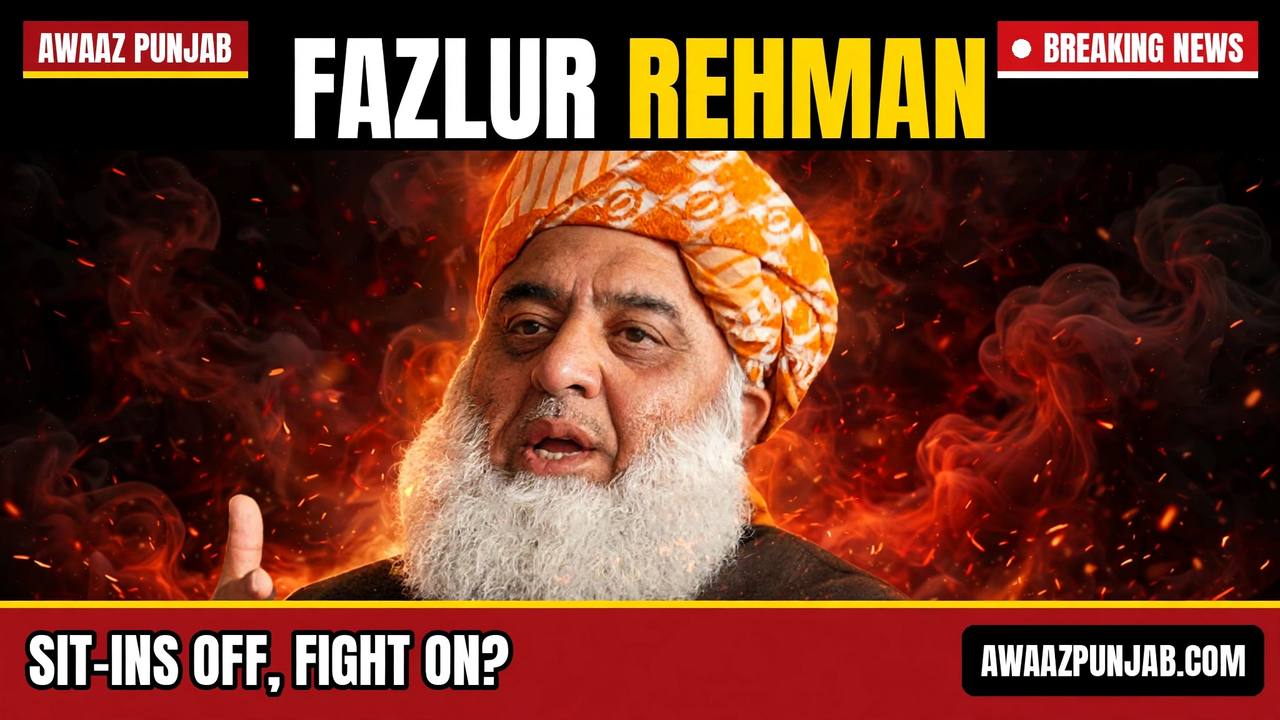
JUI-F ended its nationwide sit-ins on Friday, November 27, a day after the party blocked highways across Pakistan over the ban on its Sargodha gathering. Read our earlier report on how the protests began. Earlier: JUI-F chief calls nationwide protests as Sargodha conference blocked
Jamiat Ulema-e-Islam-Fazl (JUI-F) called off its nationwide road blockades on Friday, November 27, allowing traffic to resume on major highways and motorways, a day after the party's supporters blocked roads across Pakistan in protest against restrictions on its planned conference in Sargodha.
Source: QOM News
The decision followed instructions from JUI-F chief Maulana Fazlur Rehman, who directed party workers to end their sit-ins and organise further protests after Friday prayers, with arrangements to be decided at district level. The withdrawal of the sit-ins does not mark the end of the protest campaign, and the dispute over the Sargodha gathering remains unresolved.
What happened on Thursday
The demonstrations began on Thursday after Fazlur Rehman accused the Punjab administration of preventing him from travelling to Sargodha, where he was scheduled to address a party gathering. He also alleged that several party leaders and workers had been detained.
Following his call for nationwide protests, JUI-F supporters blocked major roads in Punjab, Khyber Pakhtunkhwa, Sindh and Balochistan, disrupting transport and leaving commuters stranded. The Lahore-Islamabad Motorway was blocked near the Bhera Interchange, while demonstrations also affected the Peshawar-Islamabad Motorway and several national highways.
In Lahore, Fazlur Rehman's convoy remained near Thokar Niaz Baig on Multan Road for several hours after police barriers prevented it from proceeding towards Sargodha. The restrictions caused traffic congestion, affecting motorists and school transport. Traffic began returning to normal after demonstrators dispersed and authorities reopened the affected routes.
Arrests in Peshawar
Police in Peshawar arrested more than 22 JUI-F leaders and workers after protesters blocked the M-1 motorway and burned tyres during a demonstration, authorities said. Between 180 and 200 supporters and local leaders took part, blocking both sides of the motorway near Peshawar. Police formally named 16 local leaders and workers in the first information report (FIR No. 189) registered at Chamkani Police Station, under sections 148, 149 and 341 of the Pakistan Penal Code.
Source: Azaad Digital
The Khyber Pakhtunkhwa government's information adviser said authorities would not allow anyone to take the law into their own hands or obstruct public roads in the name of political demonstrations, and warned of strict action against those involved in blocking highways.
Why JUI-F was protesting
The dispute followed an order issued by the Sargodha district administration on November 25, barring Fazlur Rehman and eight other JUI-F figures from entering or remaining in the district for 30 days under the Maintenance of Public Order Ordinance. Authorities cited concerns about public order, while the party maintained that the restrictions interfered with its constitutional right to organise political gatherings.
The controversy also involved conflicting accounts of Fazlur Rehman's detention. JUI-F representatives claimed he had surrendered to police following the standoff in Lahore to avoid a confrontation. Lahore police rejected the claim, maintaining that the party chief had neither been arrested nor placed under house arrest and had returned to his residence. The issue has also reached the Lahore High Court, where the party challenged the restrictions on his movement and government representatives denied the allegations of unlawful confinement.
Federal Information Minister Attaullah Tarar urged Fazlur Rehman to exercise restraint and resolve the dispute through political dialogue.
What happens next
Fazlur Rehman has instructed local JUI-F organisations to arrange demonstrations after Friday prayers, with arrangements to be determined at district level. The party's Rawalpindi chapter separately withdrew its protest call for Islamabad and Rawalpindi, citing the presence of foreign delegations in the federal capital.
Seven political parties in Balochistan have announced support for Fazlur Rehman's call, and agreed to hold an all-parties conference at Arbab House in Quetta on December 10 to announce an alliance and determine a course of political action. Although the road blockades have ended, the disagreement over the Sargodha gathering, the detention of party members and restrictions on political activity remains unresolved.
Fazlur Rehman leads one of Pakistan's most organised religious-political parties, and his street power has repeatedly forced governments to negotiate. The sit-ins lasted barely a day this time, but with fresh protests promised after Friday prayers and a December 10 alliance conference in Quetta, the standoff is paused, not settled.