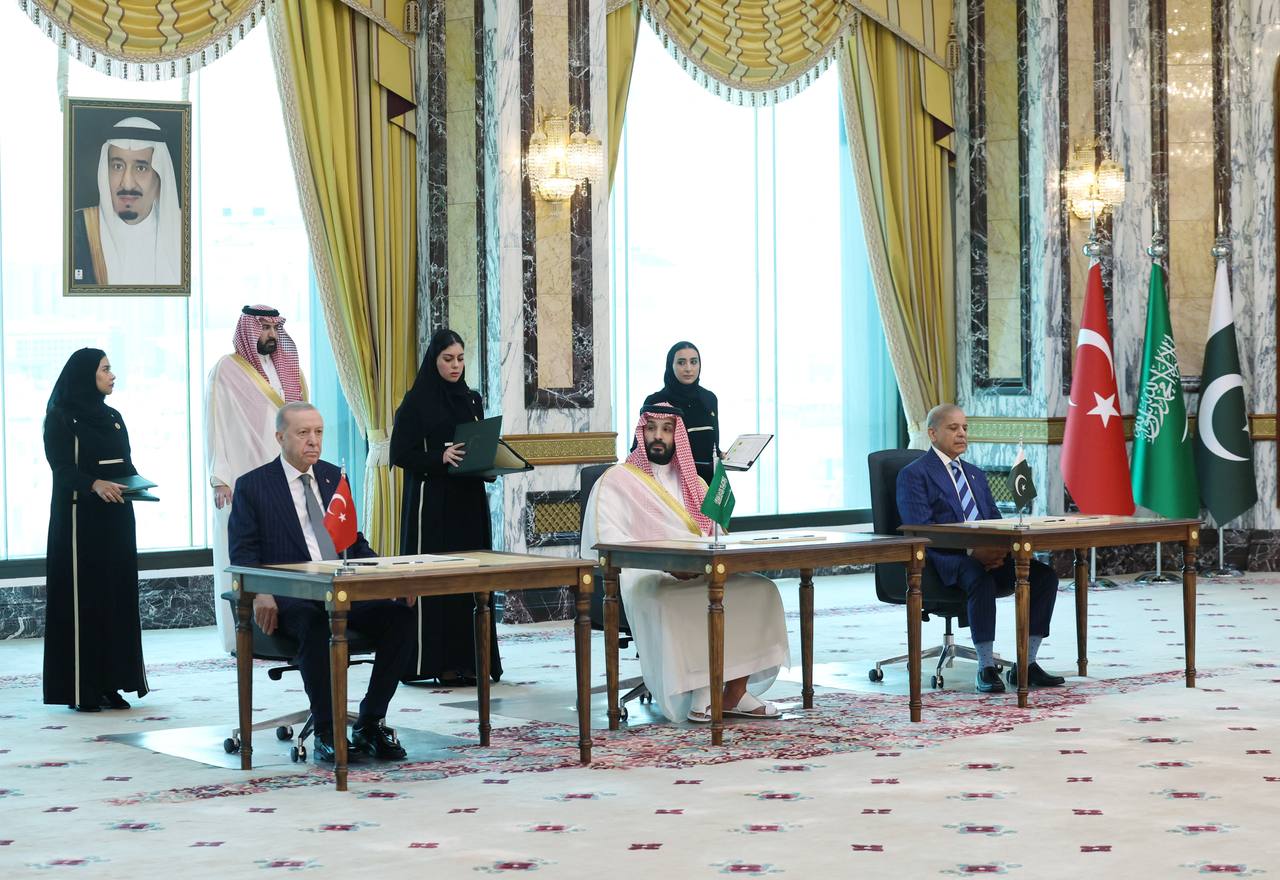
ISLAMABAD — Pakistan, Saudi Arabia and Turkey will hold a meeting on their mutual defence agreement in Islamabad on Friday and Saturday, November 27–28, two Pakistani sources told Reuters on Thursday. The foreign ministers of Saudi Arabia and Turkey are travelling to Pakistan for the talks.
Source: Reuters
The two-day gathering is the third session of the Strategic Political and Defence Committee set up under the trilateral pact, and the first ministerial-level meeting since the agreement formally entered into force earlier this month, Pakistani diplomatic sources said.
Source: Republic Policy
The pact signed in Mecca
The three countries signed the joint defence agreement in Mecca on August 7, 2026. Pakistani Prime Minister Shehbaz Sharif, Saudi Crown Prince Mohammed bin Salman and Turkish President Recep Tayyip Erdogan signed the pact, which commits each country to treat an attack on one as an attack on all.
The agreement was signed amid escalating concern about the US–Israeli war against Iran, which has been raging since February and has now spilled across the Gulf — Iran has struck targets in Bahrain and Kuwait this month, and shipping through the Strait of Hormuz has come under attack.
Why this meeting matters
Turkey's parliament has ratified the pact, and the agreement formally entered into force earlier this month. The Islamabad meeting is where the three governments will work out how the alliance operates in practice — joint command structures, consultation mechanisms, and what collective defence means if any member comes under attack.
The timing is pointed. On Thursday, Iranian drones struck Kuwait, killing two Italian technicians working on the Gulf state's air defences — the second Iranian attack on Kuwait this month — and two tankers were hit in the Strait of Hormuz. The Gulf states at the heart of this alliance are directly in the line of fire.
For the lakhs of Punjabi and Indian workers living and working across the Gulf, the alliance — and whether it steadies or sharpens the confrontation with Iran — matters directly: their safety, flights home and remittances all depend on the region staying open for business.
Syria has also been reported to be weighing joining the pact, which would extend the alliance's reach across the Levant — a question the ministers may address in Islamabad.
What happens next
The foreign ministers are expected to issue a statement after the talks conclude on Saturday. Watch for any announcement on joint military planning, new members, or a common position on the war with Iran — and for whether the alliance presents itself as a defensive arrangement or a wider regional bloc.