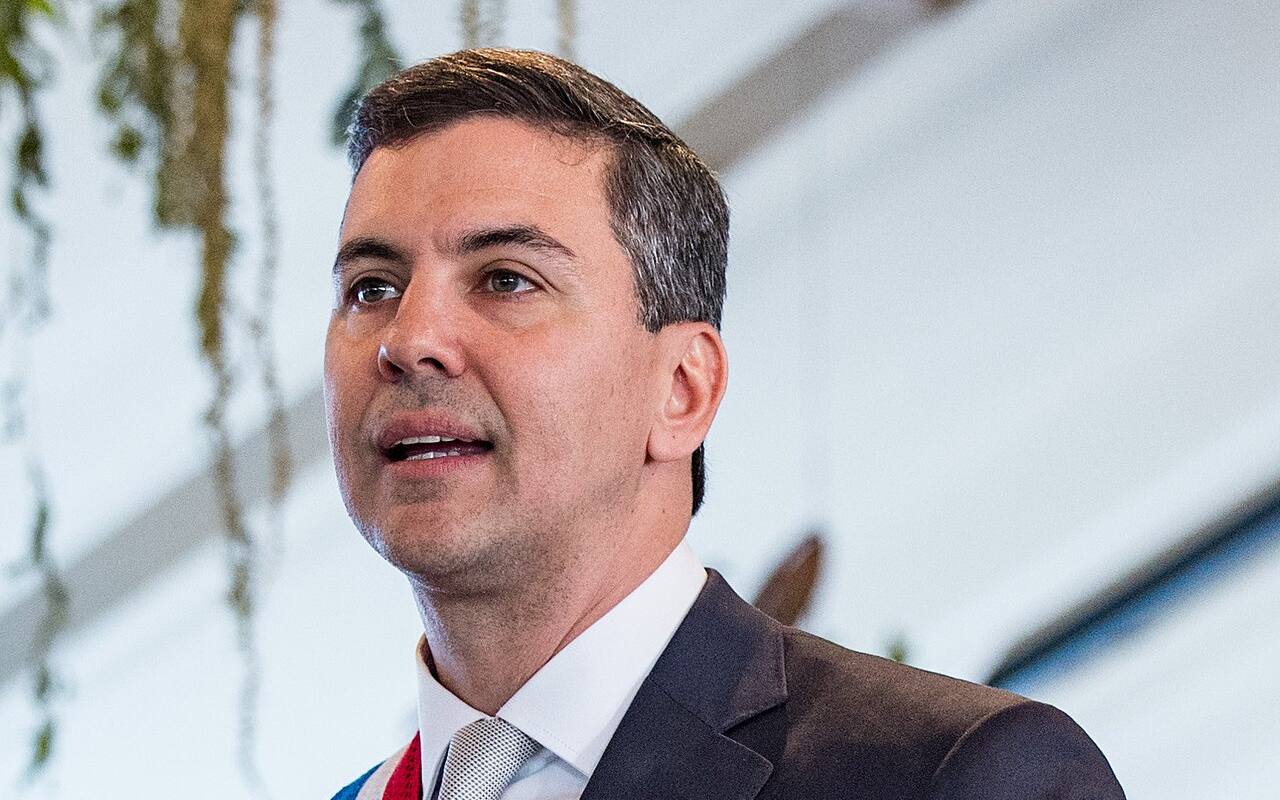
Santiago Peña is still the president of Paraguay. Hours after he announced his resignation on Thursday over the collapse of the digital lender Ueno Bank, a joint session of Congress called to accept or reject that resignation collapsed without a quorum when ruling-party lawmakers walked out, the resignation was never accepted, and the Senate opened an impeachment trial against him on Thursday night, according to reports by Reuters, the Associated Press and AFP.
Peña announced his resignation on Thursday morning after the central bank seized Ueno Bank, his own Colorado Party turned against him and the lower house moved to impeach him. That story reported Vice-President Pedro Alliana was expected to take over — a succession that has now stalled. Read the earlier story: Peña resigns over Ueno Bank collapse
The day had begun with Peña's video message on X announcing he was stepping down in the interest of “the stability of our country, social peace and the need to preserve our democratic institutions”. Minutes later, the Chamber of Deputies voted unanimously, 78-0, to approve impeachment charges against him for alleged poor performance of his duties and conflicts of interest. The chamber rejected the parallel impeachment request against Vice-President Pedro Alliana by 48 votes to 30.
How the resignation session collapsed
Congress then met in joint session to decide the resignation. With the vote trending against acceptance, most government-aligned deputies left the chamber and the session lost its quorum. The Associated Press reported that of the 125 members of both chambers, 42 opposition and Colorado dissident lawmakers voted to reject the resignation and 41 voted to accept it before the walkout ended the sitting. Senate president Basilio “Bachi” Núñez later declared the quorum-less session invalid and said the impeachment process would continue.
The fight is over what each path means. Under Article 202 of Paraguay's constitution, Congress must accept or reject a presidential resignation, and until it does, Peña keeps his powers. Lawmakers who blocked acceptance argue that a resignation would make Peña a senator for life, with the parliamentary immunity that status carries, while removal through an impeachment trial under Article 225 would strip that protection and let prosecutors charge him at once. “A resignation gives him immunity,” opposition deputy Johanna Ortega said, as reported by the Associated Press.
Senate trial opens, defence set for Friday
On Thursday night the Senate received the accusation file, prepared by eight deputy prosecutors from a complaint signed by 35 lawmakers, and swore in its 45 senators as the trial tribunal. After the prosecutors presented the charges, the Senate adjourned until Friday, November 6, at 10 a.m., when Peña must present his defence in person or through lawyers. Núñez has said the trial could conclude the same day. Removal requires the votes of 30 of the 45 senators.
Peña, who had offered his resignation hours earlier, reversed course in a post on X: “Given that the impeachment trial is continuing, I will appear and exercise my right to a defense. I will do so with arguments and evidence, with respect for the Constitution and the institutions of the Republic.” Presidential spokesperson Guillermo Grance confirmed Peña is in the country and will defend himself, and Argentina's Casa Rosada denied rumours that he had fled to Argentina. A planned swearing-in of Vice-President Alliana did not take place.
The money figure in context: Ueno held roughly $800 million in public deposits — yaani about $80 crore — including money from the state pension and health fund and the operators of Paraguay's giant hydroelectric dams, the Associated Press reported.
Criminal probes widen beyond Congress
Attorney General Emiliano Rolón Fernández has opened three criminal investigations into the collapse, covering the supervision of the bank, the handling of its failure and the placement of public funds in it; the Associated Press reported the investigations reach 39 people, including Peña and Alliana. On Thursday a judge ordered six Ueno executives jailed pending trial, including founder Miguel Vázquez and bank president Juan Manuel Gustale, with two others placed under house arrest. Interior Minister Enrique Riera has also resigned, according to AFP reporting. Outside Congress, protests over frozen savings escalated into clashes with police, with local broadcasters reporting wounded demonstrators, at least one injured officer and allegations of tear-gas use.
The crisis began on Tuesday, November 3, when the Central Bank of Paraguay opened a resolution process against Ueno after finding its solvency ratio had fallen below half the legal minimum, freezing the accounts of a bank that grew in under five years from an obscure finance company into a household name claiming more than 60 percent of Paraguay's adults as customers. Opposition lawmakers accuse Peña of conflicts of interest: he held a stake in Grupo Vázquez, the group linked to the bank, although he says he sold his shares in March 2025. Paraguay's Deposit Guarantee Fund protects up to 228.3 million guaraníes per depositor — yaani roughly €34,000 — and the central bank has begun the process of transferring deposits and recoverable assets to other banks.
Peña presents his defence to the Senate on Friday morning, and Senate president Núñez says the trial could end the same day. If 30 of 45 senators vote to remove him, Vice-President Pedro Alliana takes over and Peña loses the senator-for-life status a resignation would have preserved. If the Senate instead lets Congress accept the resignation, Alliana is sworn in without a trial. Either way, the criminal investigations into the Ueno collapse continue, and the fight over depositors' frozen savings is unresolved.
What is solid
- Peña announced his resignation on Thursday and the Chamber of Deputies voted 78-0 to impeach him
- The joint session on his resignation ended without a quorum, so the resignation was never accepted and Peña remains president
- The Senate opened the impeachment trial on Thursday night and set his defence for Friday; removal needs 30 of 45 votes
What is only claimed
- The accusations of conflicts of interest and misuse of pension funds are allegations by opposition and dissident lawmakers; Peña says he sold his Grupo Vázquez shares in March 2025
- Reports differ on partial vote counts from the collapsed joint session, and rumours that Peña had fled to Argentina were denied by the Casa Rosada