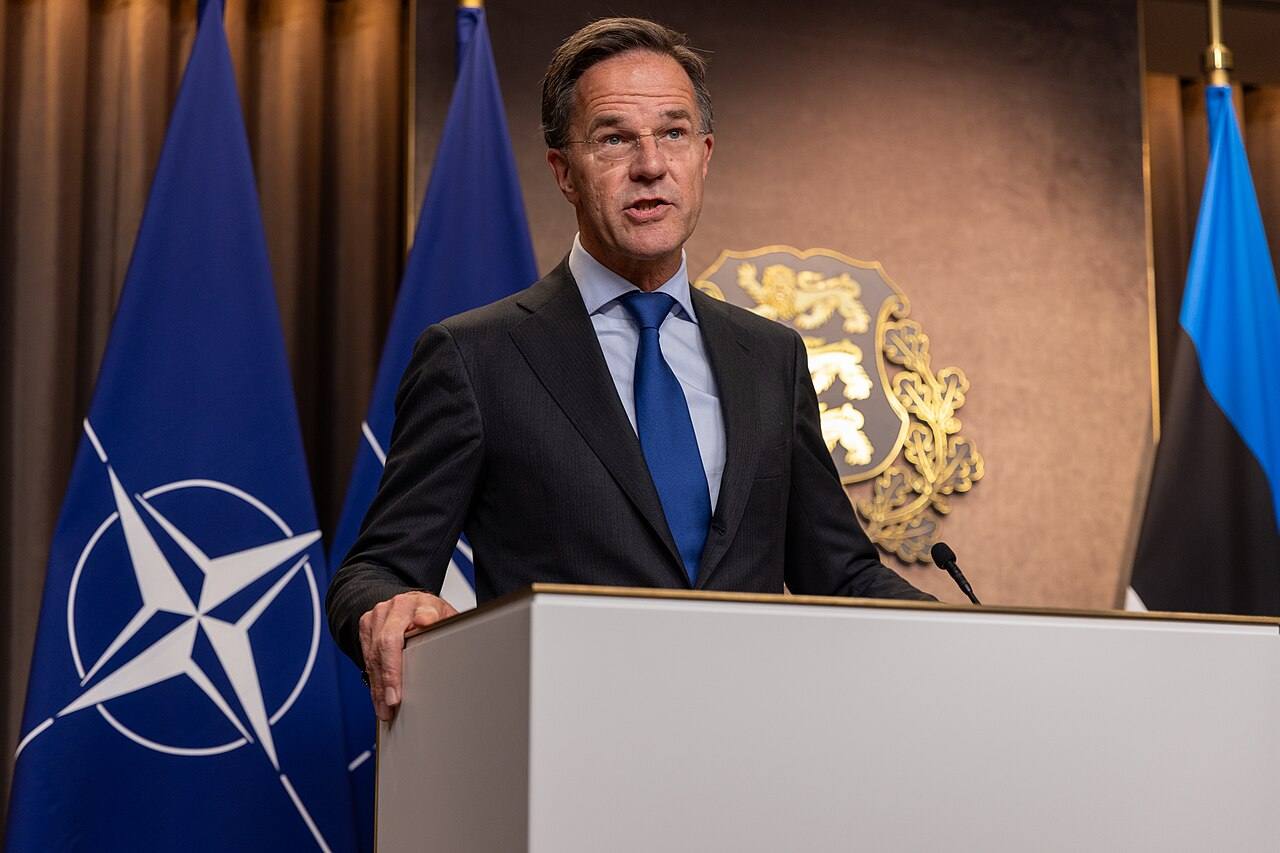
NATO Secretary General Mark Rutte has said outright victory for either side in Russia's war against Ukraine is very unlikely, and that the war will most probably end in a negotiated peace deal built on compromise. Rutte made the remarks on Thursday night, November 5, on the Dutch television talk show Pauw & De Wit, in a wide-ranging interview that also covered Donald Trump, Iran and Russia's long-term threat to Europe.
Asked whether anyone would win the war in Ukraine, which began with Russia's invasion in February 2022, Rutte said: "I don't think that's very likely." He added: "These kinds of wars always end in a peace deal, which is often a kind of compromise." Other reporting of the same programme said Rutte also judged that Ukraine will not be able to regain all of its lost territories, while stressing that the precise terms of any peace are for Kyiv to decide.
Source: Bloomberg via Energy Connects
The comments come days before US envoy Steve Witkoff facilitates working-level talks between Russia and Ukraine in Abu Dhabi on November 10 and 11, and a day after Ukraine's allies wrapped up talks in Brussels on postwar security guarantees and reconstruction, at which the European Commission transferred a further 4.4 billion euros to Kyiv under its 90-billion-euro loan package — yaani about $4.9 billion, roughly Rs 43,000 crore.
Source: AsiaOne / AP reporting
"Keep your chin up" — and "Daddy was a mistake"
Rutte revealed he had sent Trump a short message after the Republican Party's defeat in this week's US midterm elections: "Keep your chin up, and let's keep going." He expressed "enormous admiration" for Ukrainian President Volodymyr Zelenskyy, saying they confer weekly, but added that it was important for Trump and Russian President Vladimir Putin to have a "good relationship". Asked about Trump's recent agreement with Putin to provide the US with diesel fuel, Rutte acknowledged the "panic" among European allies when the deal was announced — "I get that, I also raised an eyebrow" — but noted Europe itself bought far more Russian liquefied natural gas this year: "Europe also isn't saintly either."
The NATO chief, a former Dutch prime minister who has gone to great lengths to preserve the transatlantic relationship, also conceded that referring to the US president as "Daddy" had been, in his words, "an enormous mistake" — a remark critics had seized on as obsequious. He described NATO as "a platform for the Americans to show their power, which is greatly in our interest because we, as Europe, are not able to do so ourselves yet."
Iran, Russia and what comes after the war
On the US conflict with Iran, Rutte praised Trump's determination to prevent Tehran from building nuclear weapons and underlined the importance for Europe that Iran's nuclear threat — and, he said, ballistic missiles that could reach Copenhagen or London — be removed, a task Europe could not have done by itself. "Not all risks are gone," he said, "but the nuclear capabilities of Iran are far weakened." American voters' discontent over the Iran war and the sharp rise in fuel prices it generated was, reporting noted, a major factor in the Republican loss of both houses of Congress.
Rutte emphasised that Europe must remain vigilant about Russian aggression even after the Ukraine war eventually ends. "The Russian threat does not manifest directly at our border now, because a lot of those soldiers are busy in Ukraine," he said. "But if that's finished, then their huge army won't be there simply to be a huge army." At the end of the programme, he mused: "We dream about a time when this is all over."
Rutte's compromise remarks set the tone ahead of the Abu Dhabi round, where US mediators will try to move Russia and Ukraine towards the kind of negotiated settlement the NATO chief described. Read: Witkoff to facilitate Russia-Ukraine talks in Abu Dhabi on November 10-11
What Rutte did not do is announce any change in NATO policy: allied support for Ukraine continues, the Brussels security-guarantee work continues, and the decision on peace terms, he stressed, rests with Kyiv. But the alliance's own secretary general saying publicly that neither side is likely to win outright — and that compromise is how such wars end — is the clearest signal yet of how NATO's leadership expects this war to finish.