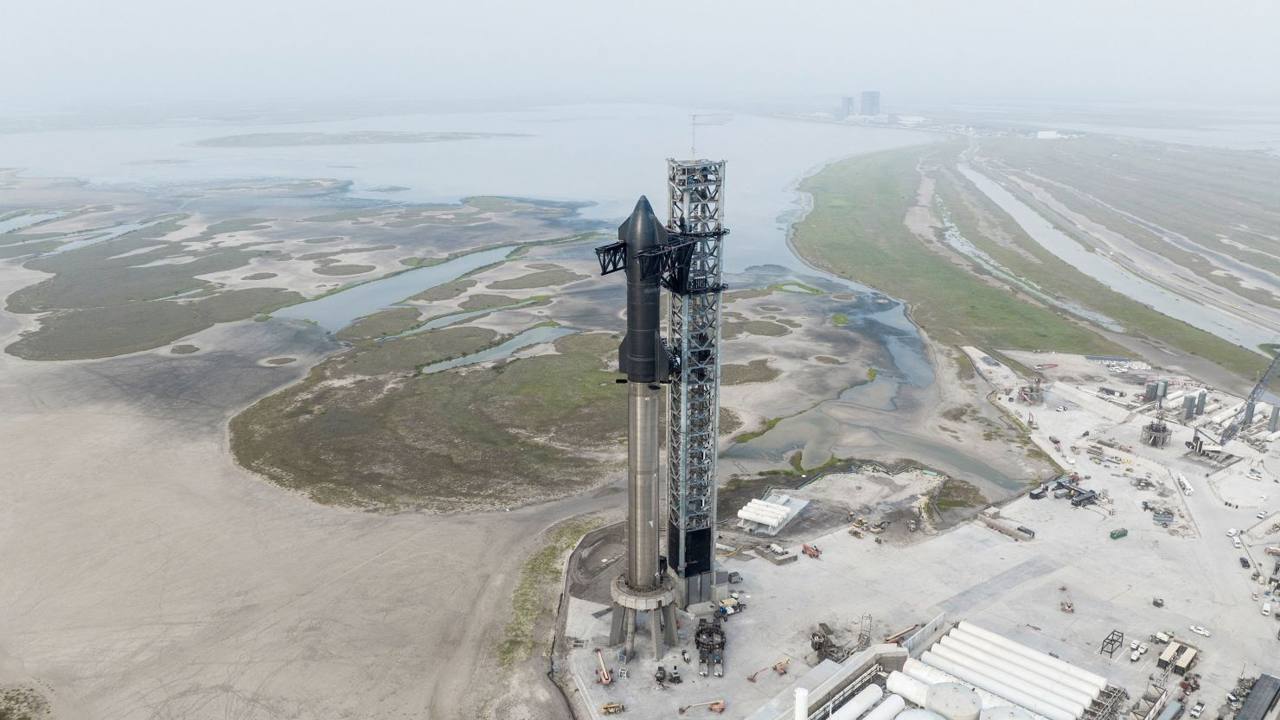
SpaceX launched Starship on its 15th flight from Starbase, Texas, at 5:47 p.m. Eastern Time on Friday, November 13, in the company's first attempt to catch both stages of the giant rocket at the launch tower — but the first half of that plan was called off within minutes. The Super Heavy booster separated from the upper stage about two minutes into the flight, and SpaceX opted not to attempt the tower catch, diverting the booster instead to a splashdown in the Gulf of Mexico, Gizmodo reported in its 5:55 p.m. ET update, and Space.com reported in its launch coverage.
Source: Gizmodo, Nov 13, 2026 (update 5:55 p.m. ET); Space.com, Nov 13, 2026
The Associated Press, reporting on the launch, said the first-stage booster malfunctioned and, after an automatic abort, ended up in the Gulf of Mexico instead of returning to its Texas pad. Gizmodo reported that SpaceX does not yet know the cause of the booster catch abort. Awaaz Punjab is not stating a cause: none had been announced by SpaceX in the reporting reviewed.
Source: Associated Press, Nov 13, 2026; Gizmodo, Nov 13, 2026
The ship is in orbit — the second catch is still to come
The upper stage, Ship 42, continued into orbit after stage separation. The Vermilion Times, citing Space.com's reporting of the live webcast, said the ship finished its climb with all six engines and that SpaceX called it 'go for orbit', with the release of its 26 Starlink V3 satellites next. Space.com reported the upper stage is scheduled to return to Starbase for a potential tower catch after its extended flight around Earth, pending the vehicle's health and flight conditions.
Source: Space.com, Nov 13, 2026; The Vermilion Times citing Space.com, Nov 13, 2026
If controllers confirm the ship is healthy enough, it will re-enter and head for the same tower on Saturday, in a window the Federal Aviation Administration lists from 2:56 p.m. to 6:14 p.m. Central Time, the Vermilion Times reported. No ship has ever been caught by a launch tower; three Super Heavy boosters were caught on earlier test flights, Gizmodo noted.
Source: The Vermilion Times, Nov 13, 2026; Gizmodo, Nov 13, 2026
Why this flight matters, and what came before it
Flight 15 uses Booster 22 and Ship 42, a Block 3 pair, and received its FAA launch licence on the day of the flight, November 13. It follows Flight 14 in September, Starship's first orbital mission, which reached orbit but was brought down early in the Pacific Ocean because of an engine issue, according to Gizmodo and Scientific American. SpaceX's stated goal for the programme is a fully and rapidly reusable orbital rocket — recovering both stages is the step Flight 15 was designed to test.
Source: Starship flight 15, Wikipedia (updated Nov 13, 2026); Gizmodo, Nov 13, 2026
What happens next: Ship 42 is to deploy its 26 Starlink V3 satellites, coast through roughly 14 orbits over more than 22 hours, and — if its systems stay healthy — attempt the first-ever tower catch of a Starship upper stage on Saturday afternoon Central Time. SpaceX is also expected to explain why the booster catch was aborted; until it does, the cause remains unknown. Awaaz Punjab will update this story when SpaceX or the FAA states a cause, and when the ship's return attempt is made.
What is solid
- Starship Flight 15 lifted off from Starbase, Texas, at 5:47 p.m. ET on November 13, 2026 (Gizmodo, Space.com, AP)
- The Super Heavy booster's planned tower catch was aborted and it splashed down in the Gulf of Mexico (Gizmodo, Space.com, AP)
- Ship 42 reached orbit and is to deploy 26 Starlink V3 satellites, with a possible first ship catch attempt on Saturday, pending vehicle health (Space.com)
What is only claimed
- The cause of the booster catch abort: Gizmodo reported SpaceX does not yet know it, AP described a booster malfunction and an automatic abort, and no official cause had been announced in the reporting reviewed
- At least one online timeline claimed both stages were successfully caught; that claim is contradicted by AP, Space.com and Gizmodo reporting of the booster splashdown and is not relied on here