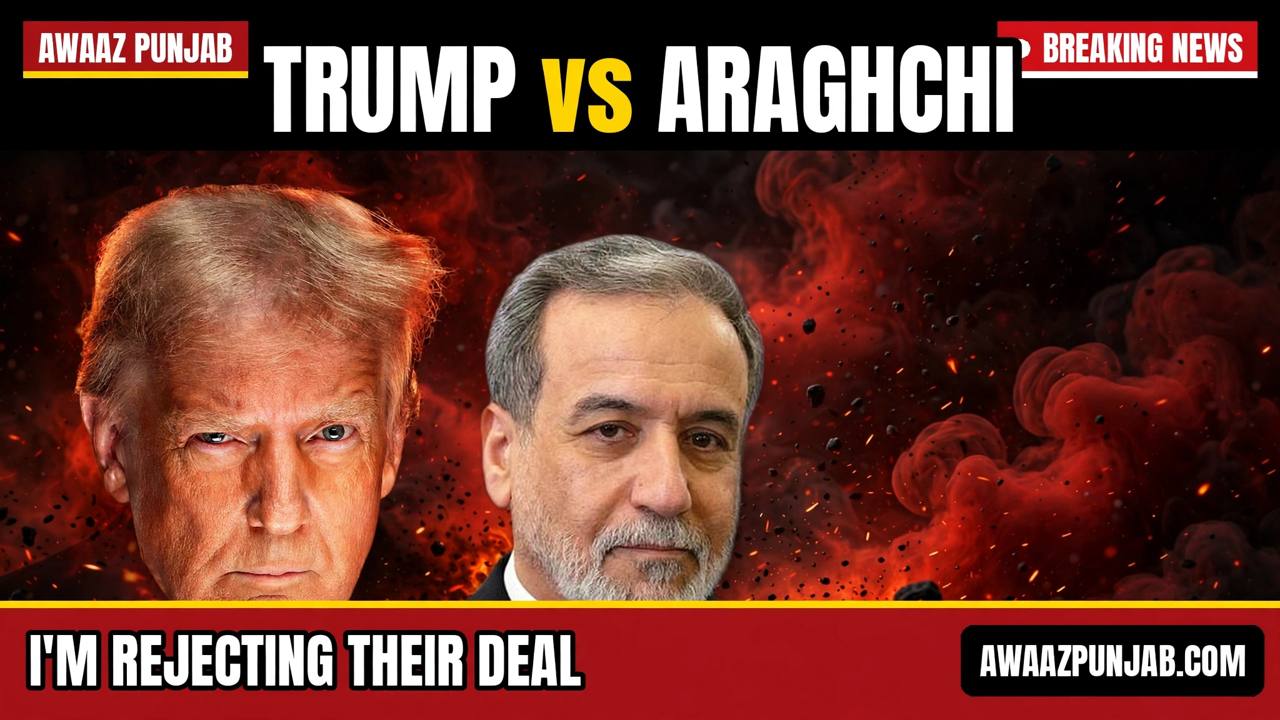
US President Donald Trump has publicly rejected Iran's proposal to reopen the Strait of Hormuz to commercial shipping within seven days, saying Tehran's offer was "not acceptable" — a rebuff that leaves the world's most important oil waterway effectively closed and the US–Iran war without a diplomatic off-ramp.
Source: BBC News
"I'm rejecting their deal," Trump told reporters at the White House, adding that Tehran wanted "to make a deal where they open the Strait immediately because they're losing so badly". He said the US already had "total control" of the strait, with "massive amounts of oil" passing through it, and that the deal on offer was not one he could accept.
Source: BBC News
Iran's Foreign Minister Abbas Araghchi had put the seven-day offer on the table on Friday, telling reporters at the United Nations in New York that an agreement could be reached "if the necessary conditions are met" — conditions he said were already contained in a memorandum of understanding (MOU) signed by the two countries in June. "If the necessary conditions are met, the strait can be reopened, a normal maritime passage restored within seven days," Araghchi said. "The choice now rests with the United States."
Source: BBC News
In a post on Telegram after Trump's rejection, Araghchi acknowledged the president's comments but said Tehran would wait for a "definitive" official US response to be conveyed by mediators. He said Trump "has made many good statements, as well as many contradictory ones, which unfortunately we hear frequently", adding: "We are waiting for the mediators to convey the definitive views to us, and we will make a decision based on them."
Source: BBC News
What Tehran offered — and what Washington wants
The June MOU, signed in Islamabad and brokered with help from Qatar and Pakistan, was a 14-point agreement designed to bring about a ceasefire and at least partly reopen the Strait of Hormuz. It said Iran would never have a nuclear weapon. But disagreements over navigation through the strait and over Iran's uranium derailed its implementation, and the deal has been the subject of competing claims ever since.
Iran's conditions, repeated by Araghchi this week, are that Washington must first halt its naval blockade of Iranian ports, ease sanctions on Iranian oil, release frozen Iranian assets held abroad and observe a broader ceasefire — including in Lebanon. Tehran also insists on keeping its enriched uranium inside Iran. Washington, by contrast, wants guarantees that commercial vessels can move through the strait without fear of attack and that Iran's nuclear programme is addressed in the first round of talks.
The strait has been effectively closed since the war broke out in February. Around a fifth of the world's gas and oil supply usually flows through it, and the closure has pushed up shipping costs and fuel prices around the world. Shipping data cited by Reuters showed a recent 10-day average of about 18 transits a day through the strait, dropping as low as nine vessels on some days — far below normal traffic. Trump has claimed the US has been successful in getting oil out through the strait.
Source: BBC News / Reuters
The rejection came as the Wall Street Journal reported on Friday, citing officials, that Trump was sceptical Iran would meet his demands and had told his staff that he saw a renewed bombing campaign as probable. His special envoy Jared Kushner said this week that Trump was keeping "all options" open on Iran. Neither statement amounts to an order for new strikes, and US forces remain positioned across the region.
Trump's rejection was backed by the US ambassador to NATO, Matthew Whitaker, who told Fox News that Iran had offered "half measures" and "illusory deals to make themselves look good on the world stage". "President Trump's right to reject it," Whitaker said.
Source: BBC News
Sanctions squeeze — and the Gulf workers caught in the middle
Treasury Secretary Scott Bessent said the US sanctions were taking a toll on Iran, posting on X that Turkey, Oman and the United Arab Emirates had halted flights from various Iranian airlines and that some banks in the UAE and Turkey had stopped transactions with Iran. The Trump administration has dubbed its economic blockade of Iran "Operation Economic Outcast". Some economists have questioned whether the latest sanctions will bite, saying that depends on Iran's major trading partners — above all China, the biggest buyer of Iranian oil, which has ignored previous US sanctions and continued to do business with Tehran.
Source: BBC News
For the lakhs of Punjabi and Indian workers living in the Gulf, the standoff is not abstract: the strait's closure has disrupted shipping and flights and pushed up fuel prices in the region, putting jobs and remittances under strain. Any renewed bombing or further escalation would deepen that uncertainty for families whose earnings depend on Gulf work.
The wider war kept spreading this week: Yemen's Houthis, allied to Iran, have intensified attacks on Saudi oil installations, and the Saudi-led coalition said it had intercepted ballistic missiles and drones launched by the Houthis towards Saudi Arabia. Iran has denied any involvement in a drone incident blamed on it by Kuwait this week.
Iran's President Masoud Pezeshkian, who travelled to New York for the UN General Assembly, told the BBC's US partner CBS that the "distrust created by this war needs to be overcome" for talks to succeed. He said Iranians were open to talks on implementing the MOU in stages, but that the "US needs to show it does not intend to overthrow our government" — and accused Trump of having "tore up" the MOU when the US resumed its bombing campaign.
Source: BBC News / CBS
Pezeshkian was also asked about Iran's new Supreme Leader, Mojtaba Khamenei, who was injured in the US strike that killed his father in February and has not been seen in public since. Reports have claimed he suffered serious injuries to his legs and face. Pezeshkian said he had met the supreme leader twice and that he had "no specific ongoing health issues or challenges" and had been well enough to hold seven hours of talks.
What happens next
Mediators are still working: Qatar and Pakistan have been shuttling proposals between Washington and Tehran, and Oman — which has acted as a mediator between the US and Iran — called at the UN for all parties to keep talking to safeguard navigation in the strait. But with Trump sceptical, Araghchi waiting for a definitive reply and both sides holding to incompatible sequences — Washington wants movement first, Tehran wants relief first — there is no breakthrough in sight. OPEC ministers are due to meet on Sunday to weigh 2027 oil production targets, with the war and the strait's closure hanging over every decision.
What is solid
- Trump publicly rejected Iran's seven-day proposal to reopen the Strait of Hormuz, calling it 'not acceptable'.
- Araghchi offered the seven-day reopening on Friday at the UN, tied to conditions in the June MOU.
- The strait has been effectively closed since the war began in February; about a fifth of the world's gas and oil normally flows through it.
What is only claimed
- Trump's claim that the US has 'total control' of the strait and that record amounts of oil are passing through it.
- Whether a renewed US bombing campaign will follow, as officials told the Wall Street Journal Trump sees as probable.
- How far the latest US sanctions will bite, given China's continued purchases of Iranian oil.
Trump had told US troops days earlier that victory over Iran was 'at hand' — read that report here. Trump tells troops 'victory at hand' over Iran