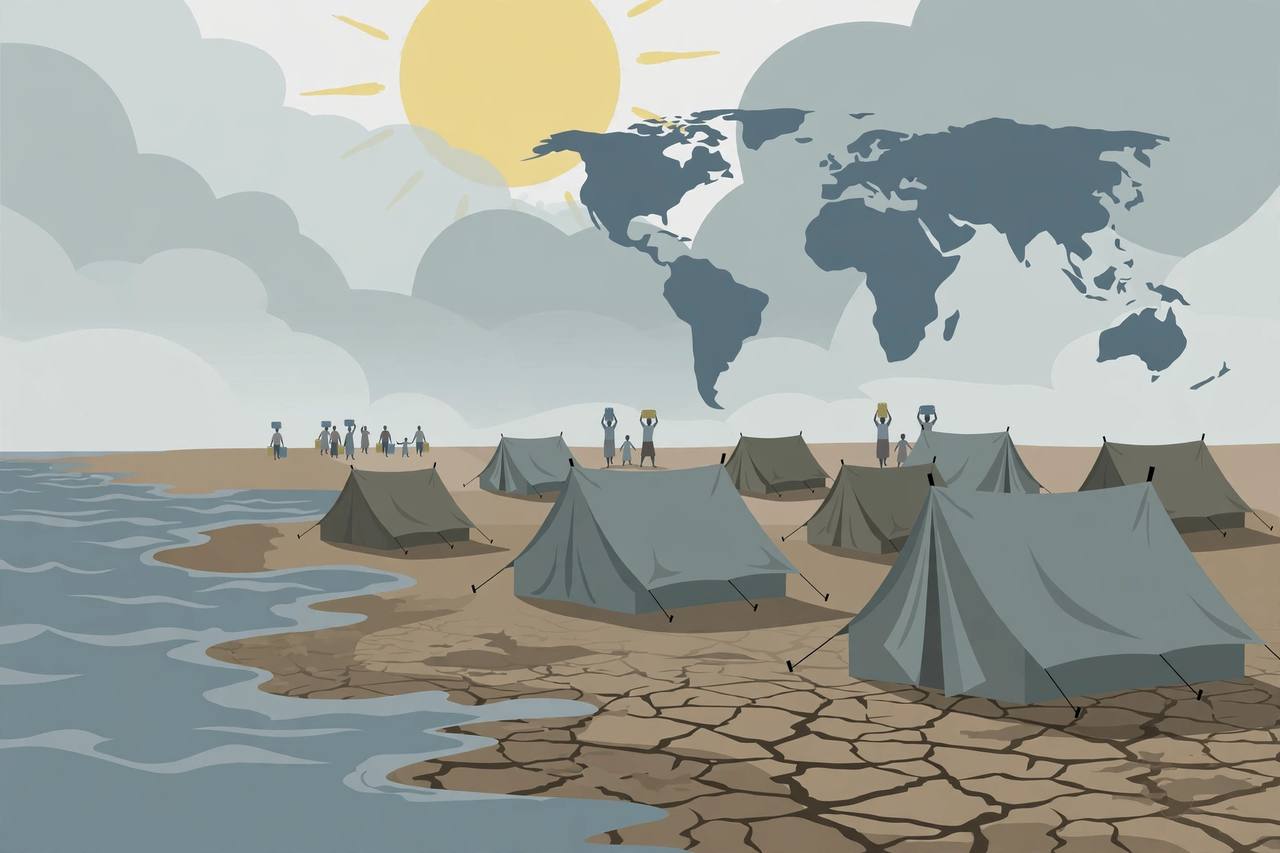
Nearly 90 million forcibly displaced people are living in countries increasingly exposed to climate-related droughts, floods and extreme heat, the UN refugee agency UNHCR said in a new report released on Friday, November 6 in Geneva, warning ahead of the COP31 climate summit that more funding is needed to help vulnerable communities adapt, Reuters reported.
Source: Reuters via SRN News
Nearly three-quarters of the world's forcibly displaced people — three in every four — live in countries such as Afghanistan and Bangladesh that are exposed to severe climate-related risks, according to the report, published ahead of the UN Climate Change Conference in Antalya, Turkey. The findings show the overlap between conflict, displacement and climate change, the report said.
Source: Reuters via SRN News
"A matter of survival" — and a double injustice
"Climate adaptation in fragile and displacement-affected areas is a matter of survival," said Anton Leis Garcia, UNHCR's assistant high commissioner for operations. "We need climate financing to reach the communities where the needs are greatest," he said. In comments carried by France 24, Garcia added: "Refugees face a double injustice — forced to flee conflicts they did not cause, they are now on the frontlines of a climate crisis they have contributed least to."
Source: Reuters / France 24 via Magna
The report highlighted the experience of a Sudanese refugee who fled conflict in al-Fashir in June 2023 to the Farchana refugee settlement in eastern Chad. She said she sometimes goes a week without finding safe water and must walk increasingly long distances for alternative sources as nearby seasonal riverbeds dry up amid intensifying heat, Reuters reported.
Source: Reuters via SRN News
Going home is no longer a guarantee of safety
In the first half of 2026, more than two-thirds of refugee returns were to countries highly exposed to climate hazards, placing them at risk of renewed displacement, the report said. In Syria, where nearly 4 million displaced people have recently returned, people face worsening water scarcity and erratic rainfall, while flooding along the Euphrates River in May damaged homes and displaced thousands of people again.
Source: Reuters via SRN News
Across sub-Saharan Africa, one in three refugee settlements could experience at least 100 days of dangerous heat each year by 2050, the report said — in some settlements in Ethiopia, including Helaweyn, dangerous heat could persist for more than 200 days a year, increasing the risks of heatstroke and premature death. "Refugees often have limited access to cooling, water and reliable energy, making it harder to escape dangerous temperatures," the report said. France 24's reporting on the report added that weather-related disasters have caused more than 255 million internal displacements over the past decade — about 70,000 people every day.
Source: Reuters / France 24 via Magna
El Nino, East Africa — and what COP31 must decide
UNHCR also warned that a forecast supersized El Nino could worsen climate-related risks in many refugee-hosting countries and trigger further displacement. In East Africa, severe flooding could displace up to 3 million people in Somalia, Kenya, South Sudan and Uganda by the end of this year, UNHCR said. In the Sahel, drought, flooding and conflict could intensify competition over scarce resources, while parts of Asia face heightened risks of droughts, floods and cyclones.
Source: Reuters via SRN News
What happens next: COP31 runs from November 9 to 20 in Antalya, and UNHCR is urging governments and climate-finance institutions meeting there to increase funding for climate adaptation and to account for the needs of displaced people and host communities. The test, aid officials say, is not the headline pledge figure but what share of it actually reaches fragile and displacement-affected places — currently only about one dollar in ten of climate finance does.
Source: UNHCR via TheGloBuzz / Reuters
The UNHCR warning lands days before COP31 opens in Antalya, where European negotiators have already said no new climate finance pledges are on the table. Read: EU says no new climate finance at COP31