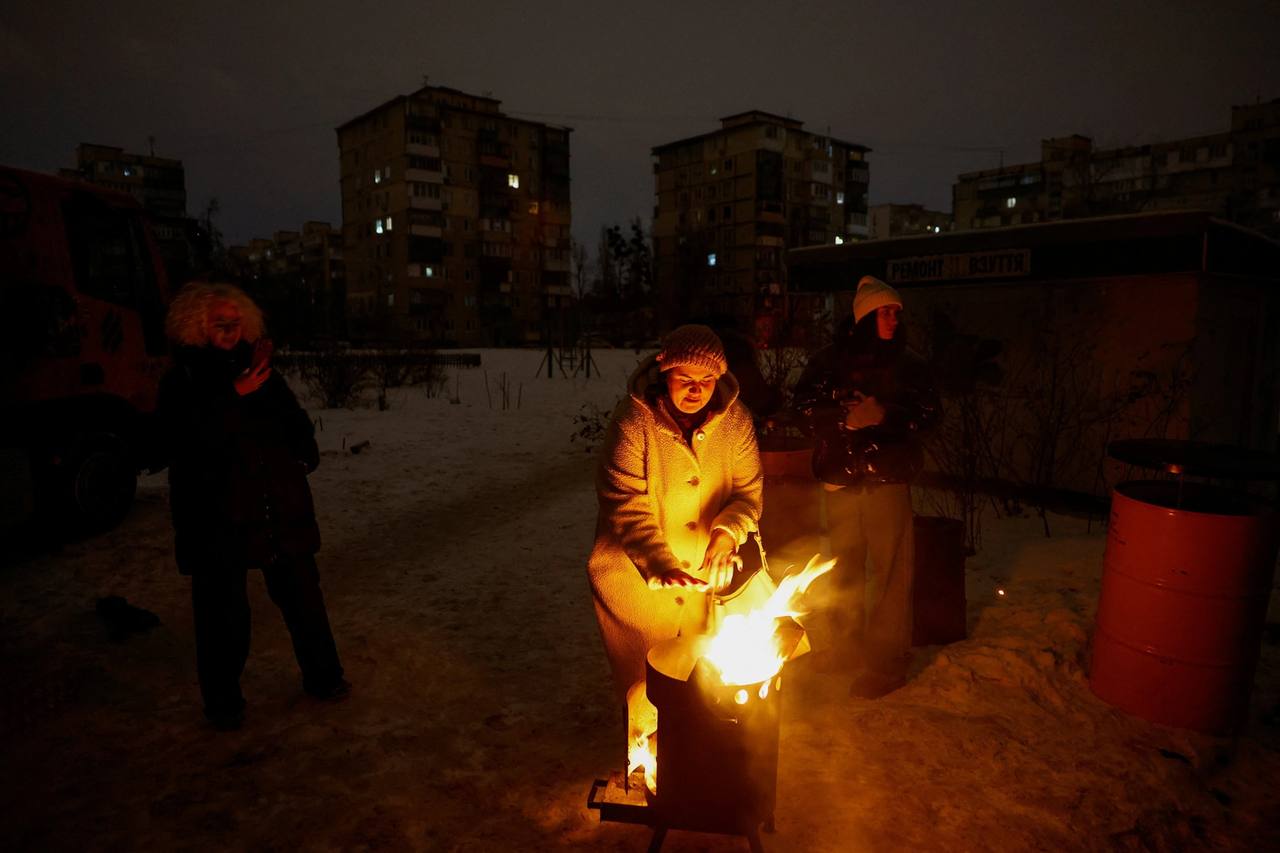
The UN Security Council was told on Monday, 23 November, that Russia's attacks on Ukraine's energy grid have moved beyond power plants — to transmission networks, water and heating systems, railways, warehouses and farms — leaving civilians without heat, power and water as winter sets in.
Source: UN Media
Rosemary DiCarlo, the UN Under-Secretary-General for Political and Peacebuilding Affairs, told the Council: 'In recent weeks, Russian attacks have expanded beyond electricity generation facilities to transmission networks, water and heating systems, railway infrastructure, warehouses, and agricultural facilities.' She said Russian missile strikes had repeatedly hit key bridges in Kyiv, and that on 23 November at least five people were reported killed in Russian attacks in the Donetsk, Kharkiv, Zaporizhzhia and Sumy regions.
Source: UN Media
The Council met hours after a fresh overnight wave of strikes. Al Jazeera reported that Russian forces hit an energy facility in Dnipropetrovsk region and infrastructure in Kharkiv region, leaving about 850,000 people across the two regions without power. Ukraine's DTEK energy company said more than 600,000 people in Dnipropetrovsk region were without electricity — in Pavlohrad, Samarivskyi, Kamianske and Dnipro — and another 250,000 lost power in Kharkiv region.
Source: Al Jazeera via Truth Era
Ukraine's Energy Ministry said Russian forces attacked the country's energy and oil-and-gas sectors 100 times over the past week, causing 224 incidents of damage to infrastructure. As of Monday morning, consumers were without electricity in the Dnipropetrovsk, Donetsk, Zhytomyr, Odesa, Poltava, Sumy and Kharkiv regions, with the situation worst in Odesa and Dnipropetrovsk. Schools in Odesa will move to distance learning from 23 to 27 November.
Source: Kyiv24
DiCarlo put the war's civilian toll at at least 17,994 people killed, including 877 children, and 57,854 injured, including 3,518 children, since February 2022. UN human rights monitors recorded 372 civilians killed in Ukraine in October, up 95 per cent on a year earlier; Ukrainian reporting put October's toll higher, at 534 civilians killed, including 16 children, and nearly 3,000 injured.
Source: UN Media / Global Issues
The Council also heard that the war at sea is now threatening food supplies far beyond Ukraine. Luke Lindberg, Executive Director of the World Food Programme, said Black Sea food shipments are falling dramatically: as of mid-October, 63 per cent fewer wheat and maize vessels were moving through the Bosphorus than at the same point in 2025. Around 10 million tons of Russian and Ukrainian wheat may not reach global markets this year, he said, calling the Black Sea the deadliest maritime route of 2026, with over 300 attacks recorded and at least 40 people killed.
Source: UN Media
Alexander De Croo, Administrator of the UN Development Programme, told the Council: 'The unprecedented scale with which Ukrainian energy and water grids have been attacked, can no longer be considered collateral damage. It is deliberately making life for ordinary citizens nearly impossible.'
Source: UN Media
What is solid
- The Security Council met on 23 November 2026 to discuss Russian attacks on Ukraine's energy grid and Black Sea shipping.
- Russian strikes have hit electricity generation and transmission, water and heating systems, railways and farms, UN officials said.
- About 850,000 people lost power in Dnipropetrovsk and Kharkiv regions in overnight strikes, DTEK and Al Jazeera reported.
- Black Sea wheat and maize shipments have fallen sharply, the World Food Programme said.
What is only claimed
- Whether the overnight strikes were timed to pressure the Abu Dhabi talks: President Zelenskyy accuses Russia of intensifying attacks to pressure Kyiv at the talks; that is an allegation based on timing, not proven fact.
- Russia's claim that the energy facilities it hits support Ukraine's armed forces: Moscow says it will keep targeting fuel and energy facilities on that basis; the claim has not been independently substantiated.
- October's civilian death toll: UN monitors recorded 372 killed; Ukrainian reporting put the figure at 534 — different counts from different sources, both published here with attribution.
A deliberate campaign, investigators say
The UN Independent International Commission of Inquiry on crimes committed during Russia's war against Ukraine has accused Russia of crimes against humanity over its strikes on energy facilities. The commission concluded the strikes are deliberate and form part of a 'state policy aimed at depriving the civilian population of essential energy resources in order to cause suffering.' The US-based Institute for the Study of War said on 7 November that the deliberate nature of the campaign was confirmed by an intercepted Russian plan to systematically strike electricity generation and transmission facilities in order to disconnect Ukraine's nuclear power plants from the grid.
Source: Kyiv24
Russia's Defence Ministry said it would continue targeting Ukraine's fuel and energy facilities, claiming they support the Ukrainian armed forces. President Volodymyr Zelenskyy accused Russia of intensifying the attacks to pressure Kyiv at the US-mediated trilateral talks scheduled for Tuesday and Wednesday in Abu Dhabi — an allegation based on the timing of the strikes, which cannot be treated as proven on that basis alone.
This is the latest in a series of winter waves: an earlier round of strikes left more than 500,000 Ukrainians without power, and the Council heard on Monday that the pattern is now repeating at larger scale, with repair crews working around the clock and repeated strikes complicating the repairs. Read the earlier power-outage report
Ukraine's Foreign Minister Andrii Sybiha said after the Council meeting that Russian attacks on Ukrainian ports and export routes threaten global food security. What happens next turns on two clocks: the US-mediated talks in Abu Dhabi on Tuesday and Wednesday, and the repair crews racing the cold — with Ukraine seeking more electricity imports and the heating season only just beginning, while the Council itself can do little, given Russia's veto as a permanent member.