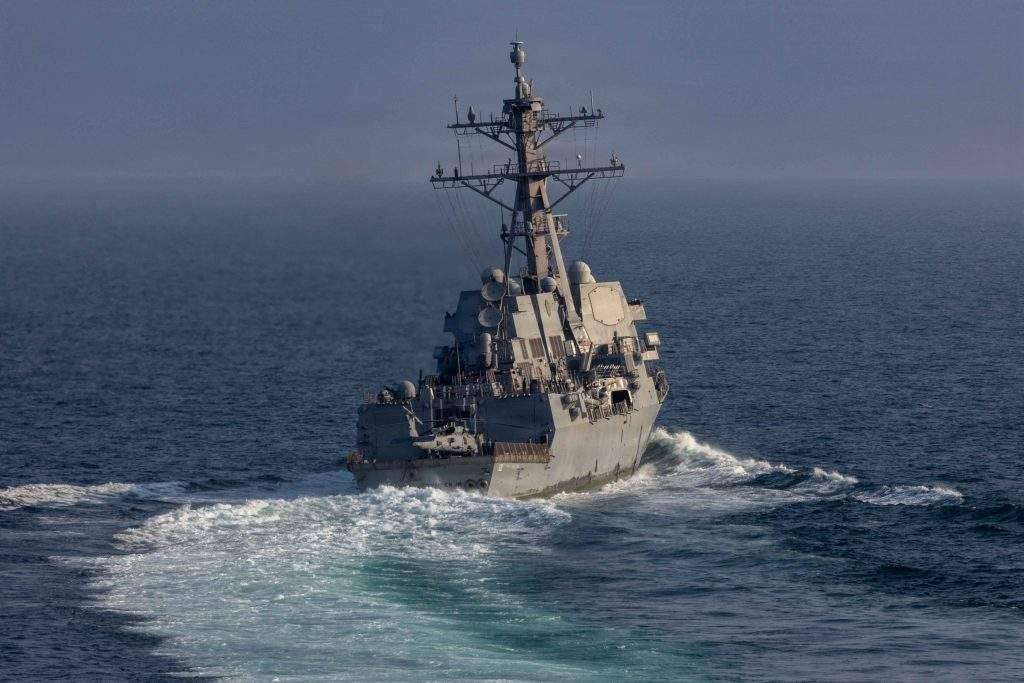
Gulf of Oman, November 7 — US forces disabled a commercial cargo vessel in the Gulf of Oman on Saturday after its crew repeatedly ignored warnings and tried to break the American naval blockade of Iran, US Central Command (CENTCOM) announced. A US military aircraft fired precision munitions at the stern of the St Kitts-flagged M/V Huda, disabling the ship, after CENTCOM forces directed the crew to abandon the targeted spaces, the command said in its statement.
Source: CENTCOM statement via EIN Presswire
CENTCOM said the cargo vessel had visited an Iranian port and was trying to depart regional waters when it was stopped. The command did not report any casualties, and it did not publish the ship's cargo, ownership or final destination. All mariners transiting near Iranian coastal areas or surrounding waters were advised to heed blockade warnings from US forces.
Source: JBizNews
The blockade in numbers
The Huda is the fifth merchant ship disabled since enforcement began in July, according to CENTCOM's own tally. The command said its forces have redirected 147 commercial vessels that complied with warnings, and had previously destroyed another 10 Iranian commercial oil tankers that it says were part of the Islamic Revolutionary Guard Corps' multibillion-dollar shadow network. Those figures are CENTCOM's claims, presented by the command itself, and have not been independently verified in full.
Source: CENTCOM statement via EIN Presswire
The Huda disabling came hours after CENTCOM announced Task Force Iron Gate to extend the pressure on Iran to its land borders and the Caspian Sea, reported earlier by Awaaz Punjab. Read the Task Force Iron Gate report
Saturday's vessel disabling came a day after President Donald Trump confirmed fresh limited US strikes on an Iranian air-defence system on Qeshm Island in the Strait of Hormuz, the first strikes since Tuesday's US midterm elections. Read the Qeshm strikes report
Background: a war, a closed strait and a stalled peace track
The US-Israel war on Iran began on February 28, 2026, and the Strait of Hormuz — the waterway that before the war carried about a fifth of the world's crude oil and natural gas — has remained at the centre of the conflict, with shipping transits far below pre-war levels. Washington resumed its blockade of vessels entering or leaving Iranian ports on July 14, and enforcement has steadily tightened since. The Huda action is the latest step in that enforcement, coming alongside the US State Department's Rewards for Justice offer of up to $20 million, announced this week, for information on Iran's nuclear programme.
Source: EA WorldView
Washington is also offering up to $20 million for information about Iran's nuclear programme, including its facilities, equipment and personnel. Read the $20 million reward report
Oil markets remain on edge over every Hormuz development: after falling around 10% in a week on hopes of a deal, Brent crude rebounded to $97.92 a barrel on Friday, a rise of 3.5% on the day, according to EA WorldView's market tracking. No verified oil-price reaction to the Huda disabling itself had been reported by the time of publication — Saturday's action came after Friday's market close, so Monday's open will be the first market verdict.
Source: EA WorldView
Iran's side, and what it means for Gulf workers
No Iranian response to the M/V Huda disabling had been reported by the time of publication. Separately on Saturday, Iran's official IRNA news agency carried remarks by an IRGC spokesperson hinting at "new surprises" on the battlefield if attacks on Iran resume — a claim by the Iranian side, reported here as its statement, not as a verified capability. Tehran has previously accused Washington of violating ceasefire understandings by targeting shipping, and Iran says the Strait of Hormuz will stay shut to the United States until its conditions are met.
Source: ViewsNewsNow (IRNA report)
For the large Punjabi and Indian workforce across the Gulf — including Indian seafarers and port and logistics workers — every tightening of the blockade raises the practical risks of sailing and working in these waters: CENTCOM's own warning tells all mariners near Iranian coasts to heed US blockade instructions, and vessels leaving Iranian ports now face interception, redirection or, as the Huda case shows, disabling fire. Families in Punjab with members crewing Gulf shipping will be watching whether Iran answers at sea.
What happens next
What to watch now: whether Iran responds to the Huda disabling at sea or through its negotiators; whether Task Force Iron Gate produces its first interdictions on Iran's land borders and the Caspian; Monday's oil-market open for the first price verdict on the weekend's enforcement; and whether the mediation track that Trump has said is making progress survives another round of force in the strait. Awaaz Punjab will update this story as CENTCOM, Iranian officials or shipping authorities publish further verified details.