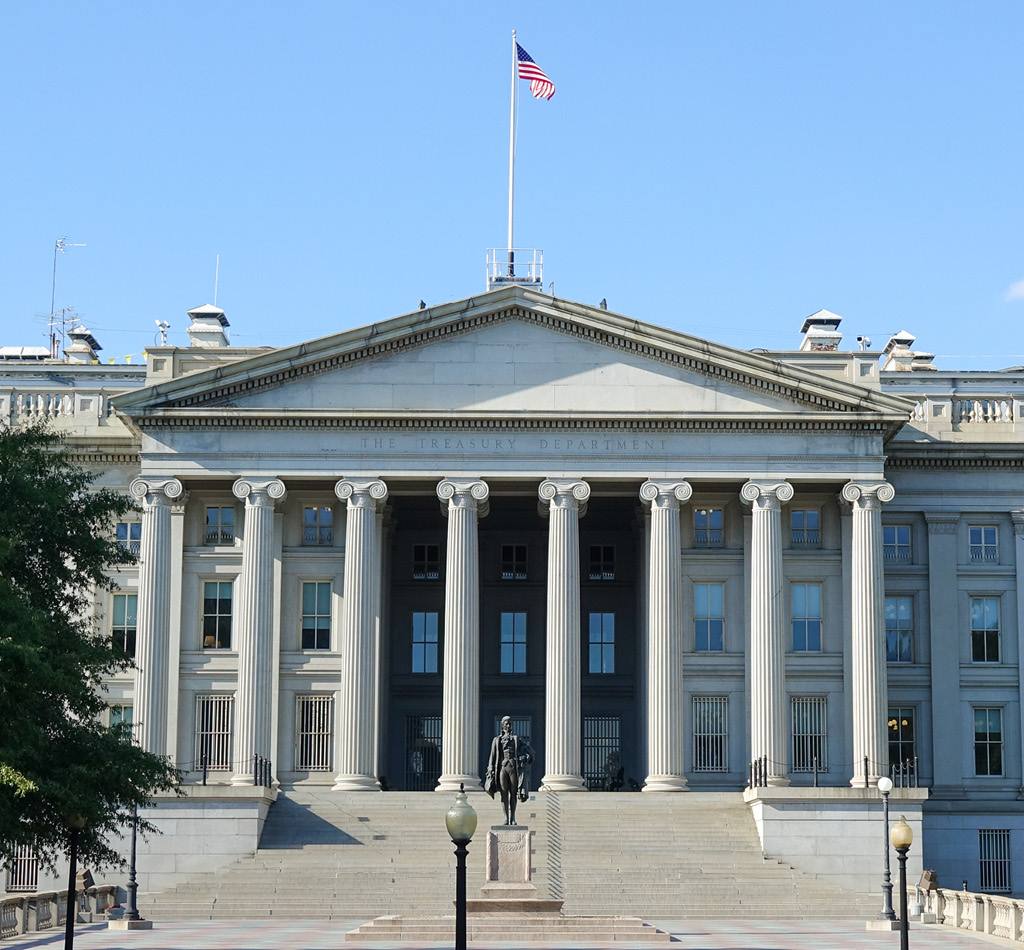
WASHINGTON — The United States on Monday sanctioned more than two dozen Iranian exchange houses, front companies and key individuals in a sweeping move to disrupt what it calls Iran's global shadow banking network, the US Department of the Treasury announced.
Source: US Department of the Treasury
A count of the Treasury's sanctions list put the total at 30 names — 22 entities and eight individuals. Sixteen of the entities have addresses in Dubai, four in Iran, one in Türkiye and one in Hong Kong, according to the count.
Source: The Edge
At the centre of the action is the Iran-based Iran Center for Exchange of Currency and Gold, which the Treasury says plays an essential intermediary role in Iran's international trade, matching exporters earning foreign currency with importers who need it — handling tens of billions of dollars of trade every year. Also designated is Rahbar Bazargani Nesim Baharan Qeshm Company, described by the Treasury as the 'rahbar company' for Bank Sarmayeh, along with three of its senior officials — Sayyed Mohammad Jalali, Valiollah Hemmati and Ali Kalhor.
Two Iranian exchange houses were also designated — Mina Fashki and Partners Exchange Company, owned and operated by Mina Fashki and Farzad Fashki, and Mellat Exchange Company, whose officials Mahmoud Akhlaghi, Parviz Fazlju and Mohammad Hossein Abbasi were named alongside it.
The Treasury named 10 front companies it says the rahbar network uses to move thousands of cross-border payments worth billions of dollars, including Dubai-based Recaz Star General Trading LLC, which it says sent and received hundreds of payments totalling more than $170 million linked to Sadaf Exchange, and OGA Global General Trading LLC, which it says oversaw millions of dollars of payments for the National Iranian Tanker Company, operator of Iran's state-owned oil tanker fleet.
The Treasury's Financial Crimes Enforcement Network (FinCEN) published an analysis alongside the sanctions, identifying about $14.7 billion in financial activity it says is potentially linked to Iranian shadow banking between January 2025 and August 2026, including about $941 million received by UAE-registered beneficiaries with accounts at Banque Misr UAE. FinCEN's analysis notes that such a report is not proof of illegal activity.
What the sanctions do
Under the action, all property and interests in property of the designated persons that are in the United States or in the possession or control of US persons are blocked and must be reported to the Treasury's Office of Foreign Assets Control (OFAC). Entities owned 50 percent or more by blocked persons are also blocked, and US persons are generally barred from transactions with them. Violations can draw civil or criminal penalties. The Treasury says the ultimate goal of sanctions is to bring about a change in behaviour.
"Iran's economy is underwater, and its leaders are panicking," Treasury Secretary Scott Bessent said in the announcement. "Iran's shadow banking system is the last financial lifeline of a bankrupt regime. Treasury will continue dismantling these illicit networks until we have buried the head of the snake."
Source: US Department of the Treasury
Operation Economic Outcast
The action is part of Operation Economic Outcast, the financial-pressure campaign Bessent announced on August 24, 2026, and dubbed 'Economic D-Day', aimed at severing what the Treasury calls the regime's remaining economic lifelines. The State Department issued a statement the same day describing the designations as part of a whole-of-government campaign against Iran's illicit revenue. The designations were made under Executive Orders 13902, 13224 and 13871.
Background: war, blockade and talks
The sanctions come as the US–Iran war, which began on February 28, 2026, when American and Israeli forces launched coordinated strikes on Iran, enters its ninth month. The United States has maintained a naval blockade of Iran, struck Iranian air defences on Qeshm Island in the Strait of Hormuz on November 3, and — in a Fox News interview on November 22 — President Donald Trump said he was 'inclined' to resume strikes after the New Year if talks fail. Iran has called Washington's reply to its seven conditions for reopening the Strait of Hormuz 'unconvincing'. The US has also claimed its sanctions campaign has pushed Iran's rial to new lows and driven inflation to about 90 percent.
No specific impact on Gulf-based Punjabi or Indian workers has been reported in connection with this action. The measures target Iran's trade-finance channels rather than workers directly, but the Strait of Hormuz shipping situation — and the blockade that governs it — remains the watchpoint for the many Punjabi and Indian workers in the Gulf. The Treasury says it will keep dismantling the networks, while talks continue and the question of renewed strikes after the New Year hangs over them.