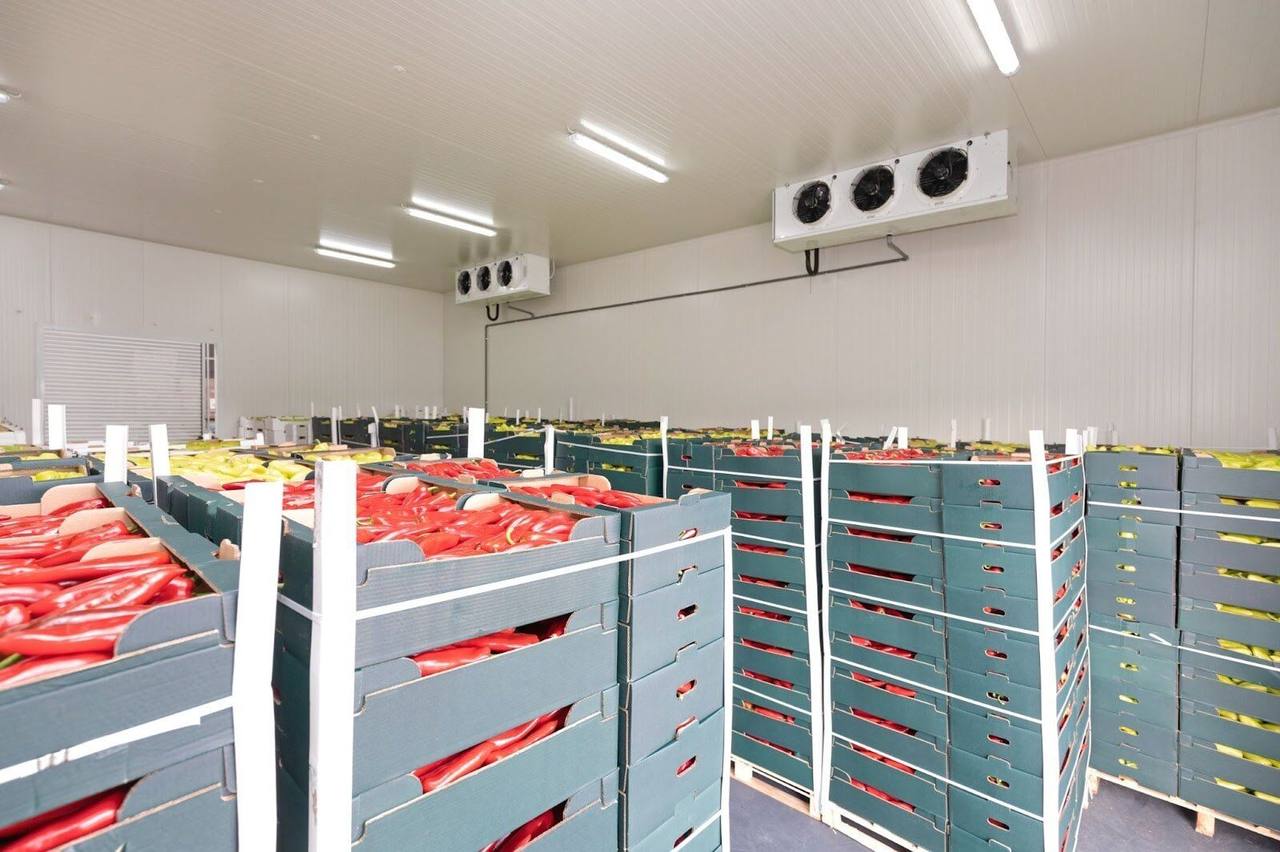
Chandigarh — Haryana Agriculture and Farmers' Welfare Minister Shyam Singh Rana said on Monday that Chief Minister Nayab Singh Saini has approved the new Haryana Cold Chain Policy, which will integrate the collection, storage, transportation and marketing of agricultural produce in the state. The aim, he said, is not merely to build cold storages but to ensure farmers' produce reaches more profitable markets in better quality, while cutting post-harvest losses, raising farm incomes, encouraging private investment and promoting energy-efficient, environment-friendly technologies.
Source: National Times
Under the policy, district-level infrastructure will be identified on the basis of local production and market demand, and integrated development of modern packhouses, collection centres, pre-cooling units, cold storages and refrigerated transport will be promoted in production clusters. Village-level packhouses will collect farmers' produce and clean, sort, grade and pack it before it is sent to markets, the Haryana Standard reported.
Source: Haryana Standard
Rana said a key objective is to free farmers from the compulsion of selling immediately after harvesting and to reduce their dependence on middlemen. Aggregation through Farmer Producer Organisations (FPOs) and direct linkages with retail chains, processing units, exporters and e-commerce platforms will be encouraged, with special attention to the participation of women and disadvantaged sections of farmers.
The policy's scope goes beyond fruits and vegetables: it covers perishable and temperature-sensitive commodities including cereals, pulses, oilseeds, spices, milk, eggs, fish, meat and dry fruits. Packhouses will display daily market prices and transport availability, and digital platforms connecting farmers, buyers and cold-chain transport providers will be encouraged.
Horticulture Department to be nodal agency
The Horticulture Department will act as the nodal department, coordinating between departments, converging schemes and monitoring outcomes. A state-level monitoring mechanism will include representatives from Agriculture and Farmers' Welfare, Animal Husbandry and Dairying, Fisheries, Cooperation and New and Renewable Energy, along with the Haryana State Agricultural Marketing Board, NABARD and research institutions. The Marketing Board will develop market yard, collection and transport facilities, while HAREDA may support renewable-energy and energy-efficient cold chain systems.
The policy also promotes modernisation of existing cold storages, upgrading of old refrigeration systems, use of solar and other renewable energy, energy audits and digital temperature monitoring, with performance standards linked to incentives. It will be implemented in three phases — 2026–2032, 2033–2040 and 2041–2047 — with the first phase focusing on performance standards, energy audits, training, digital connectivity, modernisation of existing facilities and priority production clusters.