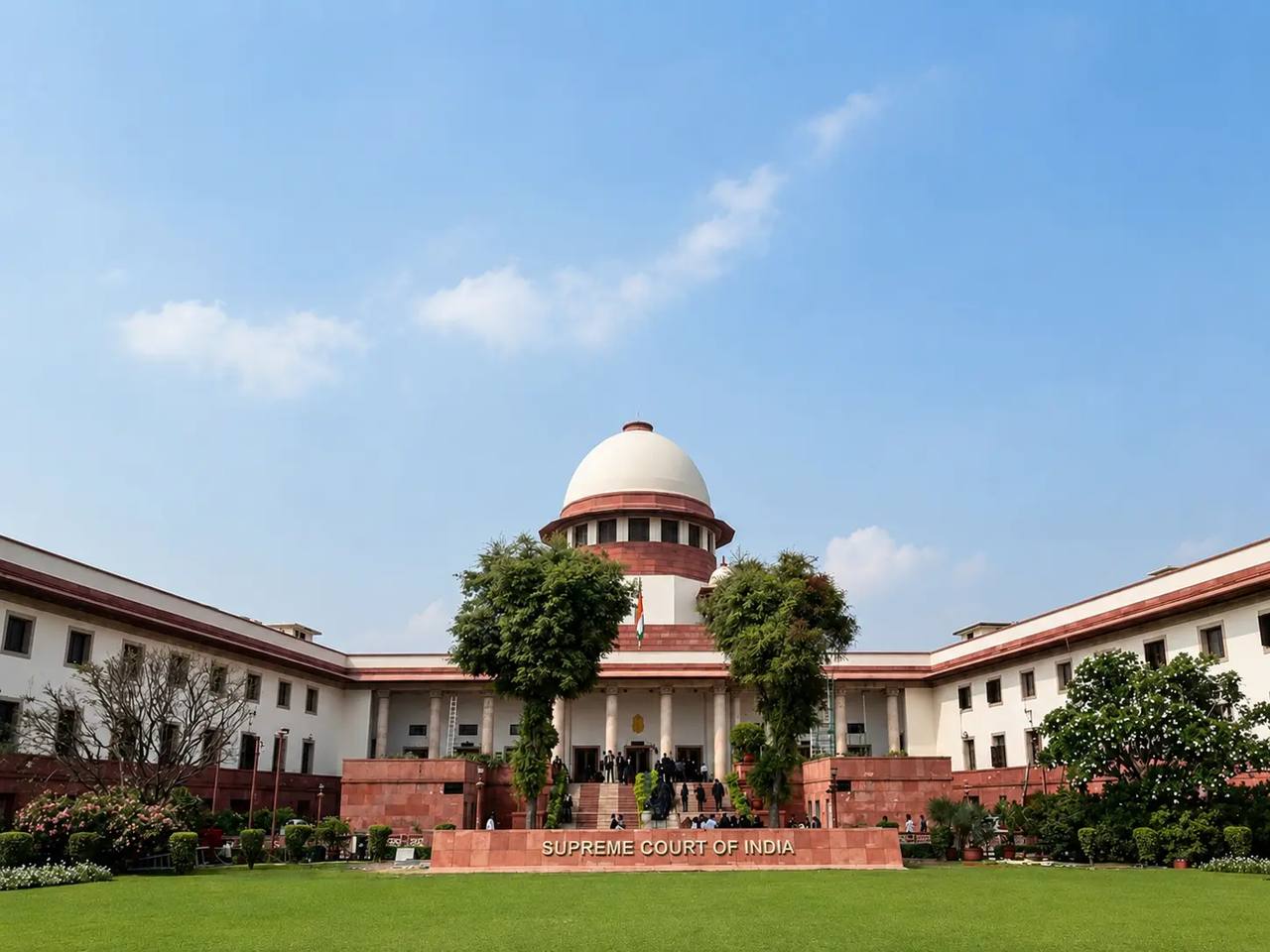
The Supreme Court on Monday ruled that children cannot be treated as toys in custody battles between parents, and that a child's welfare — not the legal rights of the parents — must decide who they live with. A bench of Justices Vikram Nath and Aparesh Kumar Singh set aside a Madras High Court order that had granted custody of two minor boys to their father.
Source: The Times of India
The boys, aged 16 and 14, have lived with their mother since 2014. The court interacted with both parents and the children separately; the boys told the judges they had met their father only four to five times and wanted to live with their mother and maternal grandparents. The court found them grown up and confident in their answers.
The couple married in August 2009 in Coimbatore, and their sons were born in 2010 and 2012 in Madurai, where the mother's family lives. They separated in May 2014. The husband later obtained a divorce decree in 2018, and the family court in Madurai granted him custody of the children under the Guardians and Wards Act, 1890. The Madras High Court upheld that order in October 2024, and the mother then approached the Supreme Court, which stayed the High Court's judgment in January 2025.
Allowing the mother's appeal, the court held that under Section 17 of the Guardians and Wards Act the welfare of the minor is the paramount consideration, and under Section 17(3) the court may consider the preference of a child old enough to form an intelligent preference. "The rule that a father should get custody of a child is always subject to exceptions and not universally applicable," the bench said.
The court noted that the father had not been found unfit, but held that removing the children from their mother would not be conducive to their mental and physical well-being and their education, despite that finding. It also found no indication that the boys had suffered inadequate care or affection, noting that their mother — who holds a master's degree in food and nutrition and is pursuing a Ph.D. while working with Abbott India — had ensured their education in good schools.
Source: Law Trend
The court said custody cases cannot be decided only on a legalistic basis. A father's status as natural guardian does not automatically win custody — the child's stability, emotional bond and own voice carry the greater weight.
The court was careful to protect the father's place in the children's lives. It observed that the father "also deserves the company of his children who are the victims of a fractured marriage", and that the children require the love and affection of both parents "as a matter of basic human right".
The father may meet the children at the Gandhi Museum in Madurai between 10 am and 2 pm on the second Saturday and Sunday of every month, and also during Pongal and half-yearly school vacations, either at the mother's residence or at the Gandhi Museum. He must inform the mother beforehand through a telephone call or WhatsApp message, and the mother must facilitate the meetings. The court also said the father should be willing to contribute towards the children's future educational expenses if the mother requests financial assistance.
Source: Verdictum
The judgment, in the case J. Sakthi Devi @ Chriti v. Joseph Charles (2026 INSC 1260), also records that a father can be denied custody even in the mother's absence if the child's welfare lies with grandparents or other relatives — the natural-guardian rule is an exception-ridden guide, not an automatic entitlement.