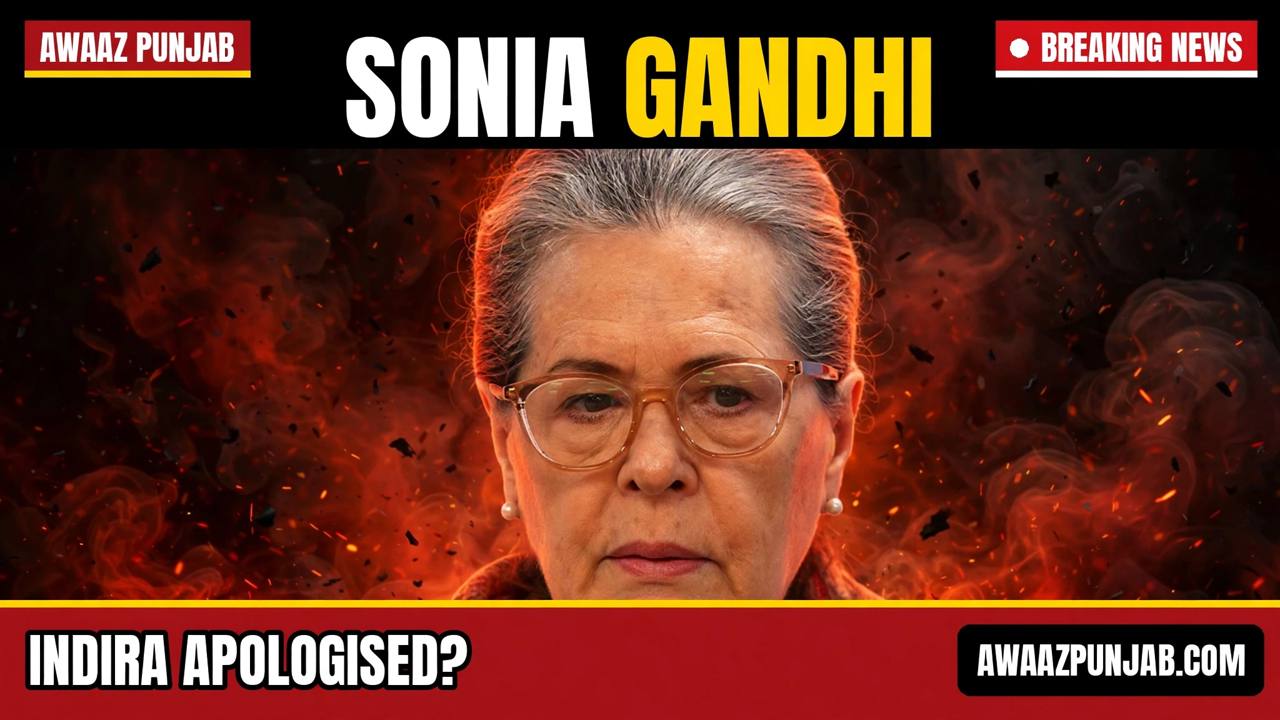
New Delhi, November 7 — Congress Parliamentary Party chairperson Sonia Gandhi has said that former Prime Minister Indira Gandhi, in the later years of her life, publicly expressed regret and apologised for the excesses committed during the Emergency, while refusing to place the entire blame for that period on her younger son Sanjay Gandhi. The remarks came in an interview with The Hindu's N. Ram, published on Saturday ahead of the worldwide release of her memoir 'Belonging: A Journey of Love' on November 10.
Source: The Hindu interview, via Nation Press
"It was not only Sanjay, though in the public mind he is often seen as synonymous with the Emergency. There was a lot of pressure from some of her senior colleagues, and I think there were very few people around her like Rajiv who had a different point of view," the 79-year-old Congress leader told the newspaper. She added that her late husband, former Prime Minister Rajiv Gandhi, used to convey to his mother the complaints and feedback he had heard from ordinary people.
Source: PTI via BizzBuzz
Rights curtailed, 'but it was done constitutionally'
Asked whether the Emergency should be recognised as an anti-democratic and authoritarian chapter in India's history, Sonia Gandhi acknowledged the curtailment of rights while explaining the circumstances as Indira Gandhi saw them. "It was only after the Emergency that I came to know the true gravity of what had been happening. Yes, democratic rights had been curtailed, and there was a suspension of habeas corpus, but it was done constitutionally," she said.
She described Indira Gandhi as struggling to cope with rapidly deteriorating circumstances: violent protests, government offices and public transport set on fire, widespread organised unrest, and calls for the bureaucracy and the armed forces to disobey orders. Critics have long argued that those circumstances do not mitigate the scale of the civil-liberty violations of 1975-77 — an argument the interview is likely to revive.
Indira 'recognised what was happening' and called the 1977 election
"Hindsight allows us to put things better in perspective. Let's not forget that it was Mrs Gandhi herself who came to recognise what was happening and called for the March 1977 election. And you know very well that she herself later publicly expressed regret and apologised for excesses during the Emergency," Sonia Gandhi said.
The Emergency was proclaimed on June 25, 1975, by President Fakhruddin Ali Ahmed on the advice of Prime Minister Indira Gandhi, and remained in force until March 21, 1977. Civil liberties were restricted, opposition leaders were detained, press censorship was imposed and habeas corpus was suspended; the forced-sterilisation campaign, associated particularly with Sanjay Gandhi's influence, became one of its most criticised episodes. Congress lost the March 1977 election that ended the period.
Source: Dainik Jagran English
Congress leader Rahul Gandhi shared the interview on X, writing: "Sixty years in public life, and still the same person. Proud of you, Ma." He also quoted a passage from his mother on the values she says have guided her: loyalty to family and friends, sincerity, and being dutiful and responsible.
The written interview, which also touches on Sonia Gandhi's decision to decline the Prime Minister's post after the Congress-led UPA's 2004 election victory, lands three days before the memoir reaches readers worldwide — and it has already returned the Emergency, still one of the most contested chapters in post-independence Indian democracy, to the centre of political discussion.
Sonia Gandhi first shared the memoir's first look when she made her Instagram debut last month. Read the earlier story