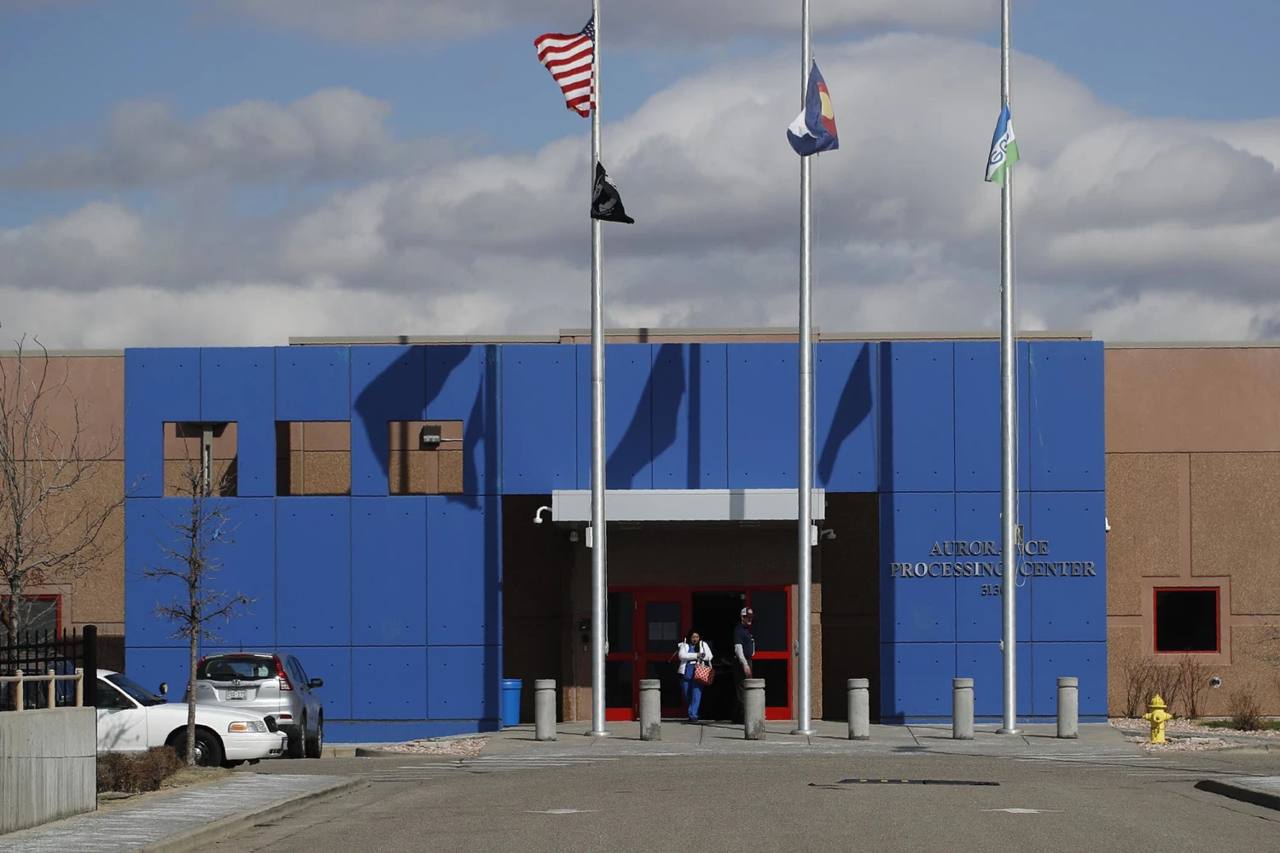
The confrontation between Colorado's federal judges and U.S. Immigration and Customs Enforcement (ICE) escalated this weekend. U.S. District Judge Charlotte Sweeney has ordered Nathan Rasper, the director of ICE's Denver field office, to appear personally in her courtroom on Monday, November 9, to answer for a practice the judges say made a mockery of their orders: detainees at the ICE detention facility in Aurora who won release through federal court were being arrested again as they walked out. The government has now identified 14 people who were re-arrested after court-ordered releases, and Judge Sweeney has directed officials to file the exact dates and times of every release and re-arrest by 8 a.m. on Monday, ahead of Rasper's appearance later that morning. This follows the inquiry Awaaz Punjab reported on November 4, when Judge Sweeney first challenged the re-detentions in open court; what is new is the personal summons for the field office director, the court's own count of cases, and a second judge's threat on Friday to hold the government in contempt.
Source: The Denver Post, Nov. 7, 2026
What The Denver Post found at the Aurora front door
The Denver Post, reviewing court records and interviewing five attorneys, two re-arrested detainees and two advocates, counted at least 17 people re-arrested as they left the Aurora facility between October 27 and November 3 — three more than the 14 on the government's own list. Some men walked out of the front door to find agents waiting. Five were driven to ICE's field office in Centennial, then driven back to Aurora and re-arrested one by one. One man, identified by the Post only by his middle name, Alex, to protect him from retaliation, told the newspaper agents cuffed him at the door, elbowed him in the leg, and — after he complained of pain back inside — struck him across the jaw; those are his allegations, reported by the Post, and the Department of Homeland Security told the Post it could not comment on them without his personal information, which the newspaper declined to provide. In another case acknowledged in the government's own filings, a man re-arrested on October 31 was flown to Arizona and then Louisiana 'for removal staging' — nearly deported — before being released.
Source: The Denver Post, Nov. 7, 2026
How the order to re-arrest ran through ICE's chain of command
Testimony at the November 4 hearing traced the practice upward. Nicole Black, an ICE assistant field office director who oversees the Aurora detention centre, testified that she received a direct order to re-detain habeas releasees who had 'some kind of criminality,' and that the directive came from Deputy Field Office Director George Valdez, who in turn received it from Rasper. Black said Ramon Quintero Alvarez — the man whose case opened the inquiry after he was released on October 27 and immediately taken back into custody outside the Aurora facility's public lobby — was re-detained under that policy; she later acknowledged the man at the centre of the hearing had no criminal charges filed against him. Judge Sweeney ordered Alvarez released by 2 p.m. on November 4 and barred ICE from detaining him again unless the government proved at a bond hearing, by clear and convincing evidence, that he was a flight risk or a danger. She told the court its orders were 'frankly being made a mockery of,' and told government attorney Andrew Soler he was 'bordering on unprofessional conduct.'
Source: Court proceedings summary, political.org, Nov. 7, 2026
Two more judges: GPS monitors and a contempt warning
Judge Sweeney is not alone. U.S. District Judge S. Kato Crews on Tuesday ordered Edgardo Garcia Vargas released after officers re-arrested him minutes after an earlier court-ordered release, finding the renewed detention an ongoing due-process violation and writing that 'the cruelty seems to be the point.' U.S. District Judge Nina Wang held hearings on Thursday and Friday into ICE's practice of placing GPS ankle monitors on people she had ordered released with no conditions; Black testified the GPS directive also traced to Rasper through Valdez, and the Post reports ICE had not passed one of Judge Wang's release orders to a supervisor until the day she ordered a representative into court. At the end of Friday's hearing, Judge Wang threatened to hold the government in contempt.
Source: The Denver Post, Nov. 7, 2026
In an unsigned statement to The Denver Post, the Department of Homeland Security said a person without legal status is not immune from immigration enforcement just because a judge has ordered their release, and that ICE can re-arrest people in ways that comply with court orders: 'To suggest that ICE cannot do this is nothing short of sabotage.' Notably, however, the Post reports that the U.S. Attorney's Office for the District of Colorado — the government's own lawyers in these cases — have repeatedly told the courts in filings that they would not argue the renewed detentions were legal. A spokeswoman for that office declined to comment on Friday.
Background: habeas petitions, Aurora, and why release orders are being tested
The cases arise from habeas corpus petitions, the mechanism by which a detained person asks a federal court to review the lawfulness of their detention. The Post reports an unprecedented number of people held in Aurora — a facility in the Denver suburb of Aurora, Colorado, where ICE holds immigration detainees — have challenged their detention this year, and judges have repeatedly ordered releases. The legal question now before three judges of the U.S. District Court for the District of Colorado is narrow and fundamental: whether releasing a person for a minute and re-arresting him at the door satisfies a release order or defeats it. Colorado is not the first place the question has surfaced: in January 2026, Minnesota's chief federal judge ordered ICE's then acting director to appear personally over alleged failures to comply with detention orders. Tim Macdonald, legal director of the ACLU of Colorado, called the Aurora practice 'an assault and an affront to any notion of due process and fair play.'
Source: The Denver Post and political.org background reporting, Nov. 7, 2026
What is solid
- Judge Sweeney has ordered Denver ICE Field Office Director Nathan Rasper to appear in court on Monday, November 9, 2026, and the government must file exact release and re-arrest times by 8 a.m. that day.
- The government has identified 14 petitioners re-arrested after court-ordered releases; The Denver Post counted at least 17 re-arrests at Aurora between Oct. 27 and Nov. 3, including one man released at 11:30 a.m. and re-arrested at 11:31.
- ICE supervisor Nicole Black testified the re-detention directive for releasees with 'some kind of criminality' came through Deputy Director George Valdez from Rasper, and that a parallel directive ordered GPS monitors on released people unless a judge had expressly forbidden conditions.
What is only claimed
- Whether the re-arrests are lawful is the live dispute: DHS says a release order does not immunise anyone from later enforcement; the detainees' lawyers and three federal judges say re-arrest at the door defeats the orders. The government's own courtroom lawyers have not defended the detentions' legality in filings, per the Post.
- Alex's account of being elbowed and struck during his re-arrest is his allegation to The Denver Post; DHS said it could not comment without his personal details and that it takes misconduct accusations seriously. No finding has been made.
- Judge Sweeney has not said whether she will pursue contempt proceedings; Judge Wang threatened contempt on Friday but has not issued such an order.
Why this matters beyond Colorado — including for Punjabi families
For immigrant families across the United States — including Punjabi families in Colorado's trucking, farming and small-business communities along the I-25 and I-70 corridors — habeas petitions are often the only route out of months of detention while a case is fought. The Aurora cases decide how much a judge's release order is worth in practice. Yvenson Lebrun, a 27-year-old Haitian father of two who was detained for 14 months before a judge ordered his release, told the Post he was re-arrested steps from the front door on October 27 and, when finally released for real, refused to believe it until he was on a plane out of Colorado: 'When people go home, there's no noise because they don't know if you're coming back or not. Nobody's really happy now.'
Source: The Denver Post, Nov. 7, 2026
What happens next
Monday is the decisive day. By 8 a.m., the government must hand Judge Sweeney the precise release and re-arrest times for every Colorado case since October 27 in which ICE re-detained someone within 12 hours of a court-ordered release — the filing whose absence of exact timing prompted this weekend's orders. Later that morning, Rasper is expected to explain who authorised the re-detention policy and on what legal basis. Possible outcomes range from stricter reporting requirements and formal findings to contempt proceedings, which Judge Sweeney has neither promised nor ruled out. Awaaz Punjab will report the hearing's outcome.