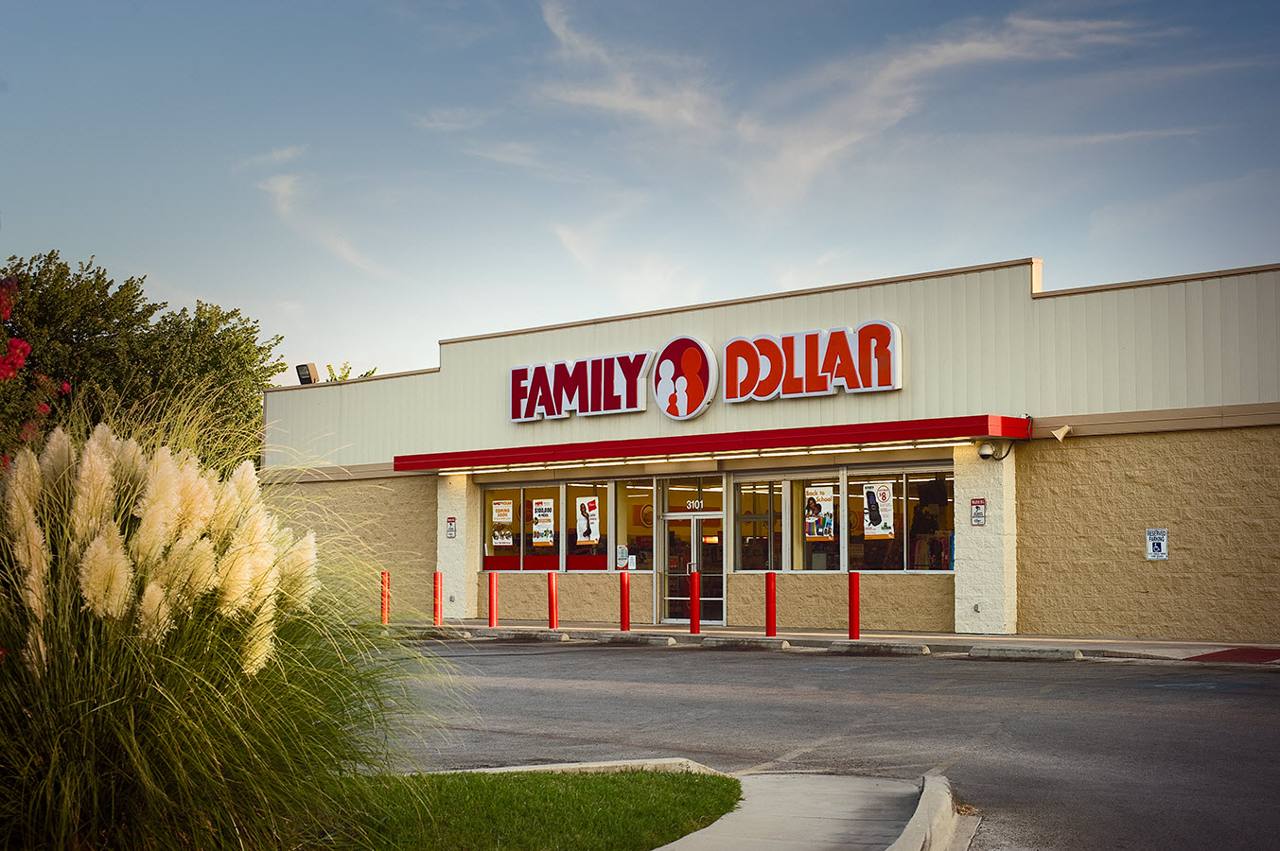
Family Dollar will pay $63 million to settle allegations by the Federal Trade Commission and 17 states that its stores routinely charged shoppers more at the register than the prices shown on shelves, price tags and advertisements, the FTC announced on Thursday, November 12.
Source: Federal Trade Commission
The complaint and a proposed settlement order were filed the same day in the U.S. District Court for the Eastern District of Virginia, in Norfolk. Reuters reported that Family Dollar did not admit or deny wrongdoing in agreeing to settle, and the order takes effect when it is approved and signed by the district court judge.
Source: Reuters
According to the FTC complaint, thousands of Family Dollar stores nationwide overcharged shoppers, including in low-income communities with limited access to full-service grocery stores, and the company failed to correct the problem despite being warned about it. The higher register prices were allegedly charged not only against shelf and tag prices, but also against prices listed on the company's website and mobile app.
Consumers also regularly reported that they did not receive the discounted prices shown on Family Dollar's Smart Coupons because the mobile application did not work and prevented them from redeeming the coupons at the register. The FTC said the company's own internal records show customers had complained for six years about the app failing to provide the promised discounts or prices.
"The FTC is committed to ensuring price transparency and fairness so consumers can make informed choices," said Christopher Mufarrige, Director of the FTC's Bureau of Consumer Protection. "Today's order will ensure Family Dollar stops deceiving consumers about its prices and returns money to consumers harmed by these practices."
Source: Federal Trade Commission
What inspectors kept finding
The complaint says state and local regulators cited Family Dollar for thousands of pricing violations over the last five years, resulting in fines exceeding $3 million, and that the company continued making false pricing statements despite thousands of failed inspections, hundreds of consumer complaints and multiple enforcement actions. Coverage of the complaint put concrete numbers on the failure rates: in Utah, stores failed 47 per cent of pricing inspections since 2023, in Cuyahoga County, Ohio, more than 83 per cent of inspections failed, and one inspected store overcharged on 12 of the 25 items an inspector bought. In most jurisdictions a store fails a pricing inspection if more than 2 per cent of scanned items ring up at the wrong price.
This is not the chain's first pricing penalty. In the last three years Family Dollar has entered multiple settlements with state attorneys general and consumer protection agencies, paying more than $800,000 for inaccurate pricing, including $400,000 to Ohio in February 2024, $113,960 to Wisconsin in January 2025 and $300,000 to Arizona in May 2025. Those state settlements required stores to post signs telling customers that if the register price is higher than the shelf price, the customer is entitled to pay the lower price or receive a refund of the difference — yet an internal Family Dollar presentation from January 2026 indicated Ohio stores were still not following the signage agreement, the FTC said in its 85-page complaint.
What Family Dollar must do now
Under the proposed order, $40 million goes into a consumer redress fund payable to eligible consumers, $20 million funds a discount program for Family Dollar customers — reported as a fixed 15 per cent reduction applied for two consecutive days, excluding certain products — and more than $3 million is paid to the states. The company must notify customers about redress eligibility by clearly posting notices in its stores and on its digital platforms.
The order also prohibits Family Dollar from misrepresenting the price of its goods or services and requires it to establish a pricing accuracy program — within 90 days, according to the settlement papers — under which it regularly monitors and verifies its prices, trains employees to identify pricing discrepancies and promptly corrects errors. The program must be independently assessed and annually certified. The Commission vote authorizing staff to file the complaint and the stipulated final order was 2-0.
The 17 states joining the FTC are Alabama, Arkansas, Colorado, Florida, Illinois, Iowa, Kansas, Louisiana, Mississippi, Nebraska, Ohio, Oklahoma, Pennsylvania, South Carolina, Tennessee, Utah and Wisconsin. The claims were brought under the FTC Act, the Gramm-Leach-Bliley Act and state consumer protection laws, according to coverage of the filing.
Part of a wider discount-store crackdown
The Family Dollar case does not stand alone. On October 26, 2026, the FTC and state partners sued Dollar General Corporation, the other giant of American discount retail, for similar deceptive pricing practices — overcharging consumers and failing to correct the issue despite warnings. That litigation is ongoing, the FTC said.
For the millions of shoppers who rely on discount chains for essentials — including Punjabi diaspora families in cities where a Family Dollar may be the closest store for groceries and household basics — the case turns on a simple promise: the price on the shelf must be the price at the till. What happens next is procedural but important: a federal judge in Virginia must approve the stipulated order, after which the redress fund and discount program are set up and eligibility notices go up in stores and online. Shoppers who believe they were overcharged should watch for those notices rather than paying any third party to 'claim' money for them.