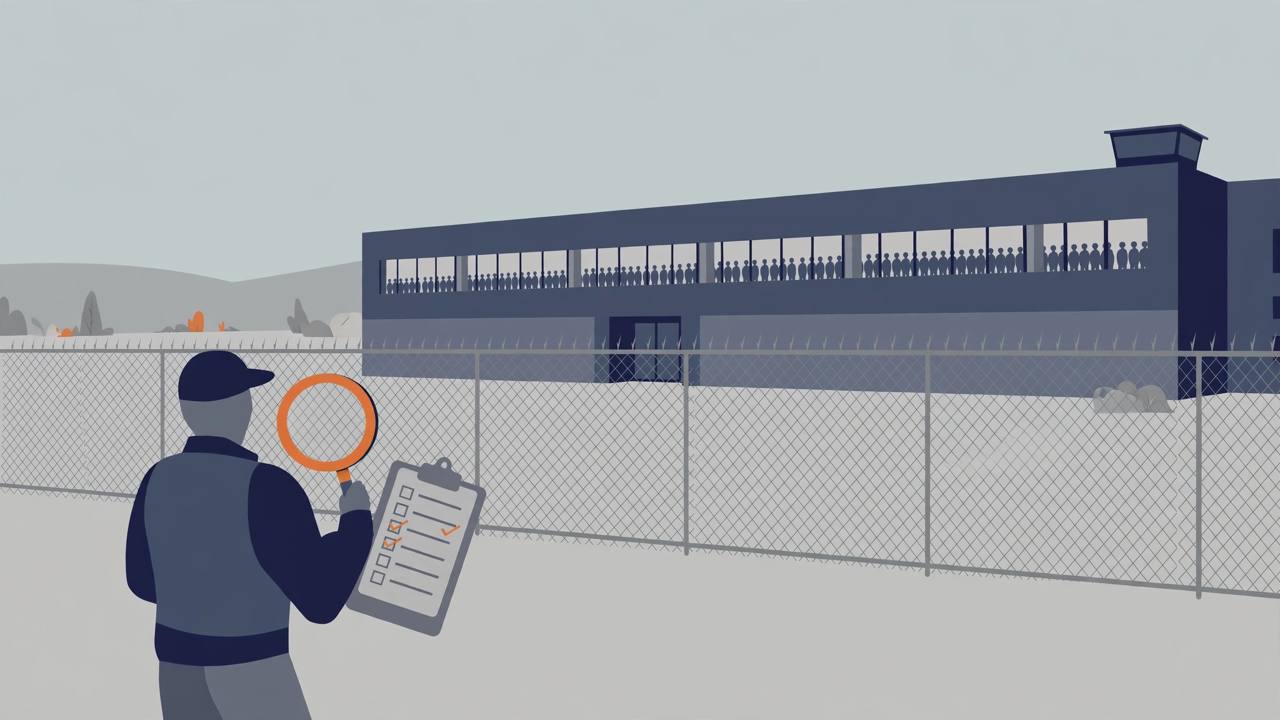
The United States government cut inspections of its own immigration detention facilities while the number of people locked inside them surged by more than 50 percent — and the cuts were made without ever assessing whether the remaining oversight was enough to keep detainees safe. That is the central finding of a report by the Government Accountability Office (GAO), the non-partisan watchdog of Congress, whose release was led on Thursday, November 5, by Senator Dick Durbin of Illinois, the Senate Democratic Whip and the ranking Democrat on the Senate Judiciary Committee.
Source: Sen. Dick Durbin's office — GAO report release
The GAO examined the four offices inside the Department of Homeland Security (DHS) that are charged with inspecting facilities holding noncitizens for more than 72 hours. Its conclusion was blunt: Immigration and Customs Enforcement (ICE) changed its inspection programmes one by one but never established whether the changes, taken together, still provided sufficient scrutiny of detention conditions.
Between April 2025 and April 2026, the average daily detained population jumped by more than 50 percent, reaching 61,817 people in April 2026, while the number of active facilities expanded from 128 to 172. The growth was fuelled by an explosion in funding: ICE received over $45 billion for immigration detention in those two years alone, according to the GAO material released by Durbin's office.
Source: IANS via HiIndia
Four watchdogs — and one has been shut down entirely
The deepest cut fell on the DHS Office of the Immigration Detention Ombudsman (OIDO), an independent office with statutory authority to conduct surprise inspections of detention facilities. According to the GAO, that office has been shut down entirely, removing the one inspector that could arrive unannounced.
ICE's own Office of Detention Oversight (ODO) sharply reduced its work after policy changes under the current administration. It went from inspecting larger facilities twice a year to once a year or less, and its total inspections dropped from 194 to 102 in a single year. DHS now allows many smaller facilities to inspect themselves, and facilities are usually told in advance when inspectors are coming. ICE justified the changes by saying fewer inspections would ease obligations on facilities and make it easier to contract with state and local partners to detain people.
Two parts of the system did not shrink. The ICE Health Service Corps (IHSC), which inspects medical care inside detention, has kept its process the same. And the DHS Office of Inspector General (OIG) received $20 million for extra inspections. But the GAO found ICE had not backed its reductions with data: it did not analyse evidence such as past inspection deficiencies or contract compliance to judge whether the thinner oversight could still keep a rapidly growing detention estate safe and compliant.
The safeguard that quietly lapsed
The report also flagged the loss of a financial penalty that once gave inspections teeth. Since fiscal year 2019, appropriations language barred funding a contract with a facility after two consecutive less-than-adequate ODO ratings. That provision was left out of the fiscal 2026 DHS Appropriations Act. ICE told the GAO that failing ratings will now no longer block continued funding — which, Durbin's office said, allows private prison contractors such as GEO Group and CoreCivic to fail inspections with no funding consequences.
"Now that the power has shifted in Congress, the Trump Administration should take immediate steps to respond to this new alarming GAO report, which found ICE has reduced inspections without assessing the impact on detained individuals." — Sen. Dick Durbin, releasing the GAO report on November 5
Durbin linked the oversight gap to failures already documented inside facilities, saying that because of failed inspections, ICE facilities have provided inadequate medical care, unsafe food and failures in suicide prevention. The GAO report itself, however, provides no breakdown of how many Indian or Punjabi nationals are among the detained population: its figures describe the total population in facilities holding people for more than 72 hours, through April 2026. For diaspora families with relatives in detention anywhere in the United States, inspections are often the only independent check on the medical care, food and safety inside the facility holding them — which is why a halving of that check matters well beyond Washington.
What happens next
The GAO made two recommendations: that ICE assess, using real evidence, how its inspection changes have affected oversight, and that it adjust its inspections based on what it finds. The Department of Homeland Security agreed with both recommendations but asked that they be closed as already implemented, citing work under way. The GAO declined, saying ICE had not supplied evidence of an assessment covering the combined changes — so both recommendations remained open on Thursday. Durbin, whose office had earlier asked the GAO to expand a pending investigation of mental-health care in detention to cover medical care and contract mismanagement, is demanding the administration act on the findings, setting up a fresh oversight fight in the new Congress.