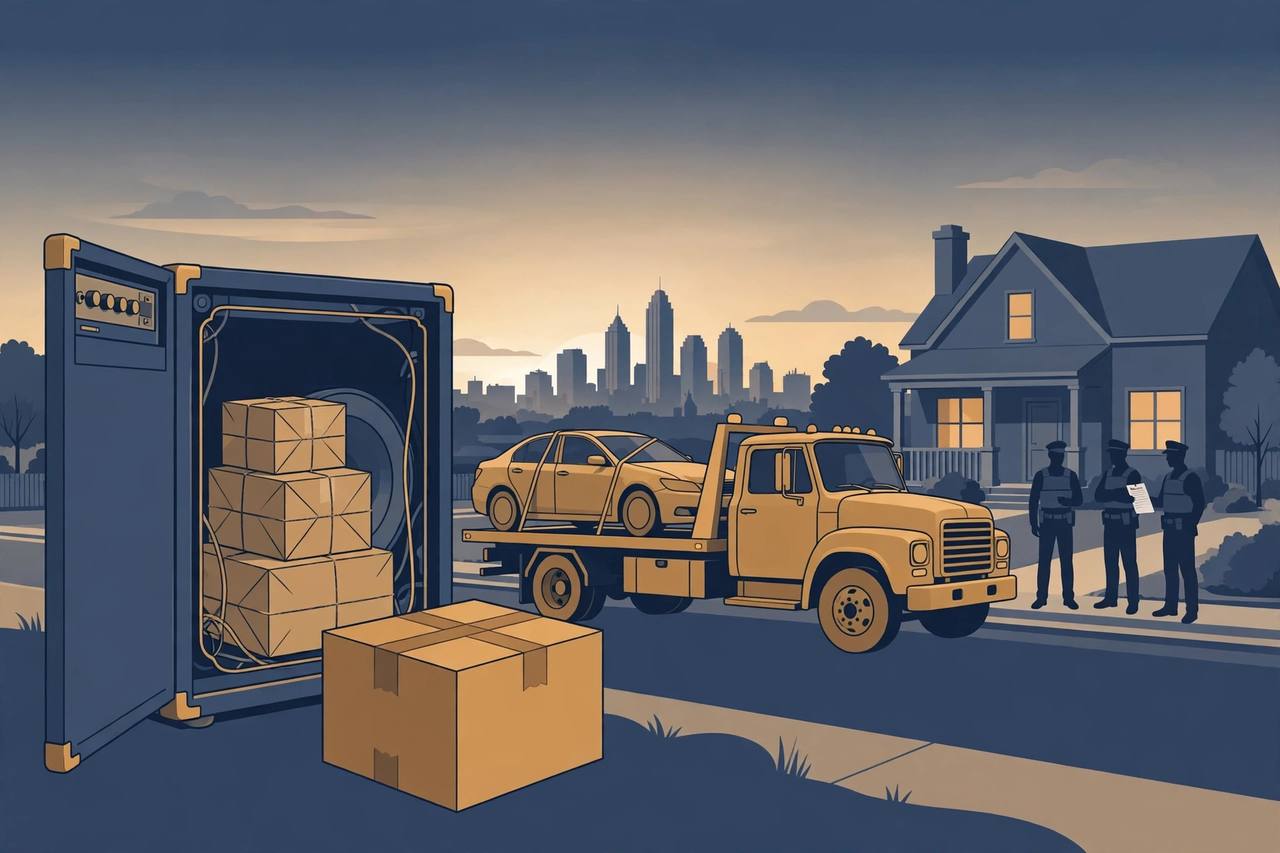
ATLANTA, Georgia — A federal jury in Atlanta has convicted Roderick Battle, 49, of Atlanta, of leading a nationwide drug trafficking organisation that moved fentanyl, methamphetamine, cocaine and heroin around the United States hidden inside guitar amplifiers, under vehicles carried on tow trucks, and through the mail on a stolen shipping account. The verdict was returned on November 3, 2026, and announced by the U.S. Attorney's Office for the Northern District of Georgia on November 5. Battle was convicted of conspiracy and possession with intent to distribute fentanyl, methamphetamine, cocaine and heroin, as well as money laundering and firearms-related charges.
Source: DEA / U.S. Attorney's Office, Northern District of Georgia
"Despite a prior conviction for trafficking narcotics, Battle was undeterred, operating a prolific drug trafficking network that supplied large quantities of fentanyl, methamphetamine, and other narcotics throughout the country," said U.S. Attorney Theodore S. Hertzberg. "This conviction reaffirms the steadfast dedication of my office and our federal and state law enforcement partners in the Homeland Security Task Force to protect the public from individuals who poison our communities with deadly drugs." Battle now faces a mandatory minimum of 20 years in federal prison when he is sentenced next March.
How the network moved drugs across America
According to the U.S. Attorney, the charges and the evidence presented in court showed that between at least January 2021 and December 2024, Battle and his conspirators concealed drugs and drug money inside guitar amplifiers and transported them nationwide using a stolen FedEx account that belonged to a sports memorabilia company. The network also moved drugs hidden beneath vehicles that were being carried on tow trucks — an ordinary sight on American highways that investigators say the organisation turned into cover for cross-country loads.
The case broke open in the spring of 2023. On May 6, 2023, the Pennsylvania State Police intercepted a package containing six kilograms of cocaine that had been shipped from Battle's residence in southeast Atlanta. Four days later, federal and state officers executed a search warrant at Battle's home and seized large quantities of narcotics — fentanyl, methamphetamine, cocaine and heroin, all packaged for distribution. Agents also found two firearms under Battle's bed and approximately $76,000 in cash. Federal agents arrested Battle on a criminal complaint that same day.
Prosecutors say the arrest did not stop the business. While Battle was held in the custody of the U.S. Marshals Service awaiting trial, he continued to facilitate the distribution of narcotics using a contraband cellular telephone smuggled into detention — a detail the jury heard before convicting him on the trafficking, money laundering and firearms charges.
"Not solved by one agency alone"
"Cases of this magnitude are not solved by one agency alone," said Michael J. Connolly, Acting Special Agent in Charge of the DEA's Atlanta Field Division. "This investigation demonstrates what can be accomplished when federal, state, and local law enforcement partners work together with a shared mission. As part of the Homeland Security Task Force, our collective efforts exposed a sophisticated drug trafficking and money laundering network, disrupted its operations, and secured a conviction against the individual responsible for leading it."
"Roderick Battle led a sophisticated, multi-state drug trafficking operation that flooded communities across the country with dangerous narcotics, including fentanyl and methamphetamine," said Marlo Graham, Special Agent in Charge of FBI Atlanta. "This conviction is a testament to the strong partnerships and coordinated efforts of law enforcement to dismantle these criminal networks and hold those responsible accountable." The case was investigated by the FBI, the DEA and the Pennsylvania State Police, with assistance from the Georgia State Patrol, and prosecuted by Assistant U.S. Attorneys Dwayne A. Brown Jr., Brock Brockington, John DeGenova and Patrick Cespedes.
Source: EIN News wire report of the conviction
The prosecution is part of the Homeland Security Task Force (HSTF) initiative established by Executive Order 14159. The Atlanta HSTF brings together agents and officers from the ATF, Coast Guard Investigative Service, DEA, FBI, ICE Homeland Security Investigations, IRS Criminal Investigation, the Labor Department's inspector general, the Diplomatic Security Service, the U.S. Marshals Service, the Postal Inspection Service and the Secret Service, alongside state and local agencies, with prosecutions led by the U.S. Attorney's Office for the Northern District of Georgia.
Background: a repeat trafficker, and methods built on ordinary freight
BACKGROUND: Prosecutors stressed that this was not Battle's first trafficking case — Hertzberg noted his prior conviction for trafficking narcotics before he built the network the jury has now convicted him of leading. The methods matter beyond one defendant: the organisation allegedly hid behind the everyday machinery of American commerce — a parcel carrier's account stolen from a memorabilia business, hollowed-out musical equipment, and tow trucks hauling cars with drugs concealed underneath. For the many Punjabi and South Asian truckers and logistics workers in Georgia and across the Southeast who move legitimate freight on the same highways, cases like this are why carriers face inspections, account audits and questions about loads — and why prosecutors say a stolen shipping account or an unexplained cash load should be reported, not carried.
The drugs at the centre of the case — fentanyl, methamphetamine, cocaine and heroin — are the same substances Georgia and Pennsylvania officers say they seize on the interstate corridors that run through Atlanta, one of the Southeast's main freight hubs. The Pennsylvania interception that started the takedown happened hundreds of miles from Atlanta, underlining how far the network's packages travelled from the southeast Atlanta home where agents later found the cash and the guns.
What happens next
WHAT HAPPENS NEXT: Battle's sentencing hearing is scheduled for March 2, 2027, before U.S. District Judge J.P. Boulee in Atlanta. He faces a mandatory minimum of 20 years in prison; the judge will set the actual sentence after considering the U.S. Sentencing Guidelines, which are advisory. Until then he remains in federal custody, where he has been held since his May 2023 arrest.