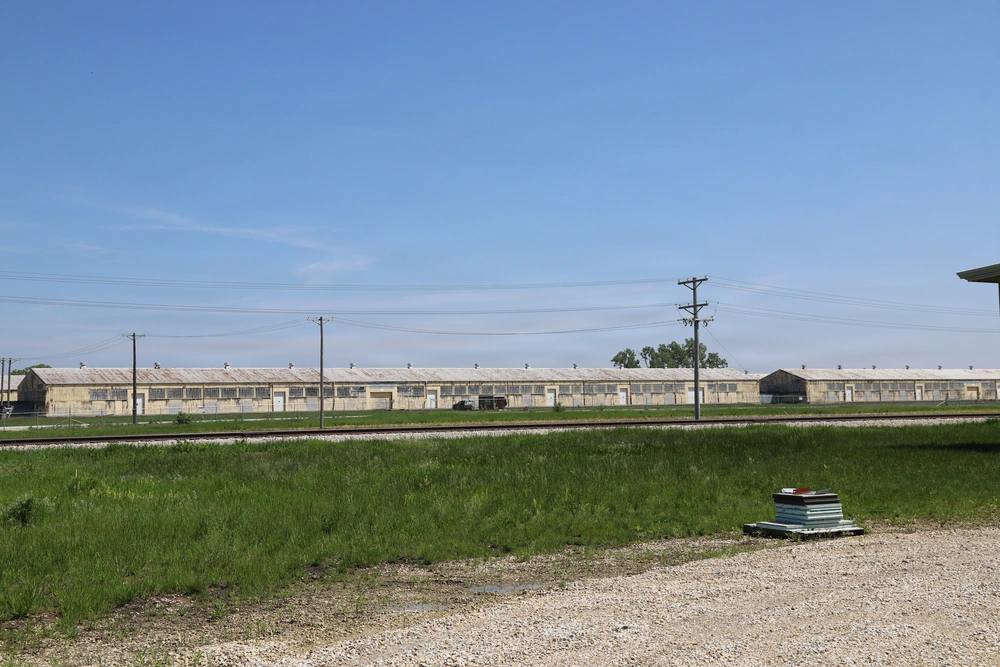
The U.S. Army intends to detonate nearly five tons of unstable lead azide at the Iowa Army Ammunition Plant in Middletown on Tuesday, even though a federal appeals court has paused the permit for the blast, the Justice Department told the court in a filing on Saturday. The Army says the degraded explosive could go off on its own as temperatures drop — leaving, in the government's words, a choice “between a planned and mitigated detonation and an unplanned and unmitigated explosion.”
Source: CNN
The court fight
The Eighth Circuit Court of Appeals temporarily stayed the Environmental Protection Agency's emergency permit on Thursday, after the Iowa Environmental Council and the Sierra Club Iowa Chapter sued to halt the blast. The EPA's emergency permit would allow the detonation between November 13 and February 11, 2027. The court has not said when it will rule on the groups' request for a longer halt.
Source: Little Village
The Justice Department first argued in a filing on Friday that a federal regulation exempting responses to an “immediate threat” to human health, public safety, property or the environment could allow the Army to act without the permit. In Saturday's filing, it said the Army intends to invoke that exemption. Colonel Aaron Teller, commander of the Army's 71st Ordnance Group, declared in a sworn statement that the lead azide poses “an immediate threat.”
Awaaz Punjab reported on November 19 that the Army had postponed the detonation to Monday after the governor, senators and lawsuits intervened, and on November 20 that the Eighth Circuit had frozen the EPA permit. The Justice Department's weekend filings are the Army's answer to that court pause. Read the earlier report
Why the Army says it cannot wait
The Army discovered during routine stockpile surveillance in March that lead azide stored in bunkers at the plant had been degrading. The material is now “extremely unstable and sensitive to even slight friction or movement,” according to an Army fact sheet, and packing and moving it “poses an unacceptable risk of accidental detonation.” Acting Army Secretary Adam Telle postponed the original Friday detonation to Monday — the “latest possible moment prior to a forecasted temperature drop, which would risk further destabilization of the material.”
The Army had previously hired a Georgia firm, MuniRem Environmental, to neutralize the material with chemicals, but later cancelled the deal citing safety concerns and opted for detonation instead. A September letter from Amy L. Borman, deputy assistant secretary of the Army for environment, safety and occupational health, said the decision was “supported by the technical consensus across military and federal explosive safety authorities that this is the only safe method of treatment.”
University of Iowa environmental health professor Patrick O'Shaughnessy said the problem should have been evaluated 20 years ago. “Somebody left it to rot that long, for it to now being the only option is to blow it up on site because it can't be moved,” he told CNN. “It's regrettable, and it's almost, it's hard to believe that it's happening in this country.”
The plume and the precautions
The blast would send a plume of smoke containing toxic lead dust drifting across southeastern Iowa and into western Illinois, and the plume could travel up to 100 miles. There is no safe level of lead in the body, health officials say, and it is especially dangerous to children, in whom exposure can slow growth and development and cause problems with learning, behaviour, hearing and speech. Residents in the path have been told to stay indoors, keep windows and doors closed for one to two days after the blast, and use portable air cleaners with HEPA filters.
Illinois agriculture officials have told farmers to keep livestock and pets inside until the plume passes and to wash animals to remove contaminants, and warned of exposure through fishing. Iowa City, about 60 miles north of Middletown and home to more than 75,000 people, said it did not know about the planned detonation until news began circulating early last week; an EPA team has since been deployed to collect pre-detonation surface water samples there. Cedar Rapids, more than 80 miles north, is monitoring its drinking water supply, drawn from wells along the Cedar River.
Iowa Governor Kim Reynolds activated a state emergency operations centre on Friday. Senator-elect Josh Turek has called for a delay, and incoming governor Rob Sand said “an unacceptable lack of communication and clarity has made Iowans understandably concerned and angry.” Illinois Governor JB Pritzker said on Friday he had spoken with Secretary Telle, urging more transparency. The Federal Aviation Administration has restricted flights around Middletown from Monday through Wednesday.
What happens next
The EPA was expected to file its response to the lawsuit by Sunday, and the appeals court will then decide whether to allow the detonation to go ahead. The City of Fort Madison said on Saturday it had been notified the blast would most likely occur on Monday or Tuesday — but if it does not happen this week, “another time will need to be arranged with additional planning.” The National Weather Service forecasts cooler, drier conditions on Tuesday, with highs in the upper 30s and winds near zero, blowing weakly from north to south — conditions that will shape how far the lead dust travels.