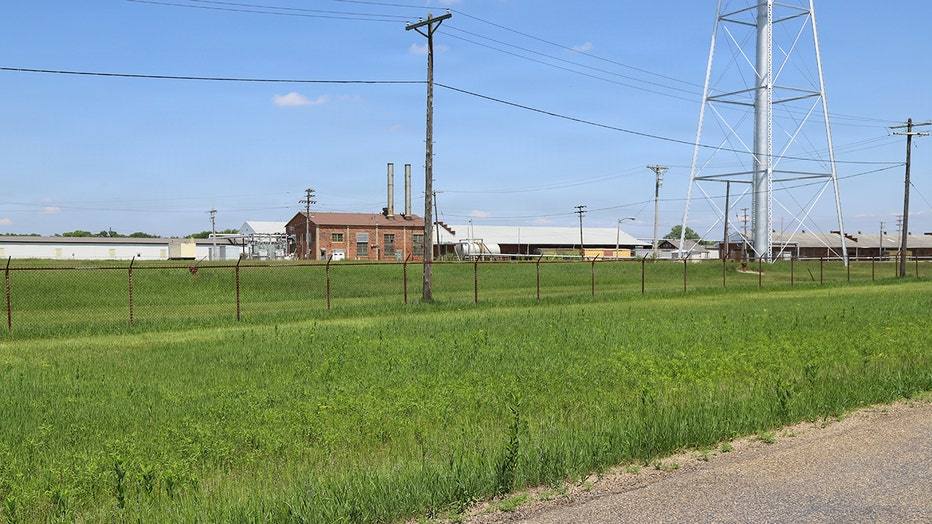
President Donald Trump on Monday ordered the U.S. Army not to detonate nearly five tons of unstable, degraded lead azide at the Iowa Army Ammunition Plant until a federal appeals court agrees the operation can go forward — reversing the Army's weekend move to carry out the blast on emergency powers that bypassed the court.
In a statement posted on Truth Social, Trump said he prefers to deal with the volatile material as soon as possible and believes a controlled detonation would be much safer than leaving it in place. But he said he has "ordered the military not to do so until such time as the 8th Circuit agrees that we can go forward," and made the decision "fully subject to the incoming Gov.-elect Rob Sand agreeing to the operation."
How the standoff reached this point
The stockpile was discovered in March, when staff at the Iowa Army Ammunition Plant in Middletown — a town of about 320 people just west of Burlington, near the Mississippi River — found several dozen barrels of lead azide, a highly sensitive chemical compound used to ignite military ammunition. The material had sat in earth-covered concrete magazines at the plant for almost 20 years. A routine inspection in April found crystals had formed on 58 of the 68 drums, after water in the storage bath had partly evaporated — a change that makes the compound more sensitive to friction and shock.
Because the material was judged too dangerous to load onto trucks and move, the Army obtained an emergency permit from the U.S. Environmental Protection Agency on November 13 to destroy it in place with two controlled detonations. The first blast was originally scheduled for noon on Friday, November 20. Environmental groups — the Iowa Environmental Council and the Sierra Club of Iowa — sued to stop it, and the Eighth U.S. Circuit Court of Appeals granted a stay while it weighs whether the EPA's emergency permit is valid.
Over the weekend the Army invoked emergency powers to proceed with the detonation despite the court's stay, telling the court it planned to blast on Tuesday, November 24, and later moving the date to Wednesday, November 25. President Trump's order on Monday countermands that move. Read our earlier report
Why the Army says it cannot wait — and why residents are worried
In court filings over the weekend, Army Col. Aaron Teller, a munitions emergency response specialist, explained that as liquid evaporates from the barrels, the solution inside becomes more susceptible to freezing, which increases the sensitivity of the crystals that have formed around the inside of the rim and underside of the lids. The Army says a controlled detonation carries the lowest risk, warning that the material could otherwise explode on its own, especially as temperatures drop.
Residents near the plant are alarmed for a different reason: the blast would send a plume of dust containing lead into the air. The Army's own forecast maps projected lead particles drifting across eastern Iowa and, in earlier versions, across the Mississippi River into western Illinois. Some residents near Middletown have been sealing their windows and doors as a precaution. About 55 homes in the Middletown City Park neighbourhood were asked to temporarily leave during the detonation window, with shelter offered at the Armed Forces Reserve Center at 16815 DMC Highway 34. Health officials warn there is no known safe level of lead exposure, and children under six and pregnant women face the greatest risk.
The blame warning to Iowa's incoming governor
Trump said that if Gov.-elect Sand or the courts do not agree, the administration will have "no choice" but to not proceed with the planned detonation — and added that he would hold the incoming governor responsible for "any and all death or destruction caused by this very unfortunate, and longterm, situation." Sand, a Democrat who won the governorship in the November 3 election, has questioned why a contract to remove the explosive risk was cancelled, why nothing was done about the stockpile sooner, and "why we are rushing to demolition now in late November."
The Army had no immediate comment on the president's statement, and had not issued an updated advisory. The Eighth Circuit's stay remains in force while the court decides on the EPA permit.